Read our report for the Paris Judicial Court in full here.
On the evening of 26 November 2024, hours before a ceasefire agreement was due to take effect between Lebanon and Israel, an airstrike landed on an apartment building in Beirut’s Barbour district.
There was no evacuation warning prior to the strike, and the area had not previously been under attack during more than a year of hostilities between Israel and Hezbollah.
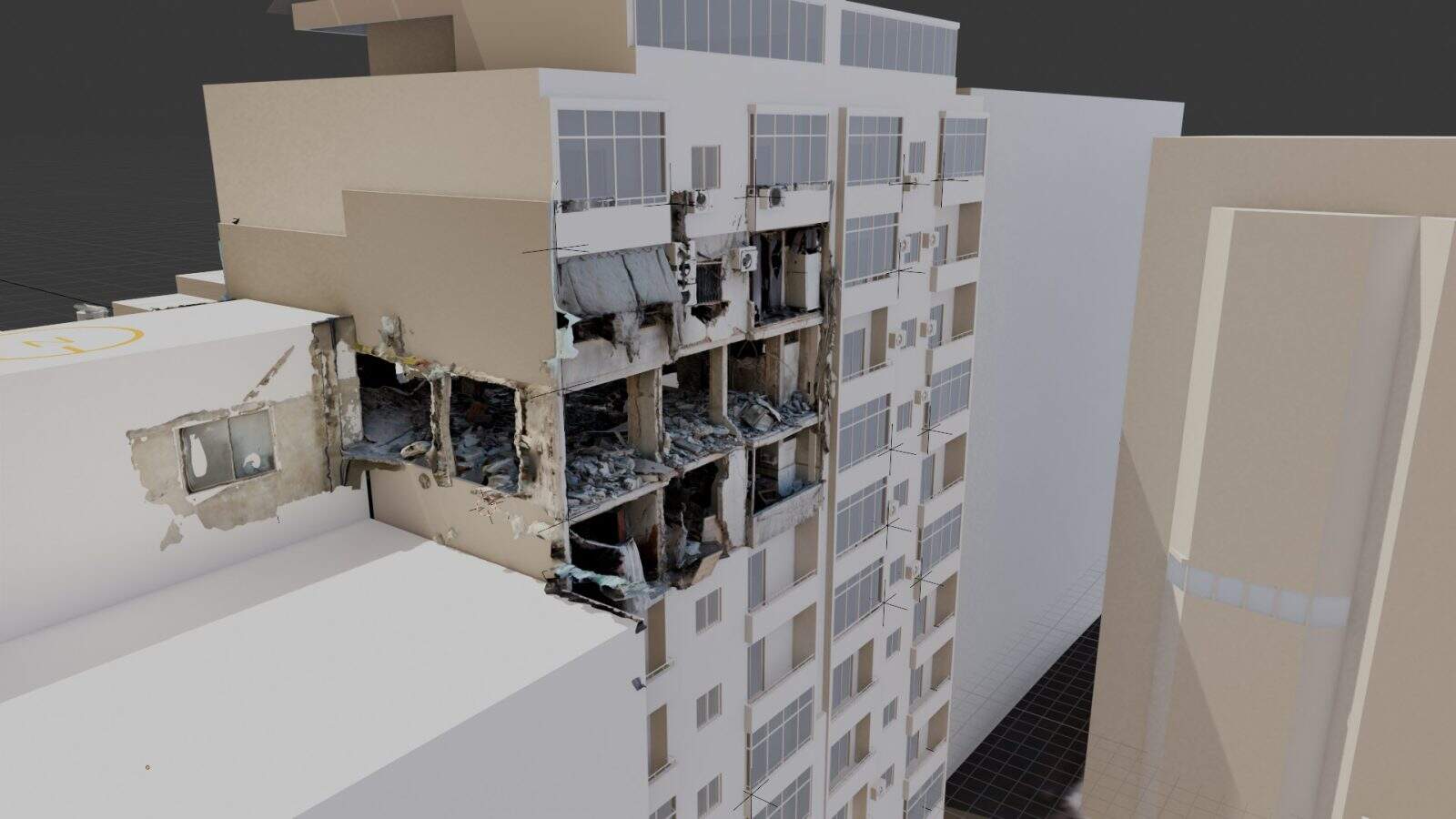
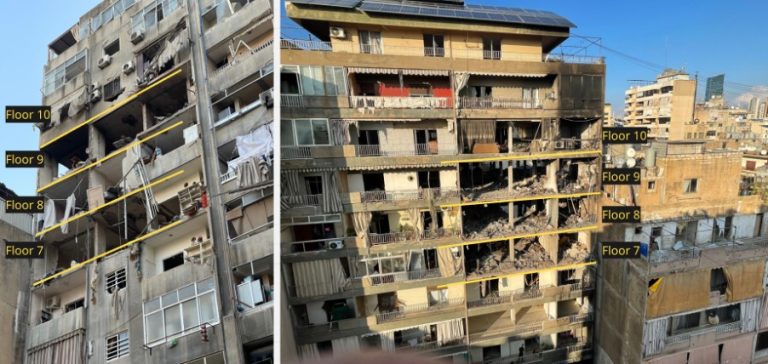
Two buildings were damaged by the initial strike. Soon after, fire broke out on the lower floors of one, causing significant damage to floors seven to nine of a residential apartment block known as the Cherri building – after the family responsible for its design and construction.
Mahmoud Naim Cherri and Nadira Hayek, husband and wife, were killed in their ninth floor apartment by the strike, along with their employee, Birki Negesa.
On 2 April 2026, supported by the International Federation for Human Rights (FIDH), Ali Cherri, son of Mahmoud and Nadira, filed a complaint for war crimes against persons unknown, with the Paris Judicial Court’s Specialized Unit for Crimes against Humanity and War Crimes. According to the complaint, the airstrikes of 26 November 2024 targeted a civilian property with no military objective, in violation of international law.
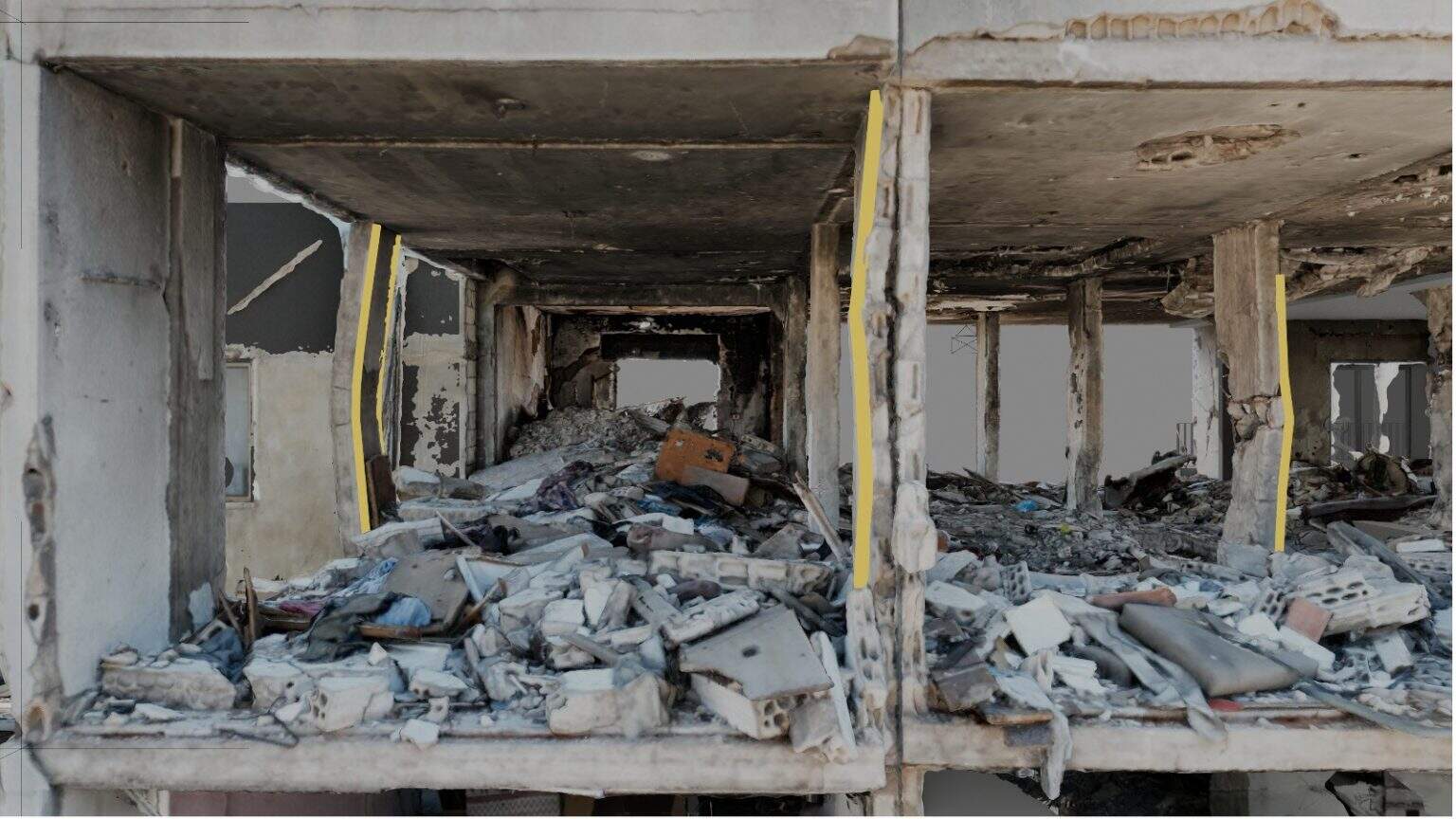
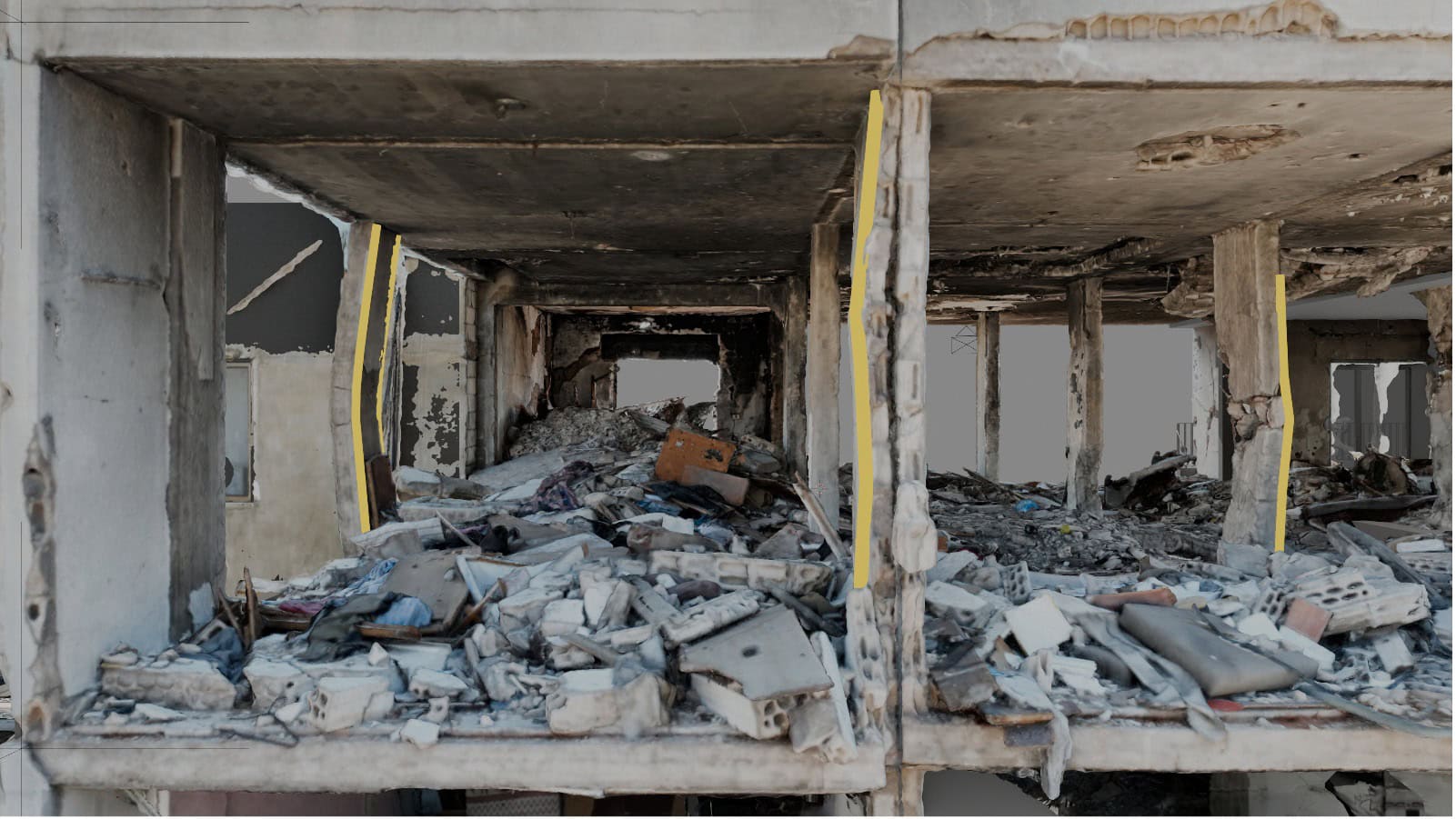
Commissioned by Cherri and FIDH, FA reconstructed the building and the ninth floor apartment – owned by Ali Cherri – in which his parents were killed.
FA’s report relies upon documentation provided by Cherri to closely analyse the incident, identifying GBU-39 munitions involved in the strike, assessing the damage to the building, and proposing possible trajectories for the munitions on the basis of that assessment.