


I.112 The Index of Repression
Updated
25 Feb 2026
Date of Incident
2019 - Ongoing
Location
Germany
Forums
Legal Process, Web Platform
Commissioned By
European Legal Support Center (ELSC)
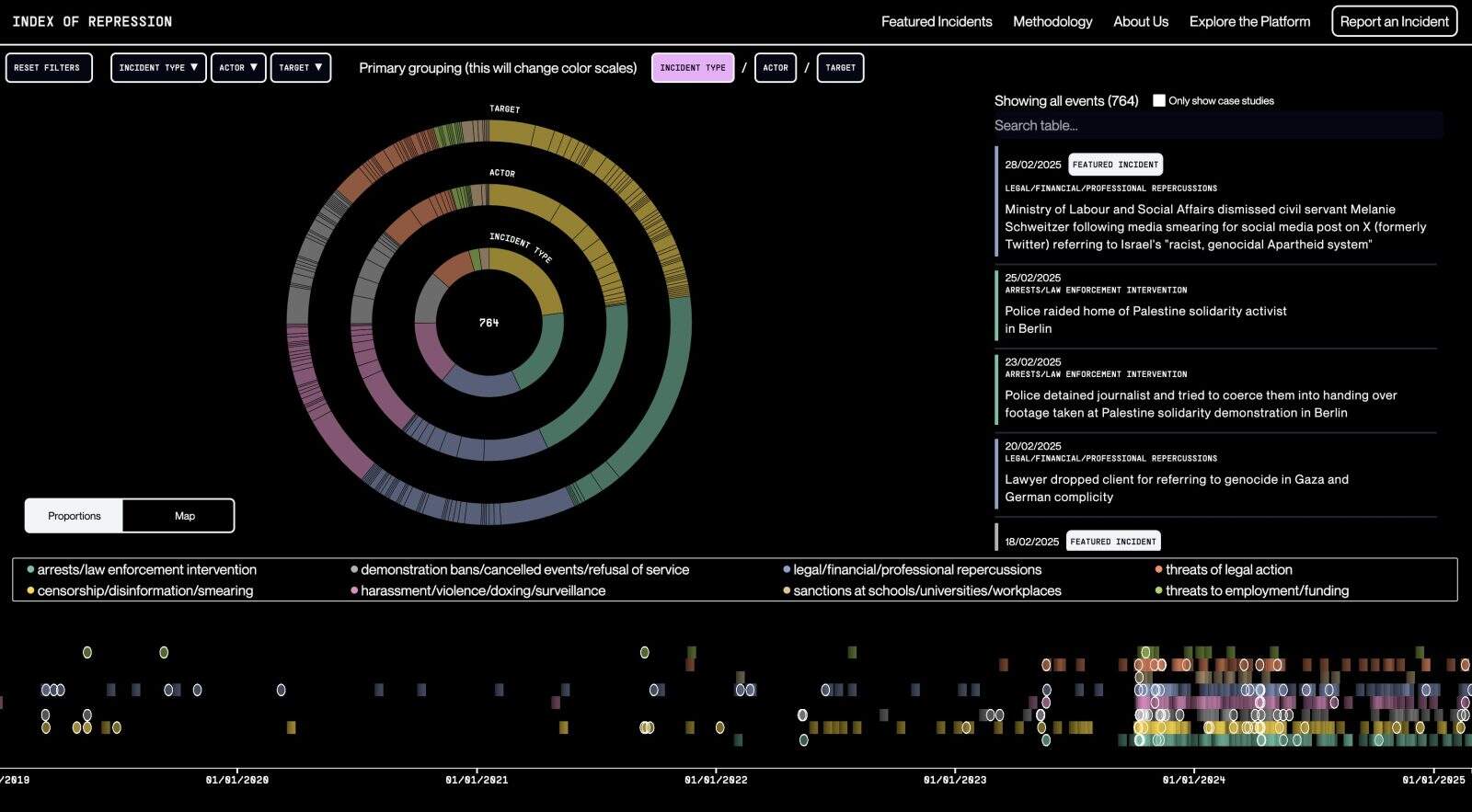
For decades, across Europe and the US, acts of solidarity with Palestine have been silenced by states, and by institutions. Since the genocide in Gaza escalated, from October 2023 onwards, incidents of repression have increased across civil society. The Index presents data collected by the ELSC, drawing patterns between almost 2,000 such incidents, in the UK and Germany.
I.120 The Massacre of Aid Workers in Tel al-Sultan

Date of Incident
23 Mar 2025
Location
Tel al-Sultan, Gaza
Forums
Human Rights Report, Media
In Partnership With
Earshot
On 23 March 2025 in Tel al-Sultan, Gaza, Israeli forces massacred fifteen Palestinian aid workers travelling in clearly marked humanitarian vehicles, later burying their bodies and vehicles in a shallow mass grave. FA and Earshot worked with the Palestine Red Crescent Society and survivors of the massacre to reconstruct the incident with unprecedented precision.
I.119 The Ceasefire in Gaza
Updated
23 Jan 2026
Date of Incident
10 Oct 2025 – Ongoing
Location
Gaza, Occupied Palestinian Territories
Forums
Web Platform
Commissioned By
Self-Initiated
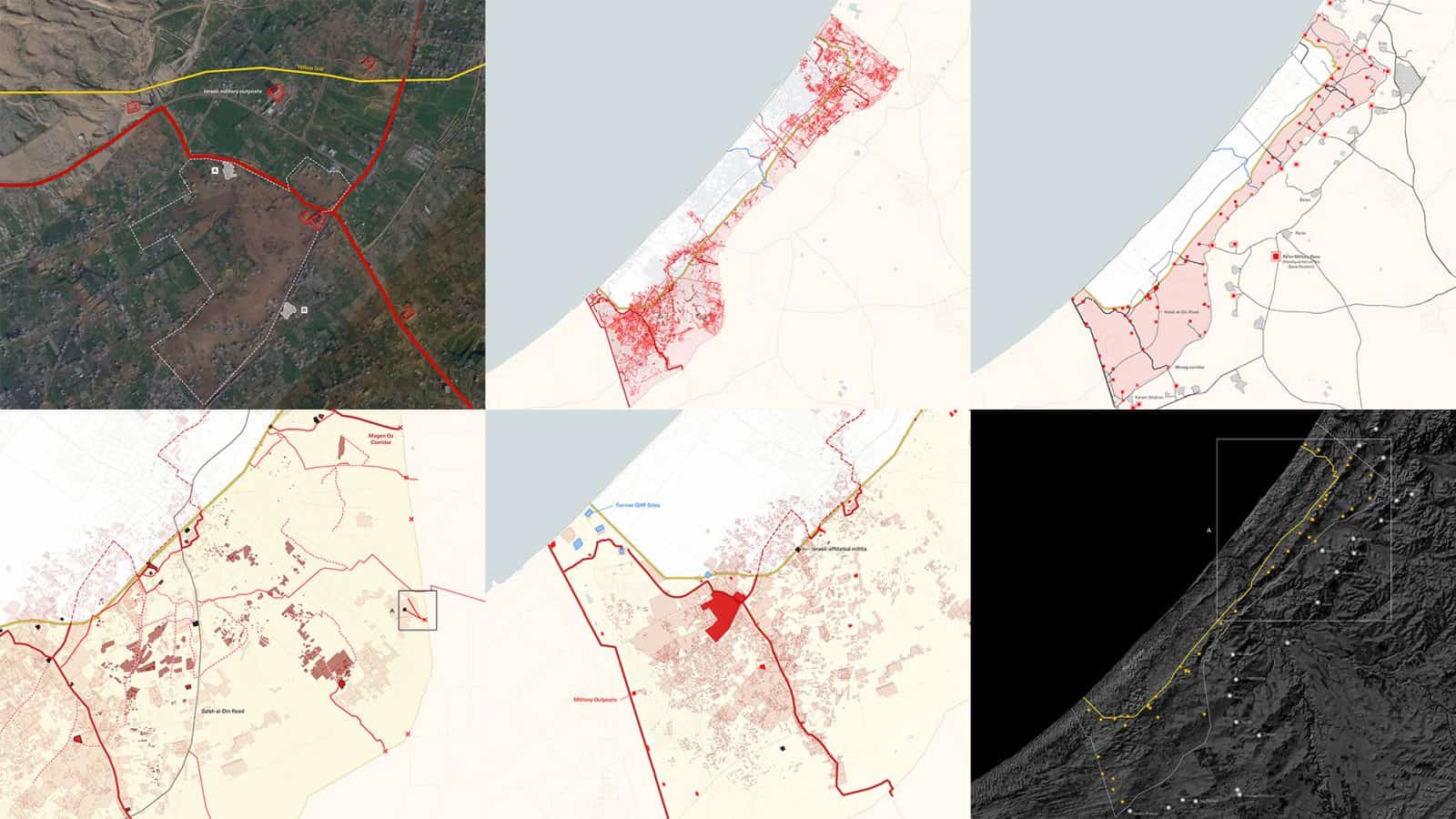
We have continued to monitor Israel’s conduct in Gaza since the ceasefire came into effect on 10 October 2025. Gaza is now defined by the ‘yellow line’ which divides it in two and places more than 50% of its land under Israeli military control. Our evidence suggests that Israel is making this line permanent, as ‘reconstruction’ plans normalise this new stage of Israel’s occupation.
I.109 A Cartography of Genocide: Israel's Conduct in Gaza since October 2023
Updated
08 Oct 2025
Date of Incident
7 Oct 2023 - Ongoing
Location
Gaza, Occupied Palestinian Territories
Forums
Legal Process, Web Platform
Commissioned By
Self-Initiated
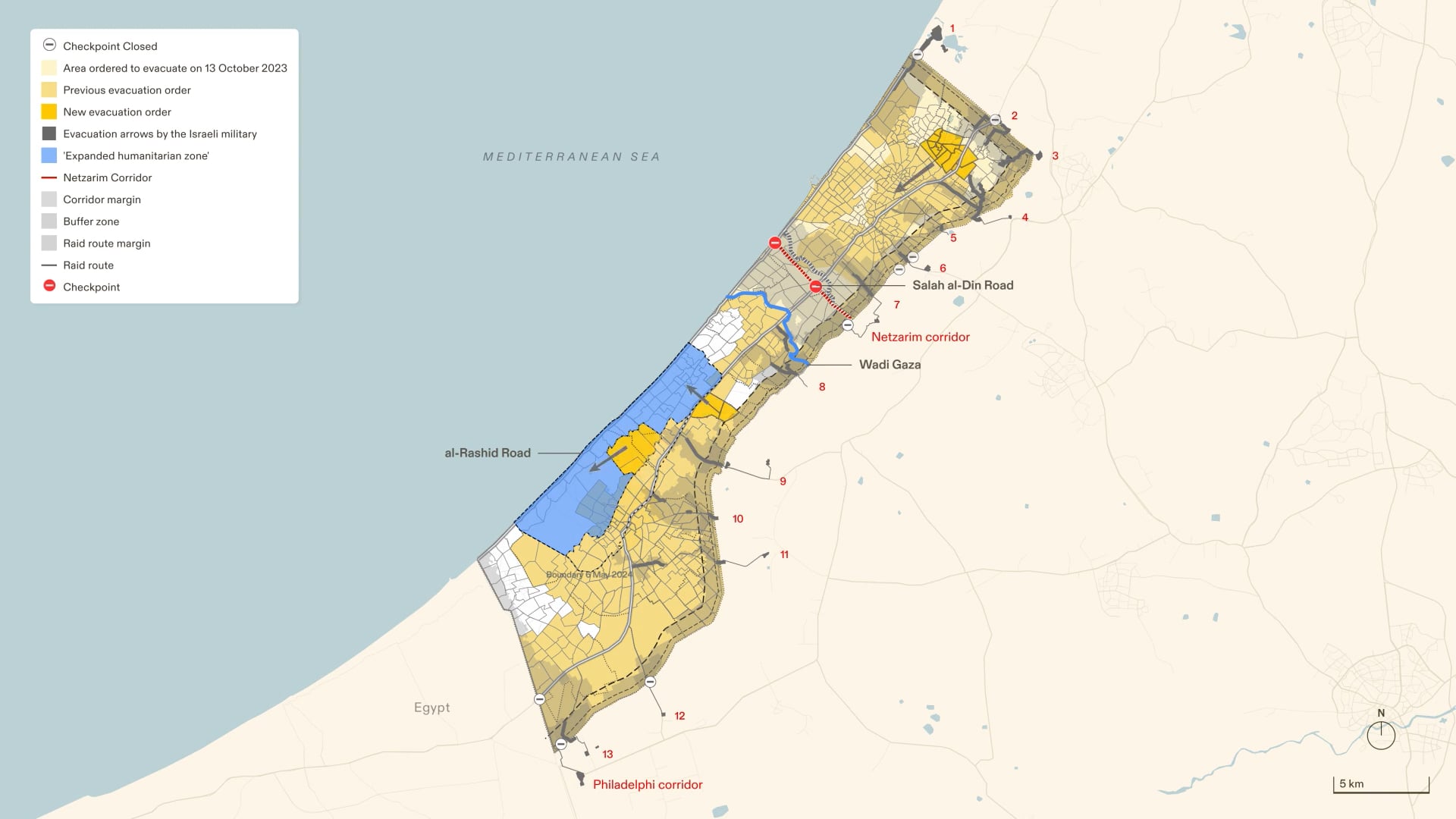
Since October 2023, we have closely monitored Israel’s military campaign in Gaza and the resulting extensive civilian harm. Comprehensive cartographic analysis, published as a web platform and in-depth report, reveals patterns of violence which indicate a systematic and organised campaign to destroy life, conditions necessary for life, and life-sustaining infrastructure.
I.117 Mass Graves in North Sinai

Date of Incident
2013 - 2019
Location
North Sinai, Egypt
Forums
United Nations, Human Rights Report, Media
In Partnership With
Sinai Foundation for Human Rights
Testimonies collected by the Sinai Foundation for Human Rights point to the existence of mass graves used by the Egyptian military to bury the bodies of civilians killed during their campaign against ISIS-affiliated militants in North Sinai. We investigated one of these sites to establish a timeline of its use and identify patterns of military activity.
I.108 'When it Stopped Being a War': The Situated Testimony of Dr Ghassan Abu-Sittah
Updated
19 Sep 2025
Date of Incident
17 Oct 2023
Location
Al-Ahli Hospital, Gaza City
Forums
Exhibition, Media
Commissioned By
Self-Initiated
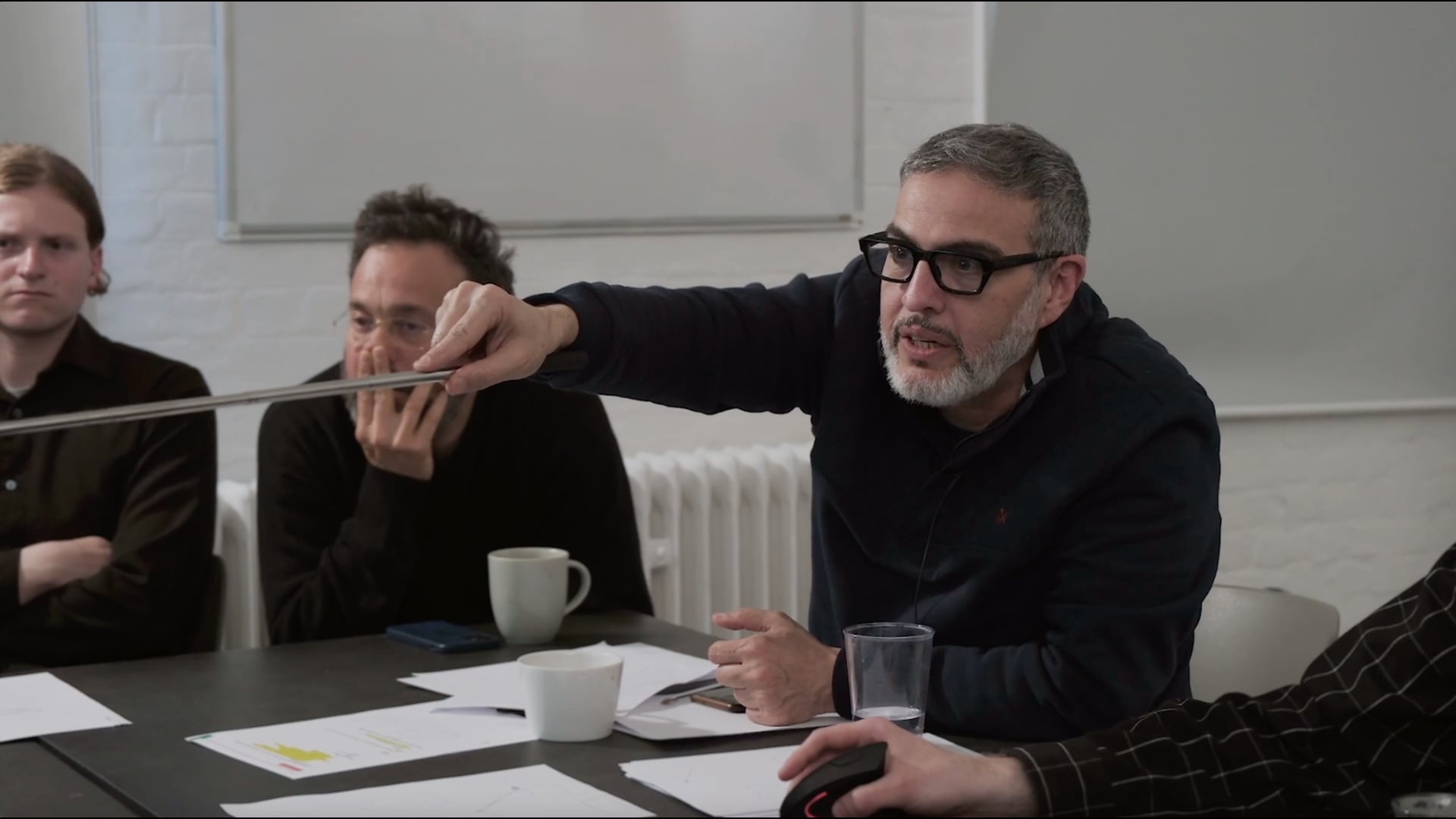
On 17 October 2023, a massive explosion at al-Ahli Hospital in Gaza City killed hundreds of civilians sheltering in a courtyard. Together with Dr Ghassan Abu-Sittah, a reconstructive surgeon working in the hospital when the blast occurred, we reconstructed the strike and its consequences.
I.116 The Architecture of Genocidal Starvation

Date of Incident
18 Mar 2025 - 1 Aug 2025
Location
Gaza, Occupied Palestinian Territories
Forums
United Nations, Parliamentary Inquiry
In Partnership With
World Peace Foundation
A ceasefire is not enough. The Israeli military’s weaponisation of aid and starvation to displace and destroy Palestinian society will not stop as long as Israel controls aid distribution. We show how Israel has imposed a deadly aid system through GHF ration stations, while dismantling a proven civilian-led model, to concentrate Palestinians in Rafah and push Gazan society toward collapse.
I.115 The Environmental Continuum of Genocide in Namibia

Date of Incident
1884 - Ongoing
Location
Namibia
Forums
Exhibition, Human Rights Report, Media
In Partnership With
Nama Traditional Leaders Association (NTLA), Ovaherero Traditional Authority (OTA)
The disappearance of Namibia’s grasslands is not a natural occurrence but rather can be traced back to German settler colonial practices following their genocidal campaign against the Nama and Ovaherero in the early 20th c. FA/Forensis worked with descendants of survivors to digitally reconstruct their ancestral lands, quantify environmental degradation, and trace colonialism’s enduring impact.
I.114 Shoot Me, I Bare My Chest: The Killing of Abu Sayed

Date of Incident
16 Jul 2024
Location
Rangpur, Bangladesh
Forums
Exhibition, Media
In Partnership With
Drik Picture Library
On 16 July 2024, police fatally shot a student, Abu Sayed, during mass protests over Bangladesh’s reinstated quota system. His extrajudicial killing became a symbol of resistance amid a broader uprising against authoritarianism, economic injustice, and systemic state violence.
SP.5 Police Violence and Misinformation at the 2025 Nakba Day Protest, Berlin
Supported Project

Date of Incident
15 May 2025
Location
Berlin
Forums
Media
An FA-supported project by
Forensis
Since October 2023, demonstrations in solidarity with the people of Palestine have been subjected to significant police violence, but also misinformation. Following the annual Nakba Day demonstration, Berlin Police claimed an officer had been severely injured by violent protesters. Our analysis of video evidence showed every one of their claims to be false.
I.113 Return to al-Ma'in

Date of Incident
14 May 1948 - Ongoing
Location
Al-Ma'in, Palestine
Forums
Media
In Partnership With
Palestine Land Society
With Palestinian historian and Nakba survivor Salman Abu Sitta, we reconstructed his birthplace, the village of al-Ma’in, to explore the story of its occupation and demolition by Zionist forces on 14 May 1948, and the settlements constructed on its ruins. Through al-Ma'in, we can view the continuation of the Nakba of 1948 through to the genocide of 2023.
SP.4 Escaping Libya's Detention Industry
Supported Project
Date of Incident
None
Location
Libya
Forums
Legal Process, Human Rights Report
An FA-supported project by
Forensis
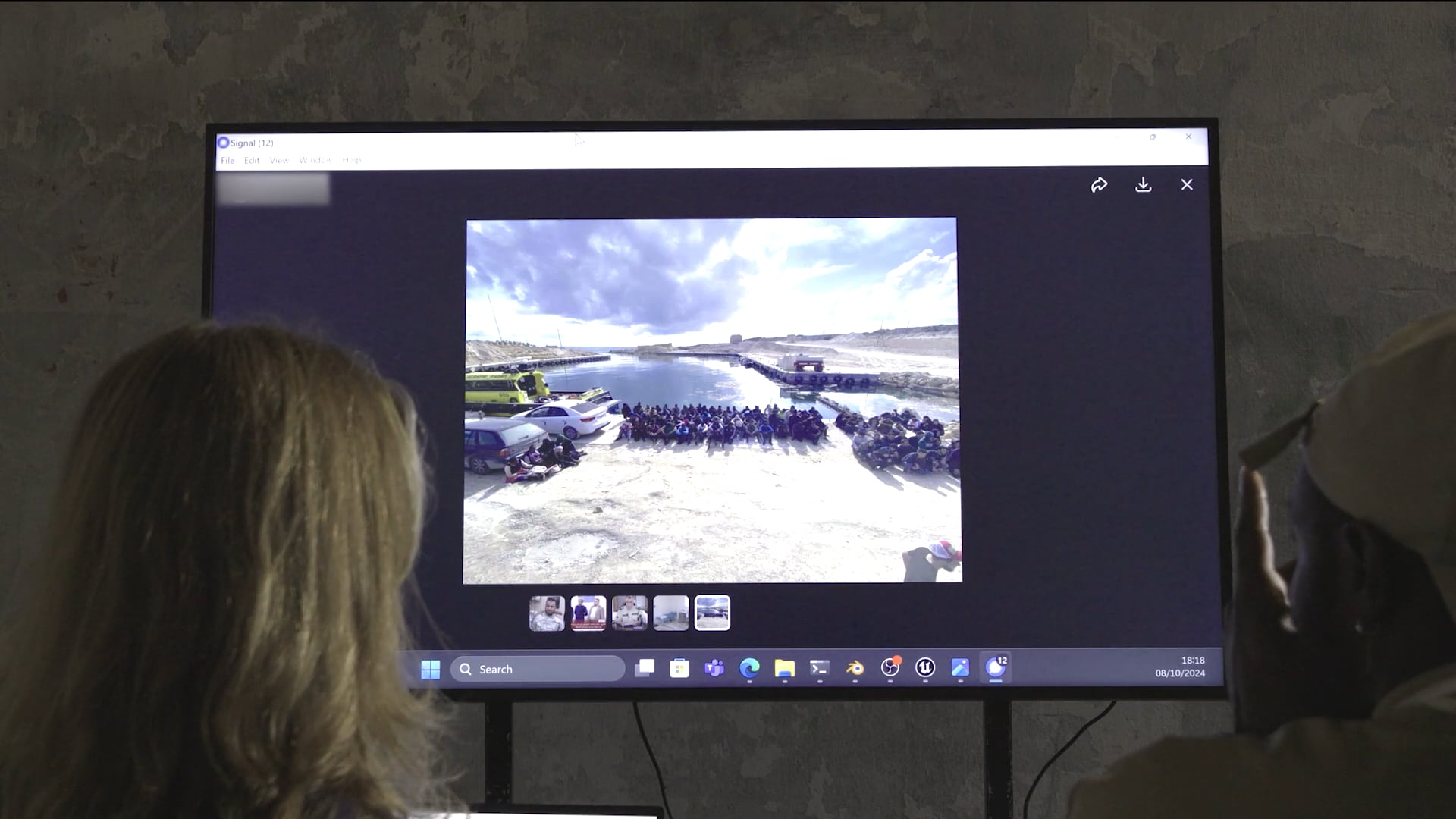
Countless migrants and refugees remain trapped in Libya’s network of brutal detention centres, tortured and mistreated. Through interviews with survivors and local experts, Forensis traces the evolution of state-affiliated detention centres out of people-trafficking networks, and their entanglement with EU support.
I.111 The Massacre at Tur Al-Zagh: Al-Dawayima, 29 October 1948
Date of Incident
29 Oct 1948
Location
Al-Dawayima, Palestine
Forums
Exhibition, Media
In Partnership With
Palestine Land Society
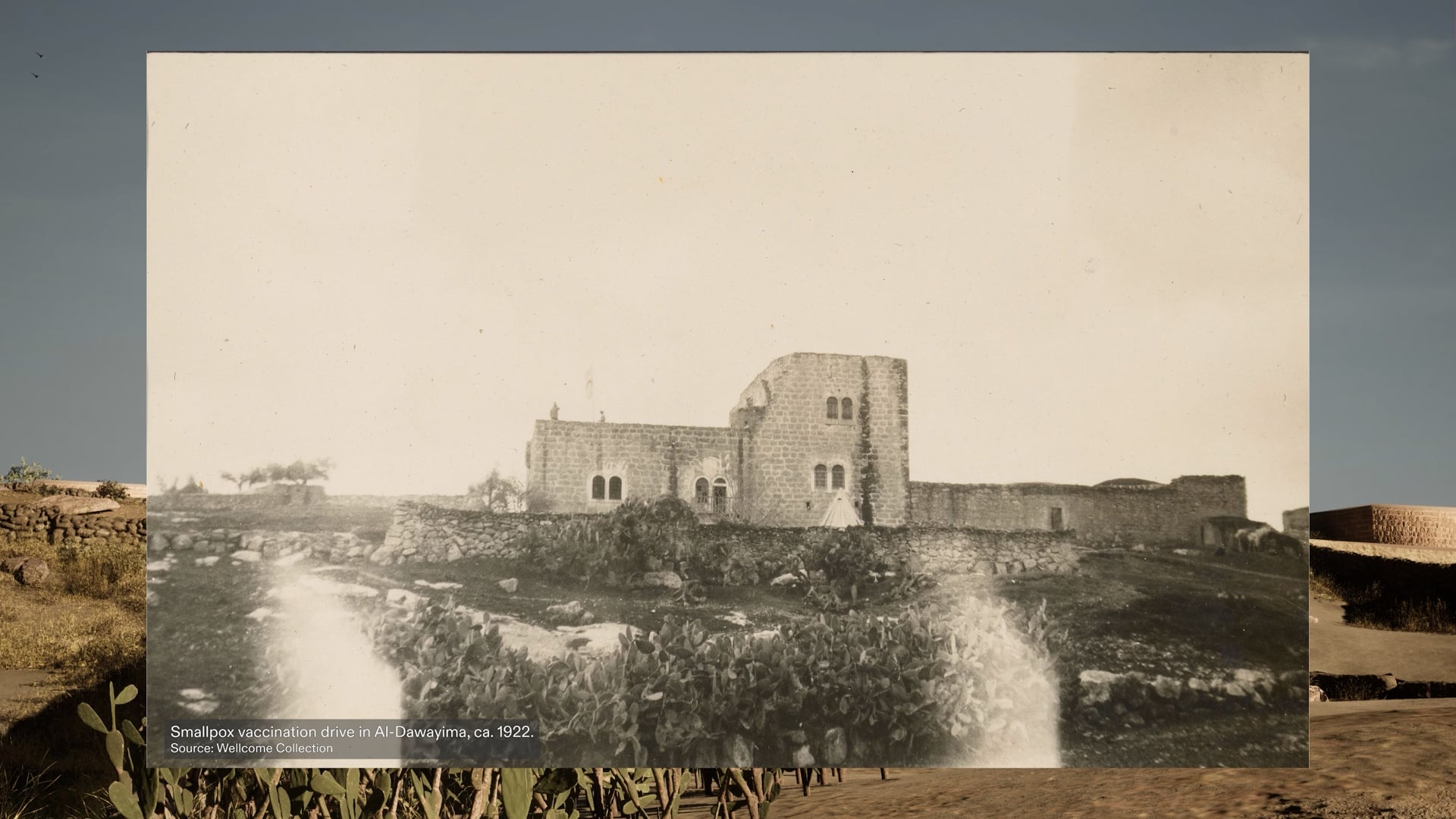
In collaboration with Palestine Land Society and working first-hand with Palestinian survivors of the 1948 Nakba, FA has uncovered new evidence related to a major massacre carried out by Israeli forces on 29 Oct 1948 in the village of al-Dawayima.
I.110 The Evros/Meriç River: A Century of Border Design
Date of Incident
1926 - 2025
Location
Evros/Meriç river, Greece/Turkey
Forums
Web Platform
In Partnership With
Self-Initiated
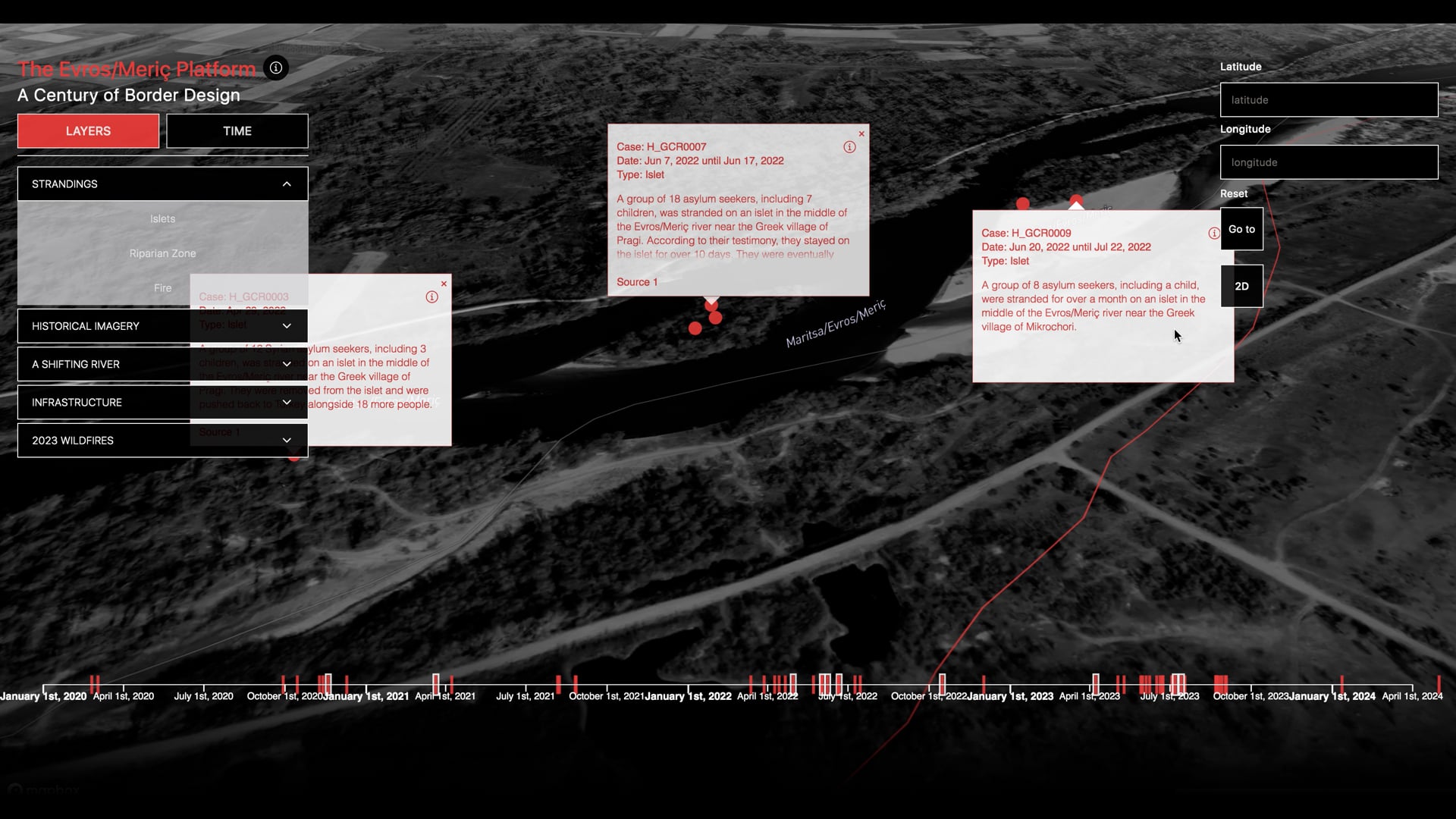
First drawn a century ago, the border that separates Greece from Turkey along the Evros/Meriç river at the EU’s southeastern frontier is deadlier and more opaque than ever. FA/Forensis built an interactive platform that unpacks this complex and lethal border infrastructure, and examines the present-day condition of the border against the transformation of the river landscape over the past century.
I.107 German Colonial Genocide in Namibia: Swakopmund
Date of Incident
1904 - 1908
Location
Swakopmund, Namibia
Forums
Exhibition, Media
In Partnership With
Nama Traditional Leaders Association (NTLA), Ovaherero Traditional Authority (OTA)
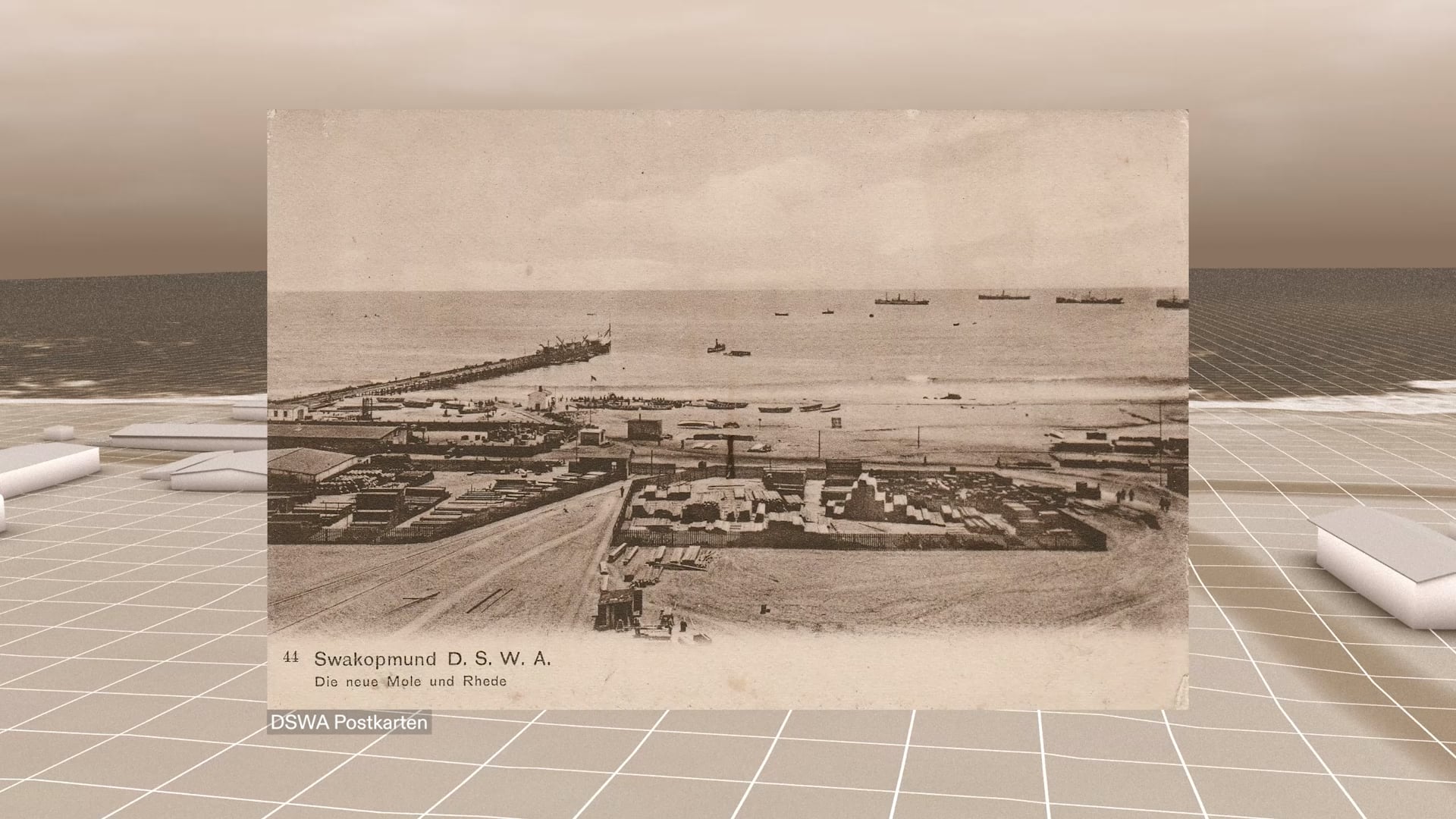
During their genocidal campaign against the indigenous Ovaherero and Nama, German colonial troops established concentration camps across today’s Namibia. The largest was in the port town of Swakopmund, a logistics hub built by forced labour. Working with local activists, we reconstructed the town as it was at that time, revealing the location of Swakopmund's concentration camp for the first time.
I.106 Chemical Fire at Marathon Refinery
Date of Incident
24 Aug 2023 - 28 Aug 2023
Location
Garyville, Louisiana, USA
Forums
Media, Web Platform
In Partnership With
The Guardian, Earthjustice, Healthy Gulf, Louisiana Bucket Brigade, The Descendants Project, Boundless Community Action
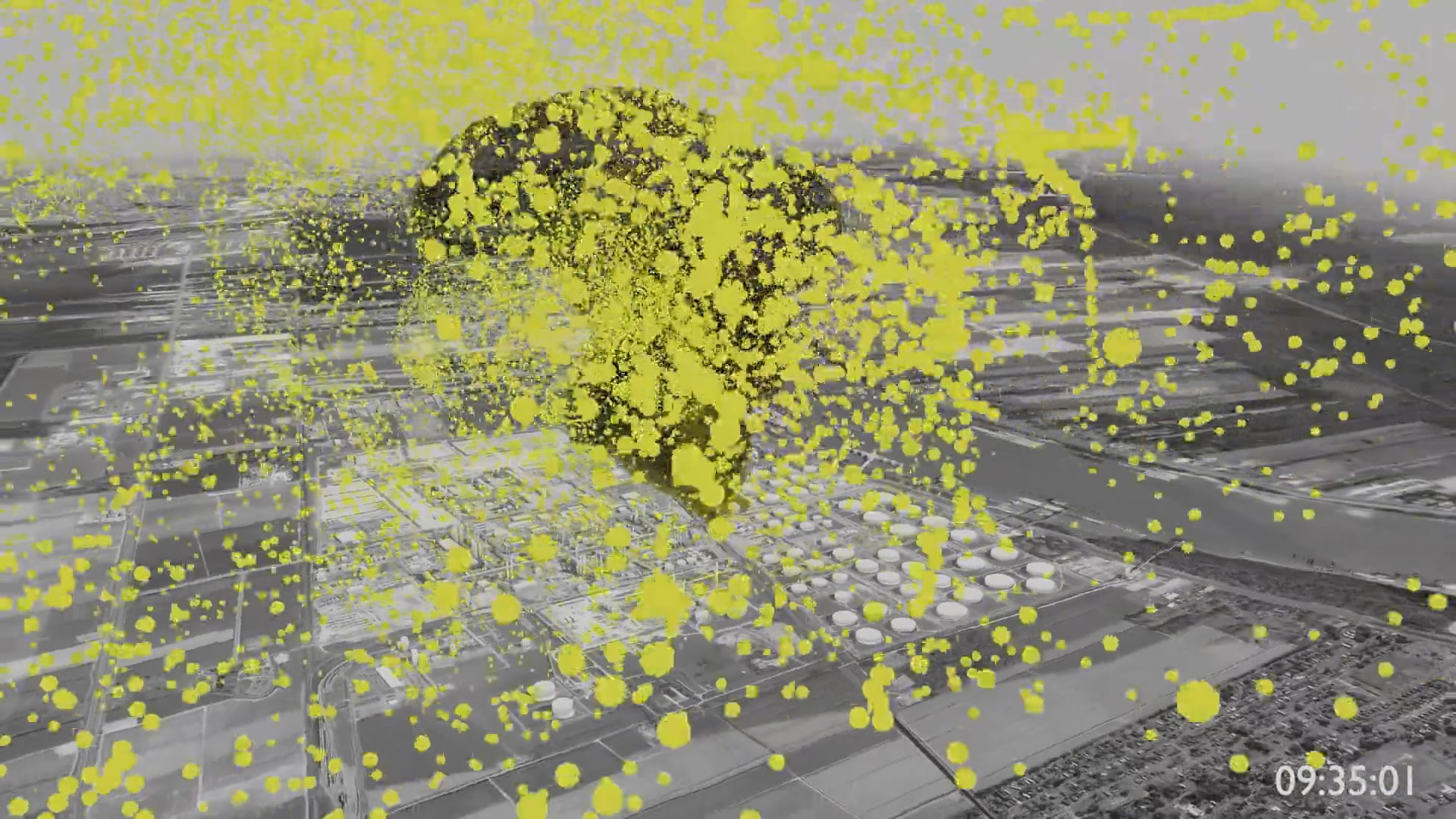
When a leaking petrochemical tank at the Marathon Petroleum refinery in Louisiana’s ‘Cancer Alley’ caught fire, it produced a thick plume of toxic smoke that spread for miles over neighbouring communities. Authorities claimed that nearby residents were unaffected, even as reports of severe health impacts emerged. Fearing a cover-up, some of those residents asked FA to investigate.
I.105 German Colonial Genocide in Namibia: Shark Island
Date of Incident
1905 - 1908
Location
Lüderitz, ǃNamiǂNûs, ǁKharas region, Namibia
Forums
Exhibition, Human Rights Report, Media
In Partnership With
Ovaherero Traditional Authority (OTA), Nama Traditional Leaders Association (NTLA)
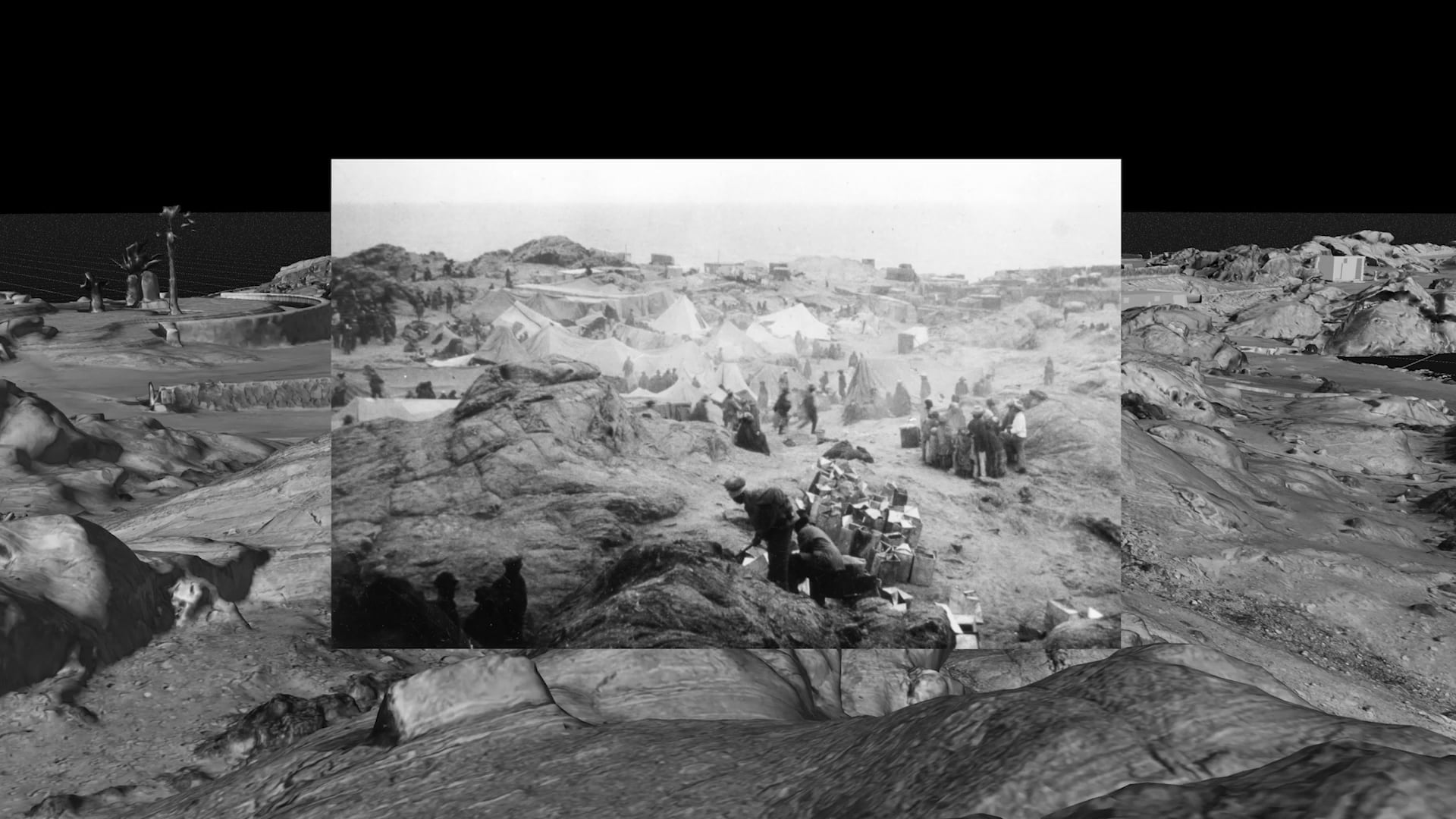
During their genocidal campaign against the Ovaherero and Nama between 1904 and 1908, German colonial troops established five concentration camps across German Southwest Africa. Shark Island, also known as ‘Death Island’, was the most notorious. FA and Forensis worked with descendants of the camp’s victims and survivors to reconstruct this space of trauma, which today faces new threats of erasure.
I.104 The Killing of Hind Rajab
Date of Incident
29 Jan 2024
Location
Gaza City, Gaza
Forums
Media
Commissioned By
Al Jazeera
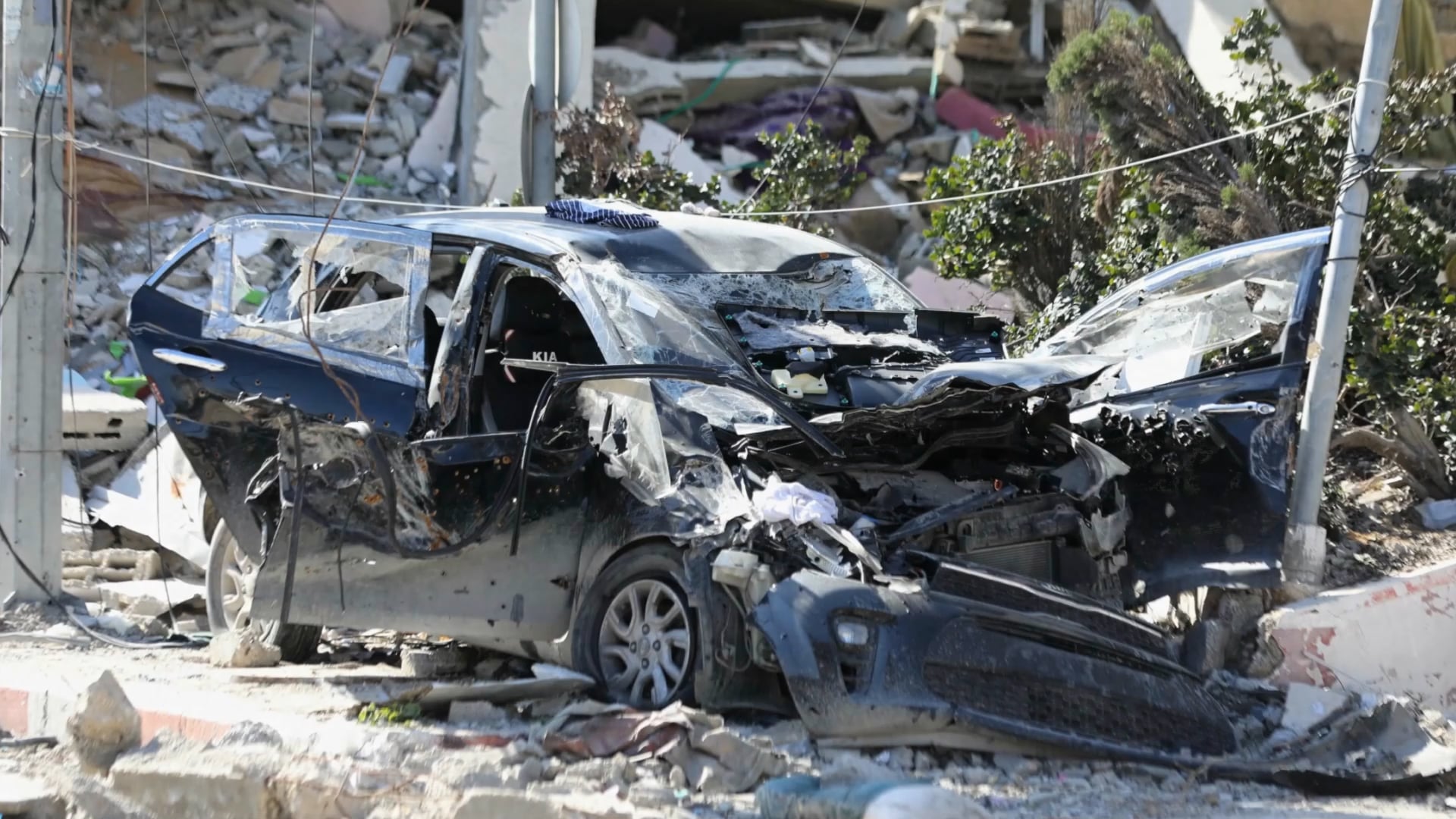
On 29 January 2024, in Gaza City, Hind Rajab, a six-year-old Palestinian girl, pleaded over the phone for emergency workers to rescue her from a bullet-ridden car. Her body was found two weeks later, alongside the bodies of six of her family members. FA was asked by Al Jazeera’s Fault Lines to investigate the circumstances of their killing.
I.103 The Grenfell Tower Fire: Situated Testimonies
Date of Incident
14 Jun 2017
Location
Grenfell Tower, North Kensington, London
Forums
Citizens' Tribunal, Media
Commissioned By
A coalition of lawyers representing bereaved families, survivors and affected local residents
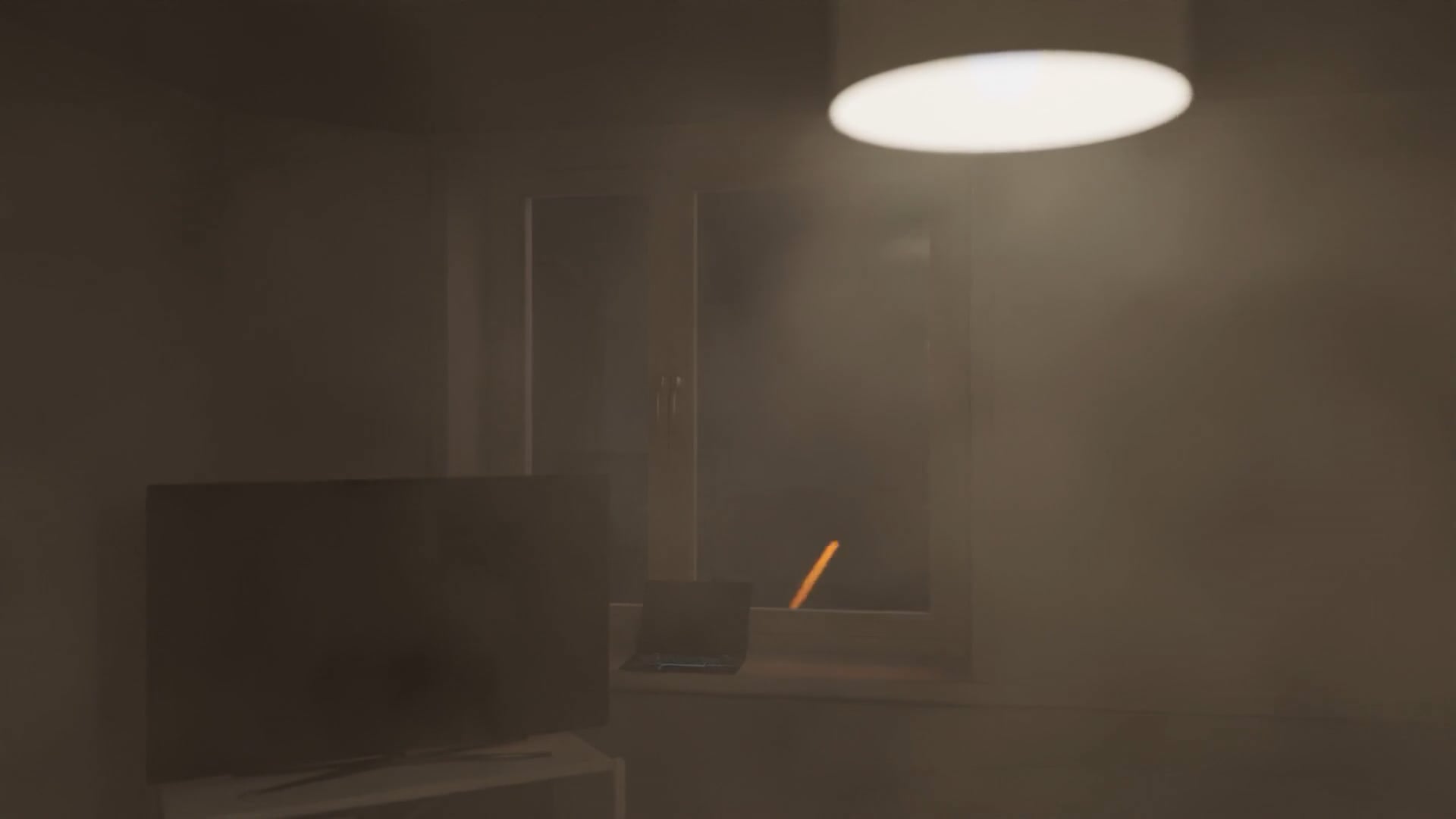
The Grenfell Tower Fire was a generational tragedy for London and the UK, ultimately claiming 72 lives. Using a technique called 'situated testimony', we produced seven video interviews with bereaved family members, survivors, and nearby residents, aided by a 3D model of the tower and its surrounding environment. These interviews were screened for the first time as part of Grenfell Testimony Week.
I.102 German Colonial Genocide in Namibia: The Hornkranz Massacre
Date of Incident
12 April 1893
Location
Hornkranz, Khomas Region, Namibia
Forums
Exhibition, Human Rights Report, Media
In Partnership With
Nama Traditional Leaders Association (NTLA), Ovaherero Traditional Authority (OTA), Forensis
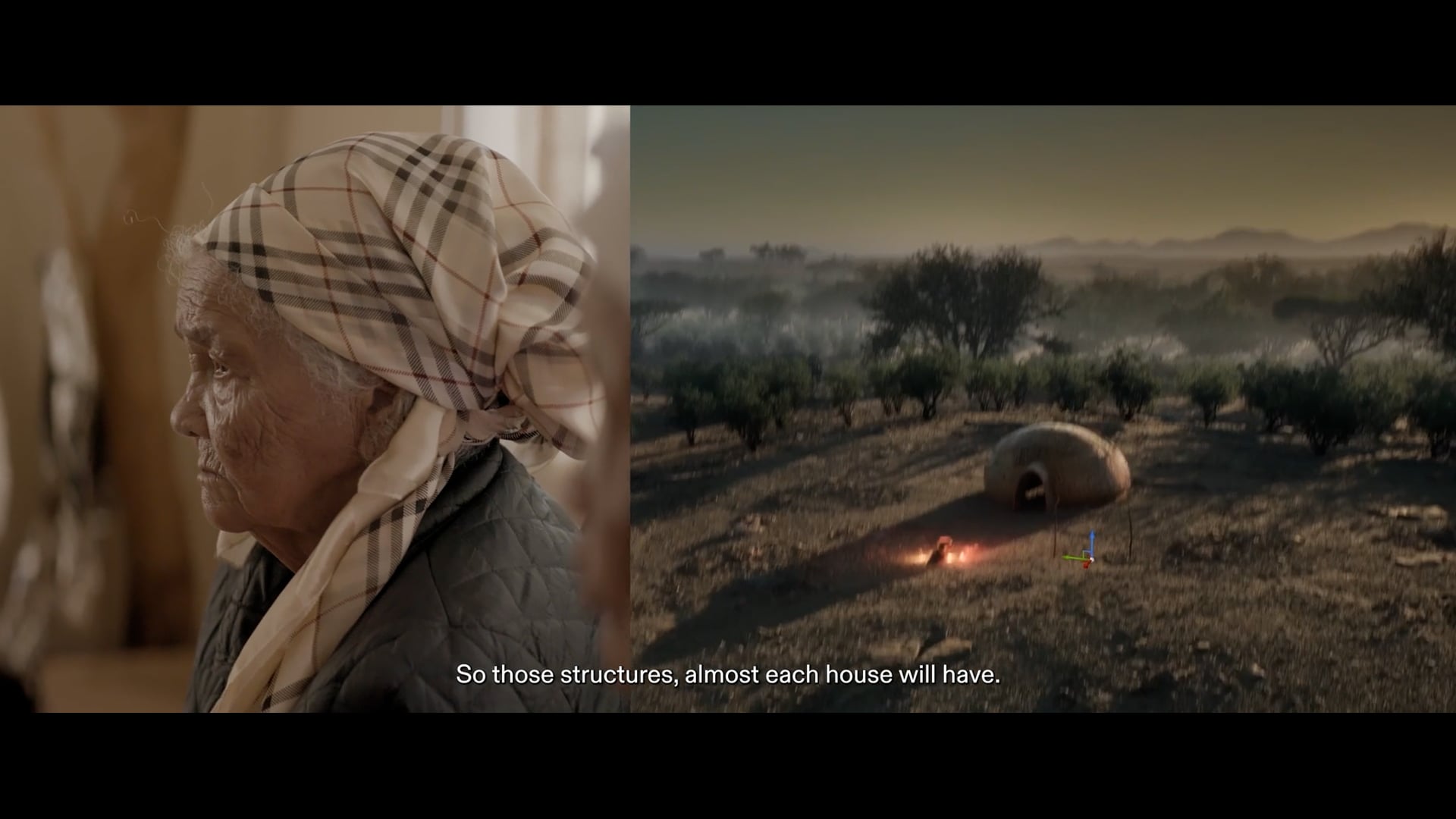
On 12 April 1893, German troops attacked the Nama settlement of ||Nâ‡gâs, also known as Hornkranz, located in present-day Namibia. This was the little-known first chapter in a genocidal campaign against the Nama and Ovaherero that culminated between 1904 and 1908. We worked with descendants to reconstruct the lost settlement and support Nama claims for access to and preservation of the site.
SP.3 German Arms Exports to Israel
Supported Project
Date of Incident
07.10.2023 - Ongoing
Location
Germany, Israel, Palestine
Forums
Legal Process, Human Rights Report
An FA-supported project by
Forensis
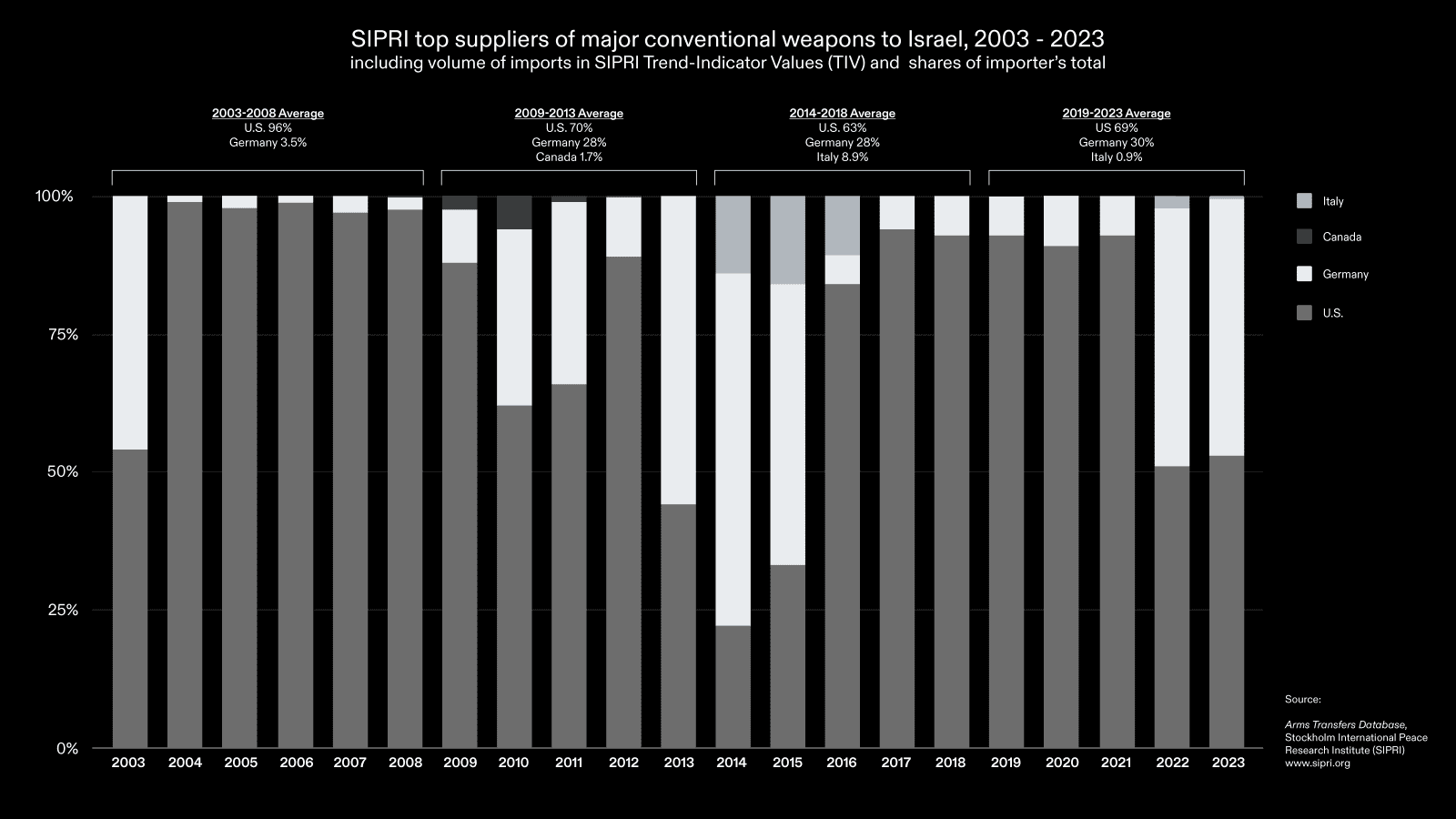
Despite widespread recognition of the growing risk of genocide in Gaza, Germany continues to offer military support to Israel through the supply of arms. Our report on past, current, and potential future arms export licences and deliveries from Germany to Israel supports an urgent application filed by Berlin-based lawyers on behalf of Palestinians in Gaza to stop all such exports.
I.101 ‘No traces of life’: Israel’s Ecocide in Gaza 2023-2024
Date of Incident
7 Oct 2023 - Ongoing
Location
Gaza
Forums
Legal Process, Media
Commissioned By
Self-Initiated
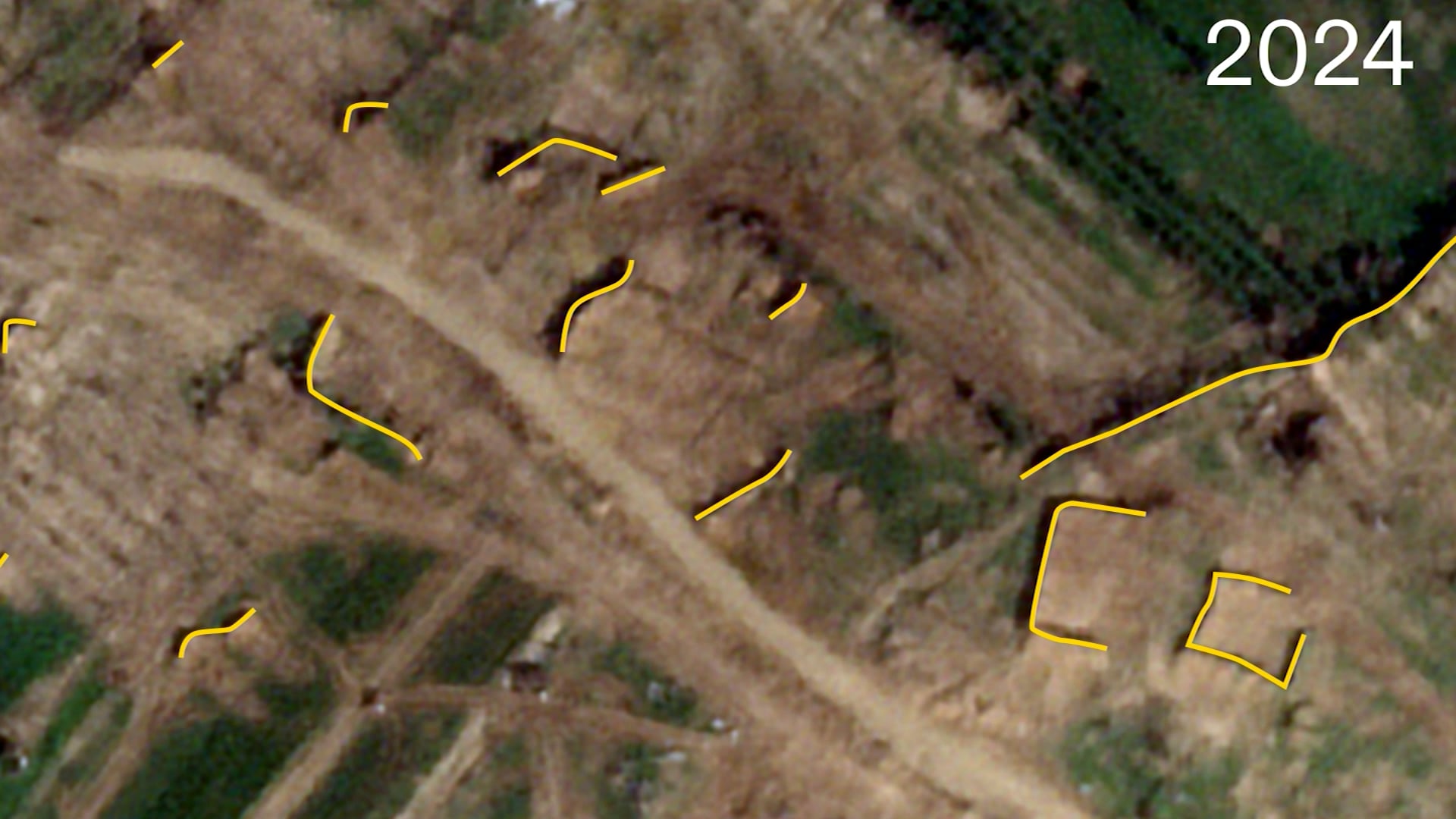
Since October 2023, the Israeli military has systematically targeted agricultural land and infrastructure in Gaza. Marking the occasion of Land Day in Palestine, our investigation reveals that the widespread destruction of orchards and greenhouses in Gaza is a deliberate act of ecocide that supports Israel’s genocidal campaign.
I.100 Humanitarian Violence in Gaza
Date of Incident
7 Oct 2023 - Ongoing
Location
Gaza, Occupied Palestinian Territories
Forums
Legal Process, Human Rights Report, Web Platform
Commissioned By
Self-Initiated
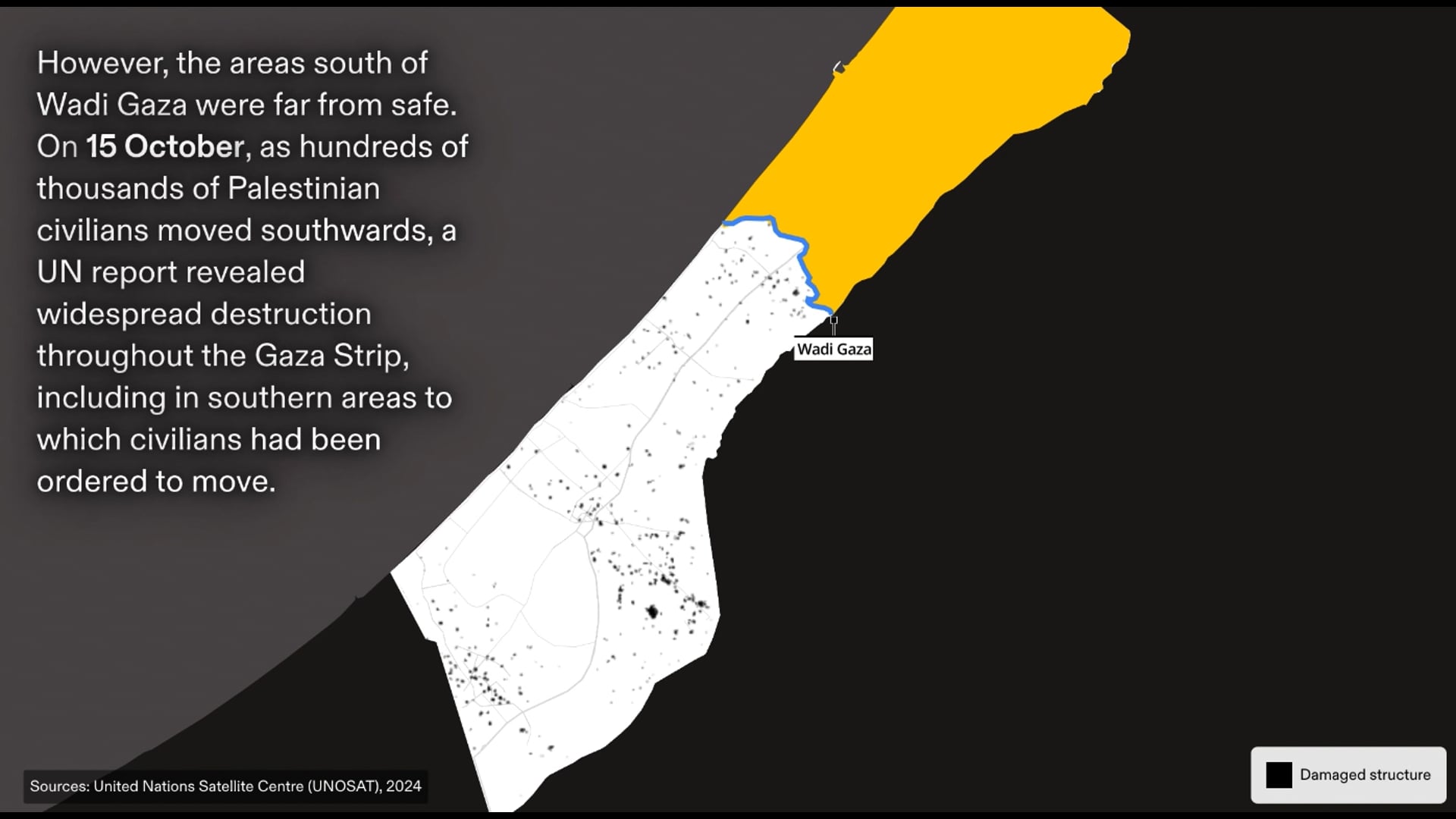
Since 7 October 2023, the Israeli military has abused and weaponised humanitarian measures such as ‘evacuation orders’, ‘safe routes’, and ‘safe zones’ to facilitate the systematic mass displacement of the Palestinian civilian population toward the southern border of Gaza.
I.99 An Assessment of Visual Material Presented by the Israeli Legal Team at the ICJ

Date of Incident
12 Jan 2024
Location
None
Forums
Legal Process
Commissioned By
Self-Initiated
Forensic Architecture’s analysis of the visual material presented by the Israeli legal team at the ICJ hearing on 12 January 2024 found multiple instances of misrepresentation, mislabelling, and misleading descriptions.
I.98 The Murder of June Knightly
Date of Incident
19 Feb 2022
Location
Normandale Park, Portland, Oregon
Forums
Exhibition, Media
Commissioned By
Self-Initiated
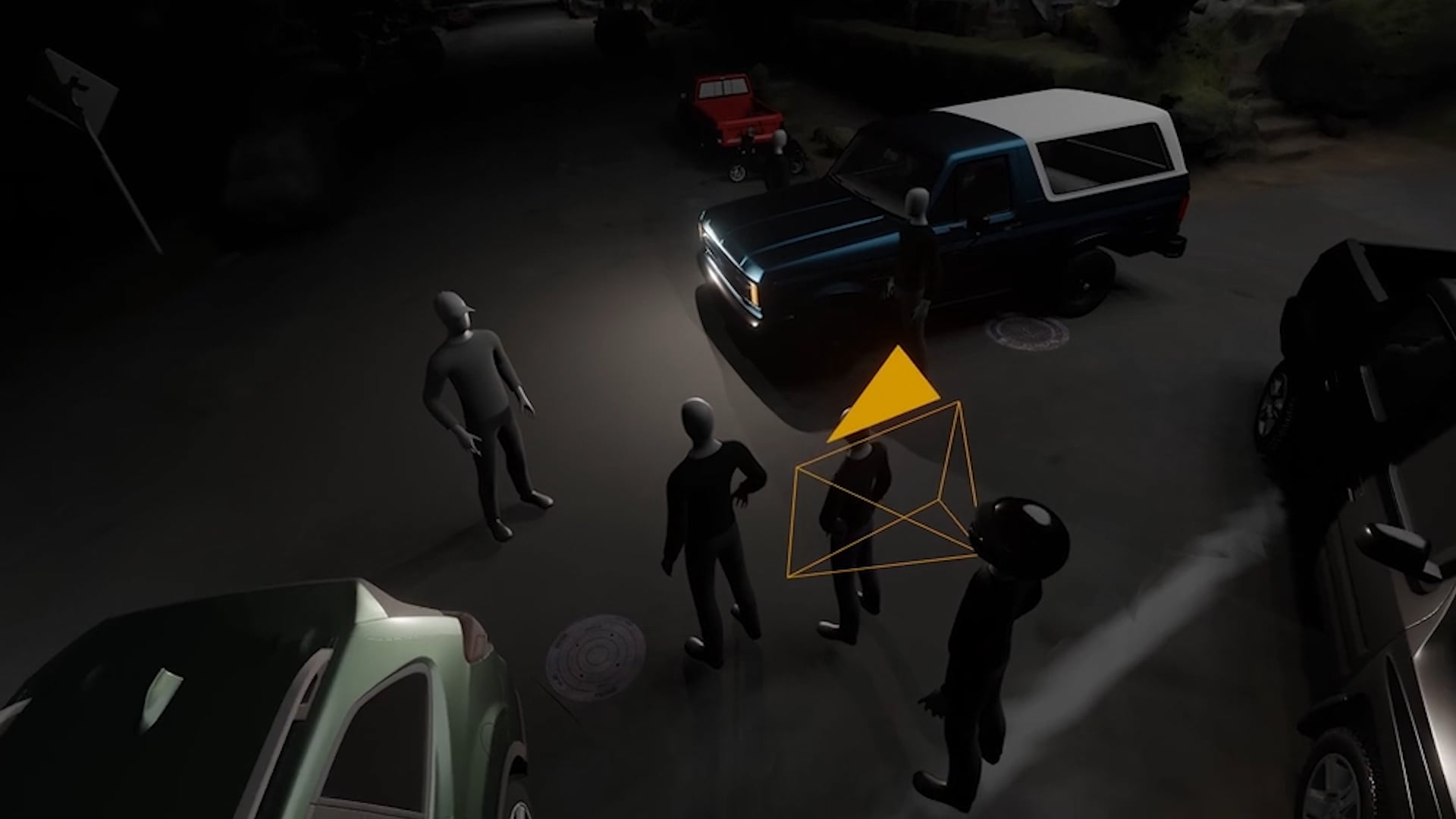
June 'T-Rex' Knightly was murdered while preparing to protect a racial justice protest, by a perpetrator inspired by toxic rhetoric from right-wing influencers and politicians. Four others were seriously wounded. False statements by Portland’s police after the attack implied the victims provoked the mass shooting. We worked with survivors to reconstruct the event, and challenge the police account.
I.84 Drift-backs in the Aegean Sea
Date of Incident
March 2020 - Ongoing
Location
Aegean Sea
Forums
Legal Process, Human Rights Report, Media, Parliamentary Inquiry, Web Platform
In Partnership With
Forensis
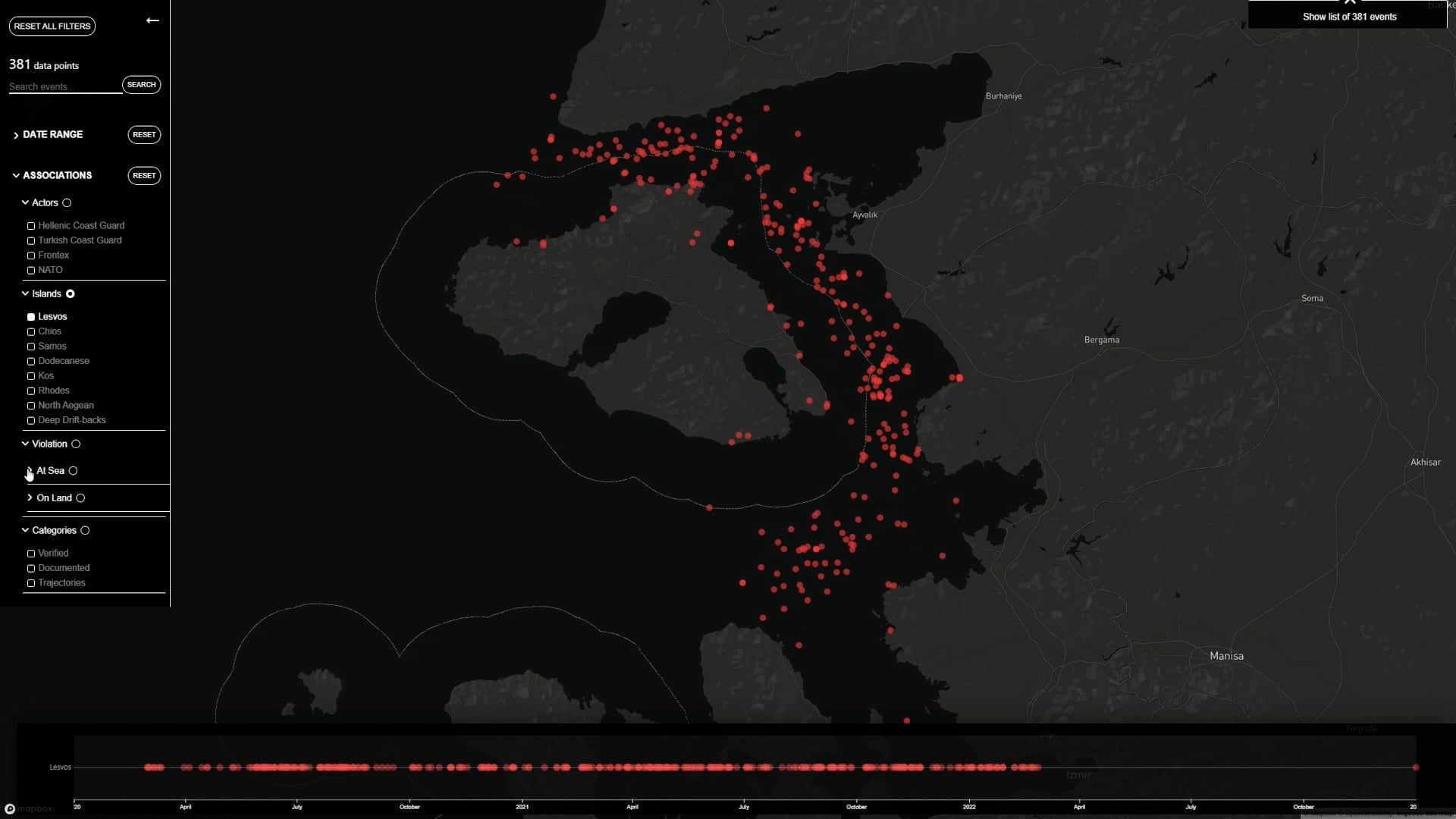
Asylum seekers crossing the Aegean Sea are intercepted within Greek waters or arrested after they arrive on Greek shores, beaten, stripped of their possessions, and then forcefully loaded onto life rafts and left to drift back to the Turkish coast. FA/Forensis verified and mapped evidence for over 2000 such ‘drift-backs’, demonstrating the scale of this violent and illegal border defence practice.
I.97 Destruction of Medical Infrastructure in Gaza
Date of Incident
7 Oct 2023 - Ongoing
Location
Gaza, Palestine
Forums
Legal Process, United Nations, Human Rights Report, Media, Web Platform
Commissioned By
Self-Initiated
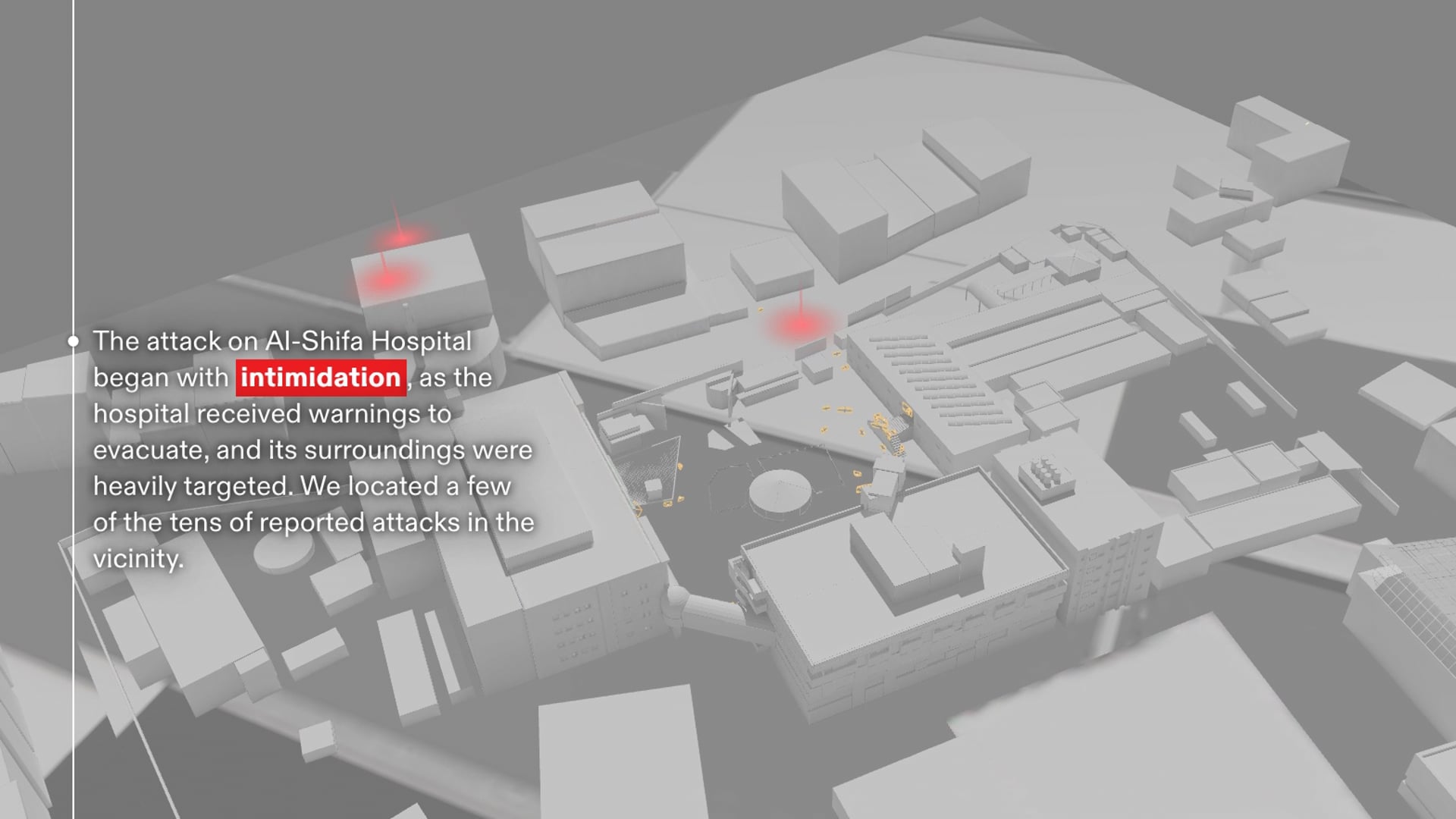
Since 7 October 2023, we have aggregated news reports of Israeli military attacks on medical infrastructure in Gaza. Our analysis suggests that hospitals in Gaza have been subjected to a pattern of intimidation, direct targeting, siege, and occupation by the Israeli military over the course of the 2023 invasion.
I.96 The Killing of Sammy Baker
Date of Incident
13 Aug 2020
Location
Amsterdam-West, Netherlands
Forums
Legal Process, Media
In Partnership With
Argos (VPRO)
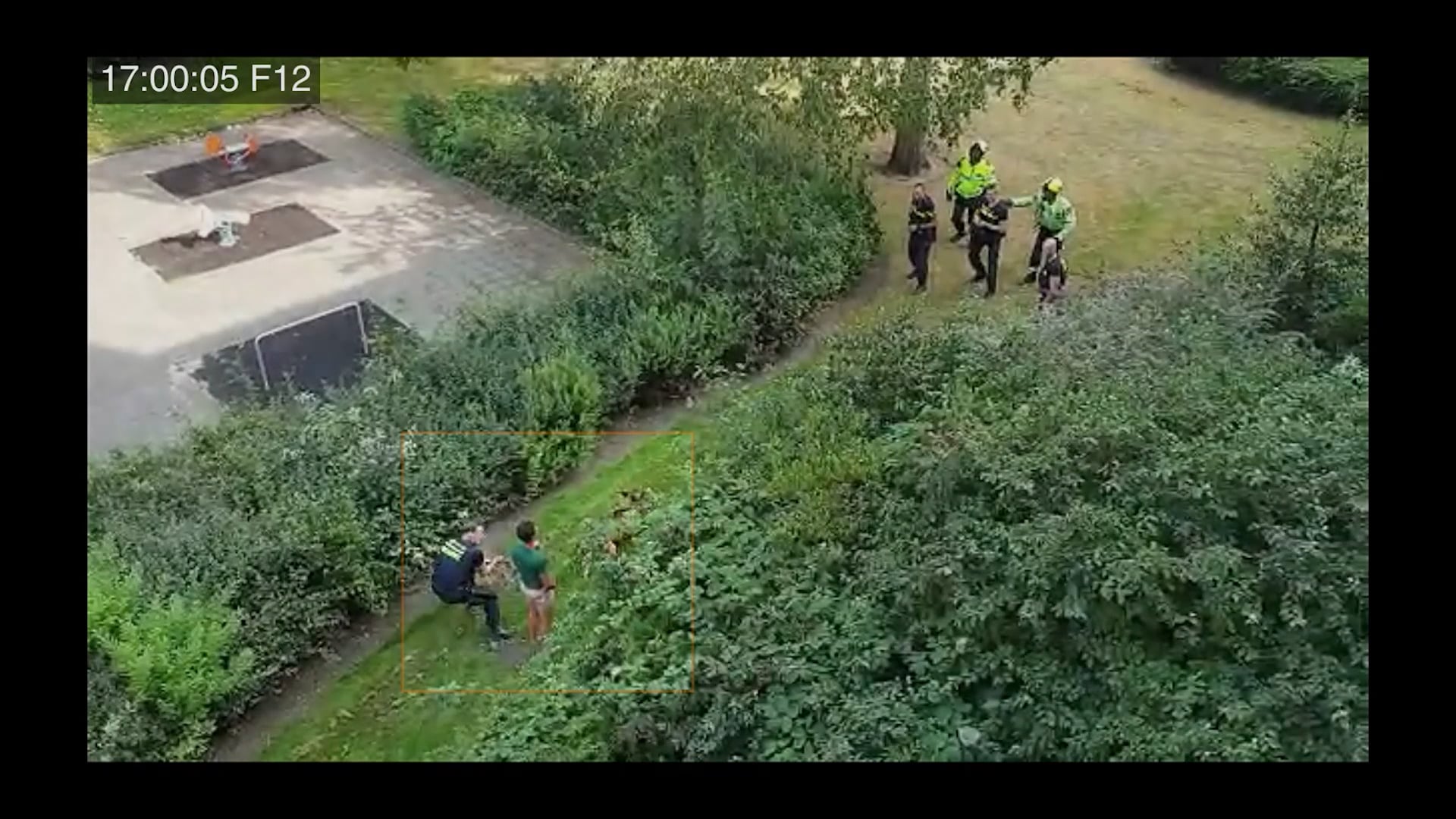
23-year-old Sammy went to Amsterdam to celebrate his birthday with friends. Three days later, after an episode of mental health crisis, Sammy was shot to death by police, who claim he threatened them with a knife. At the request of Sammy's family, FA and Forensis examined the video evidence and police testimony, while reconstructing Sammy's body position at the moment of the shots.
I.95 The Killing of Dilan Cruz
Date of Incident
1 Nov 2019
Location
Bogotá, Colombia
Forums
Legal Process
Commissioned By
Fundación Comité de Solidaridad con los Presos Políticos (CSPP)
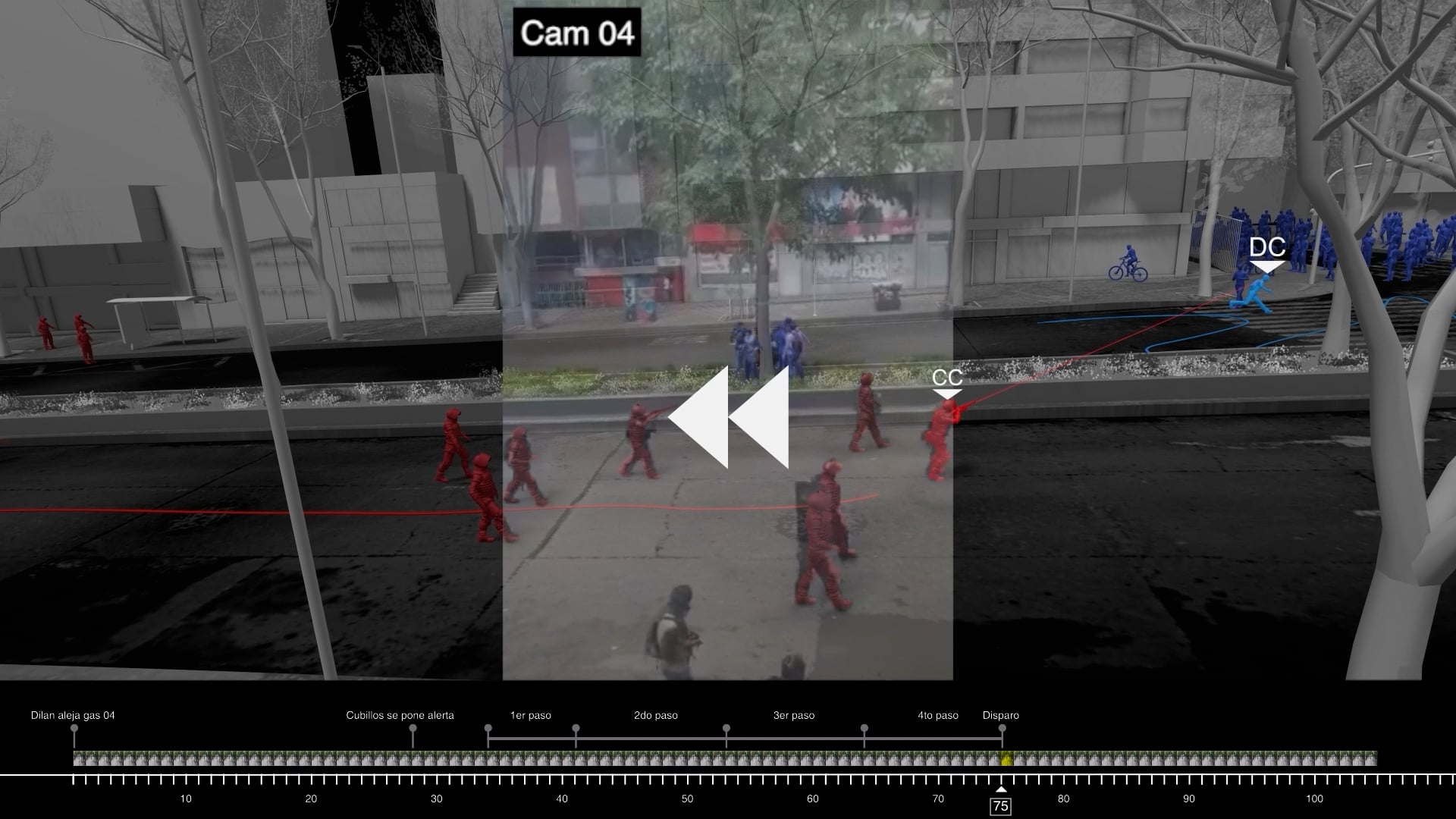
During the 2019 'national strike' demonstrations in Colombia, 18-year-old protester Dilan Cruz was shot by a bean bag round fired by police in Bogotá, and died two days later. The Colombian Attorney General subsequently published a report defending the killing and accusing Cruz of being part of a mob; our investigation shows how this conclusion derives from a misreading of the visual evidence.
I.95 The Pylos Shipwreck
Date of Incident
13 Jun 2023 - 14 Jun 2023
Location
Mediterranean Sea, Greece
Forums
Media, Web Platform
Commissioned By
Self-Initiated
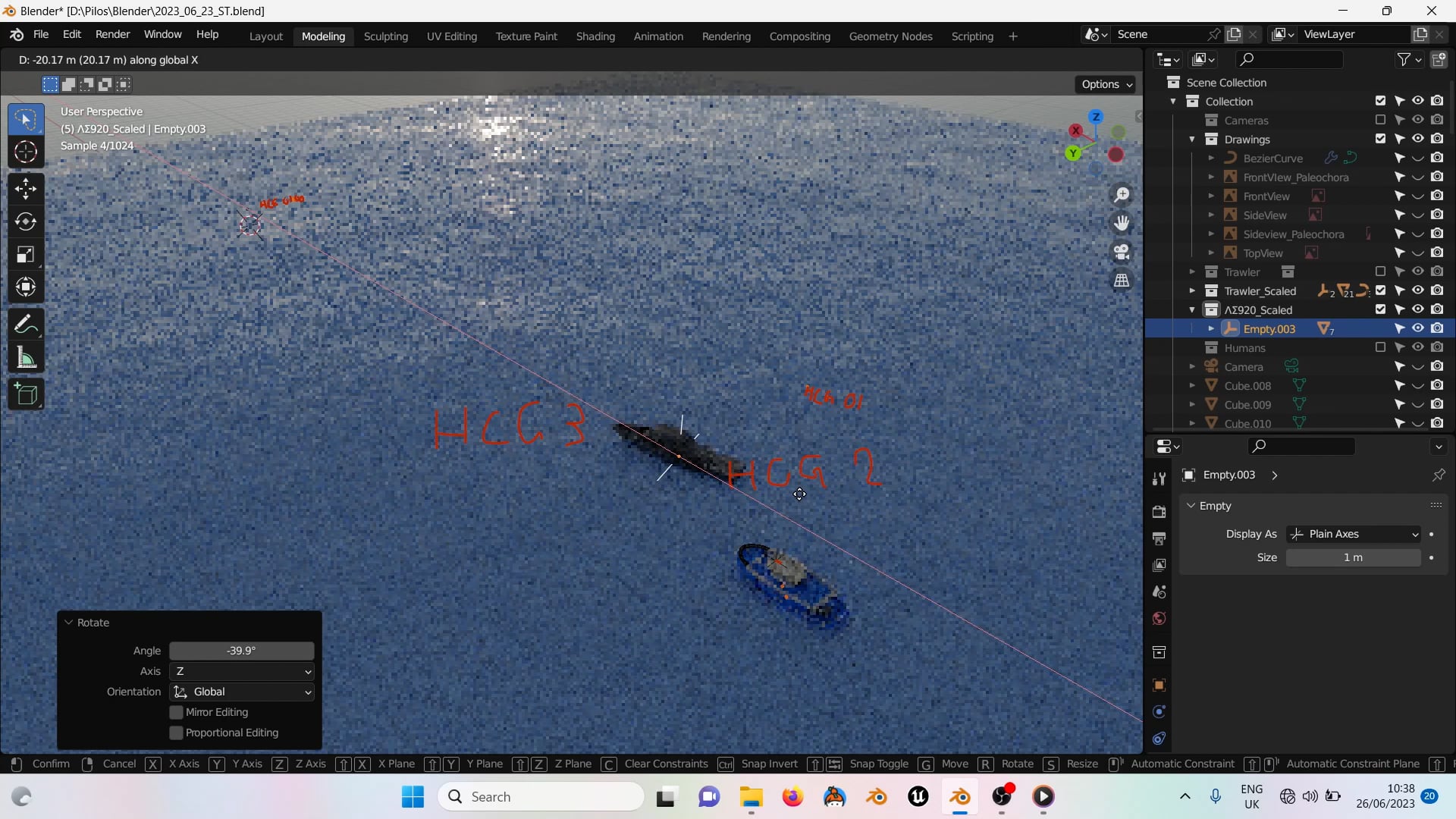
On 14 June 2023, a boat carrying hundreds of migrants sank inside the Greek search and rescue zone in the Mediterranean Sea—the deadliest migrant shipwreck in recent history. Our digital reconstruction of the boat and mapping of its trajectory reveal inconsistencies in the Hellenic Coast Guard’s (HCG) account and indicate that over 600 people drowned as the result of a failed towing by the HCG.
I.94 Executions and Mass Graves in Tantura, 23 May 1948
Date of Incident
22 May 1948
Location
Tantura, Palestine
Forums
Legal Process, Media
Commissioned By
Adalah Legal Center for Arab Minority Rights
Our investigation reveals new evidence about massacres conducted in the Palestinian village of Tantura by Israeli forces after its occupation on 22-23 May 1948 and subsequent depopulation. Launched on the 75th anniversary of the Nakba, it brings together testimonies and photographic evidence to locate several mass graves in which the victims were buried—including one previously unidentified.
I.93 The Nebelivka Hypothesis
Date of Incident
3500 BC - Ongoing
Location
Nebelivka, Ukraine
Forums
Exhibition
In Partnership With
David Wengrow
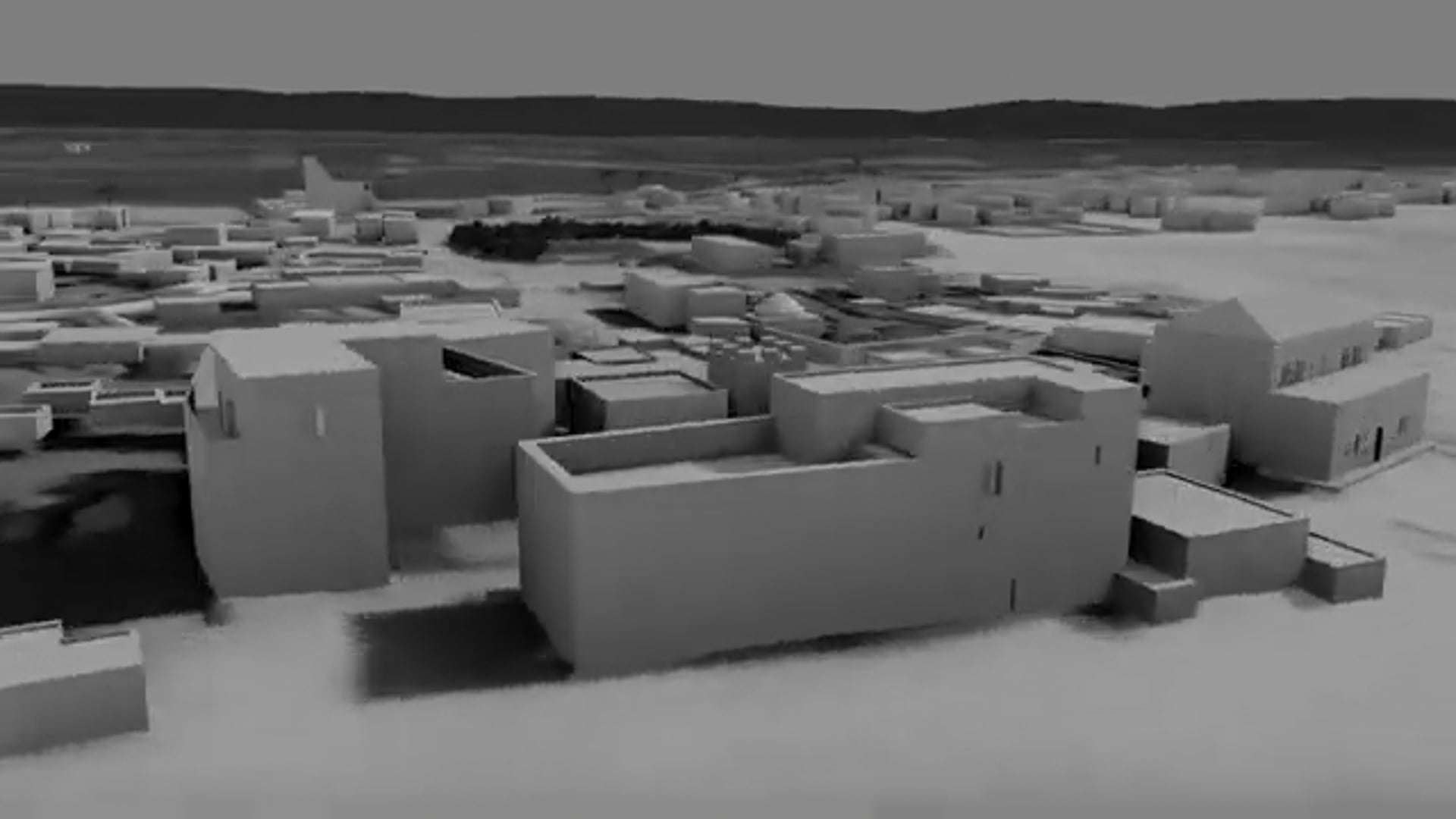
In partnership with David Wengrow, this project combines archaeological science with the tools of Forensic Architecture to examine the 6,000-year-old remains of the city of Nebelivka. By reading the soil as an archaeological artefact in its own right, a lost tradition of urban life is unearthed, offering a lens through which to interrogate core assumptions about urban space, power, and ecology.
I.92 'Tear Gas Tuesday' in Downtown Portland
Date of Incident
2 Jun 2020
Location
Portland, Oregon, USA
Forums
Legal Process, Exhibition, Media
Commissioned By
Self-Initiated
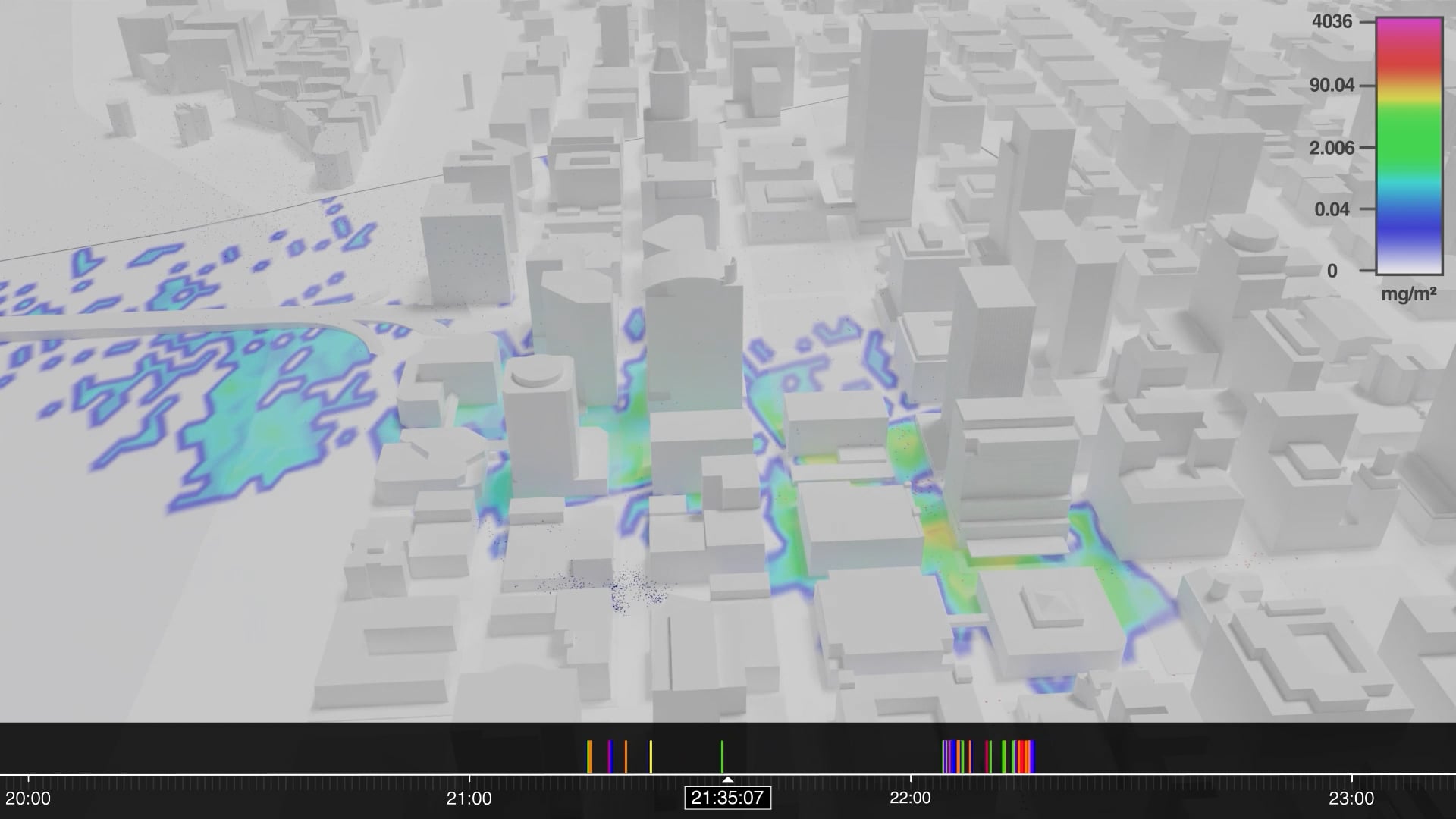
Over the summer of 2020, Portland's police force deployed large amounts of tear gas to suppress local demonstrations against racialised police violence. Focusing on a single representative day—2 June 2020—we simulated the path of the toxic tear gas clouds as they spread widely across the city centre, demonstrating that the concentration levels were in serious excess of recognised safe thresholds.
SP.1 A City Within a Building: The Mariupol Drama Theatre
Supported Project
Date of Incident
24 Feb 2022 - 16 Mar 2022
Location
Donetsk Academic Regional Drama Theatre, Mariupol, Ukraine
Forums
Media
An FA-supported project by
The Center for Spatial Technologies (CST), Forensis
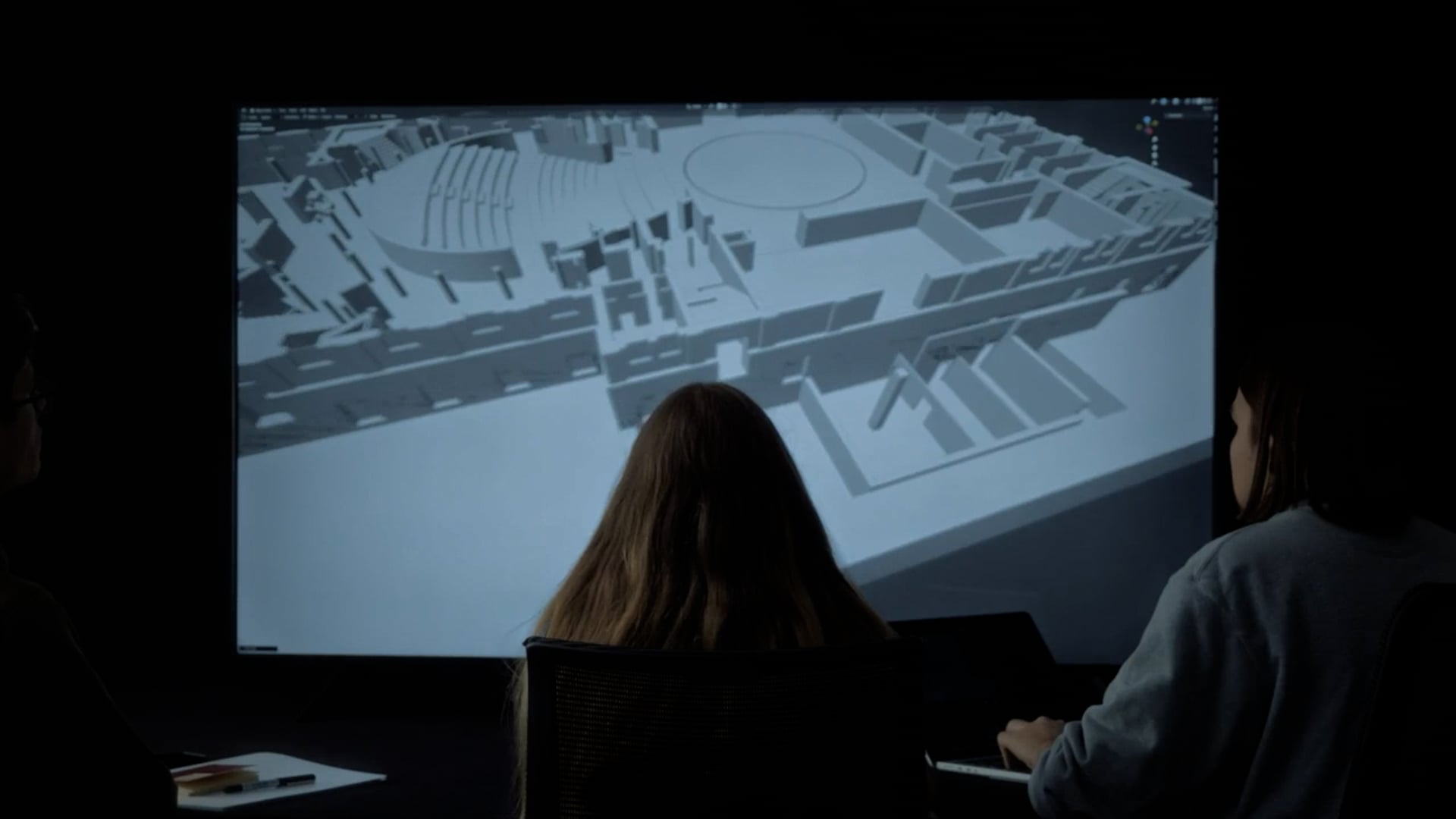
Before it was destroyed by a Russian airstrike, the Mariupol Theater was not only a key refuge in the besieged city but a unique site of solidarity and resistance. Working with Forensis and FA, the Center for Spatial Technologies assembled a vast archive of evidence and interviewed survivors of the strike to tell the story of a self-organised commune: a city within a building.
I.91 Fire in Moria Refugee Camp
Date of Incident
8 Sep 2020
Location
Lesvos, Greece
Forums
Legal Process, Exhibition, Media
Commissioned By
Lawyers for the Moria 6
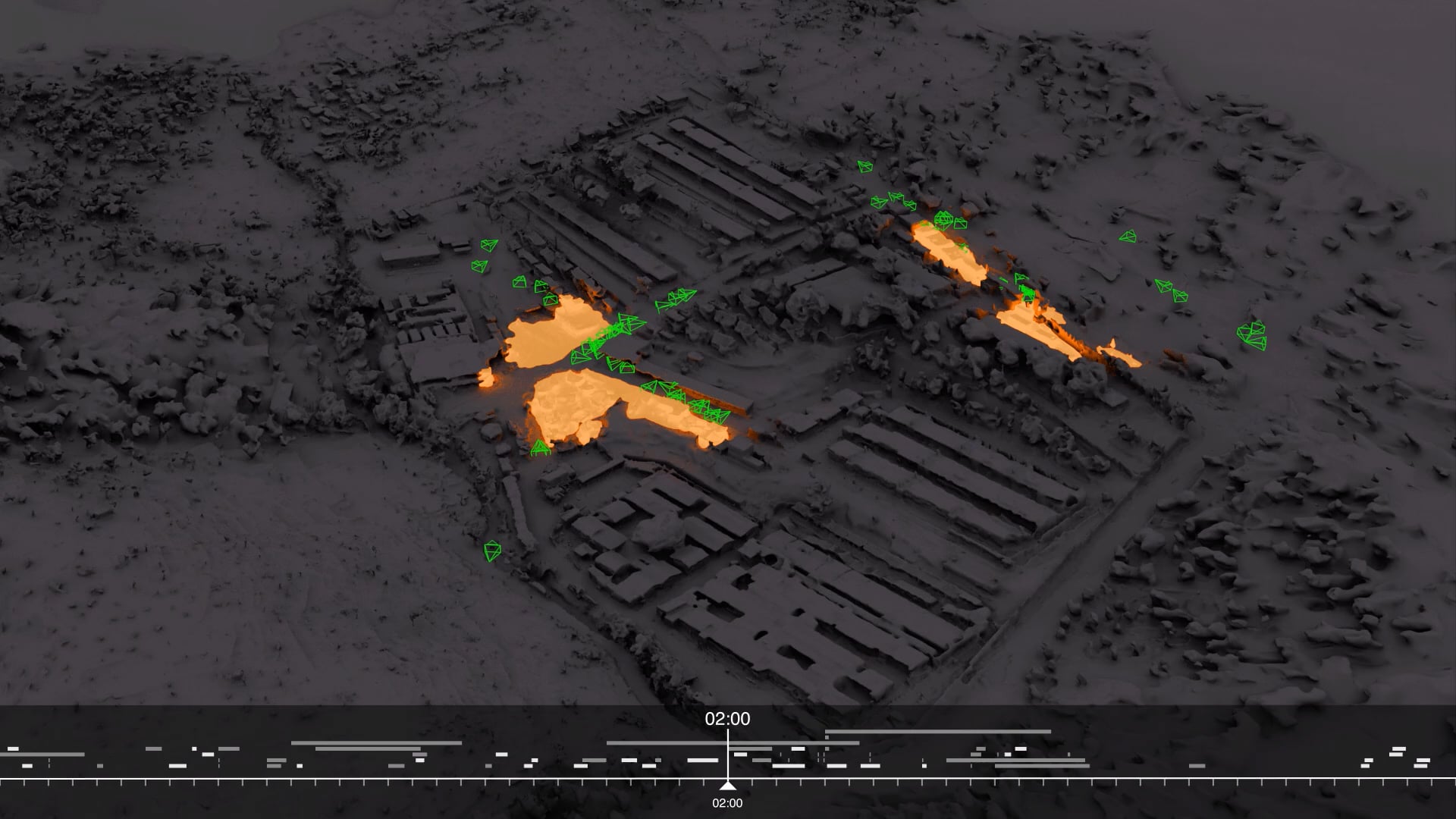
The fire which destroyed the Moria refugee camp on the Greek island of Lesvos was at least the 247th outbreak to have occurred in and around the overcrowded camp since 2013. Six young asylum seekers who came to be known as the 'Moria 6' were accused of arson and jailed. FA and Forensis reconstructed the fire’s spread, casting significant doubt on the basis for those convictions.
I.90 The Beirut Port Explosion: Destruction of Destruction
Date of Incident
4 Aug 2020 - Ongoing
Location
Beirut, Lebanon
Forums
None
In Partnership With
Febrayer Network
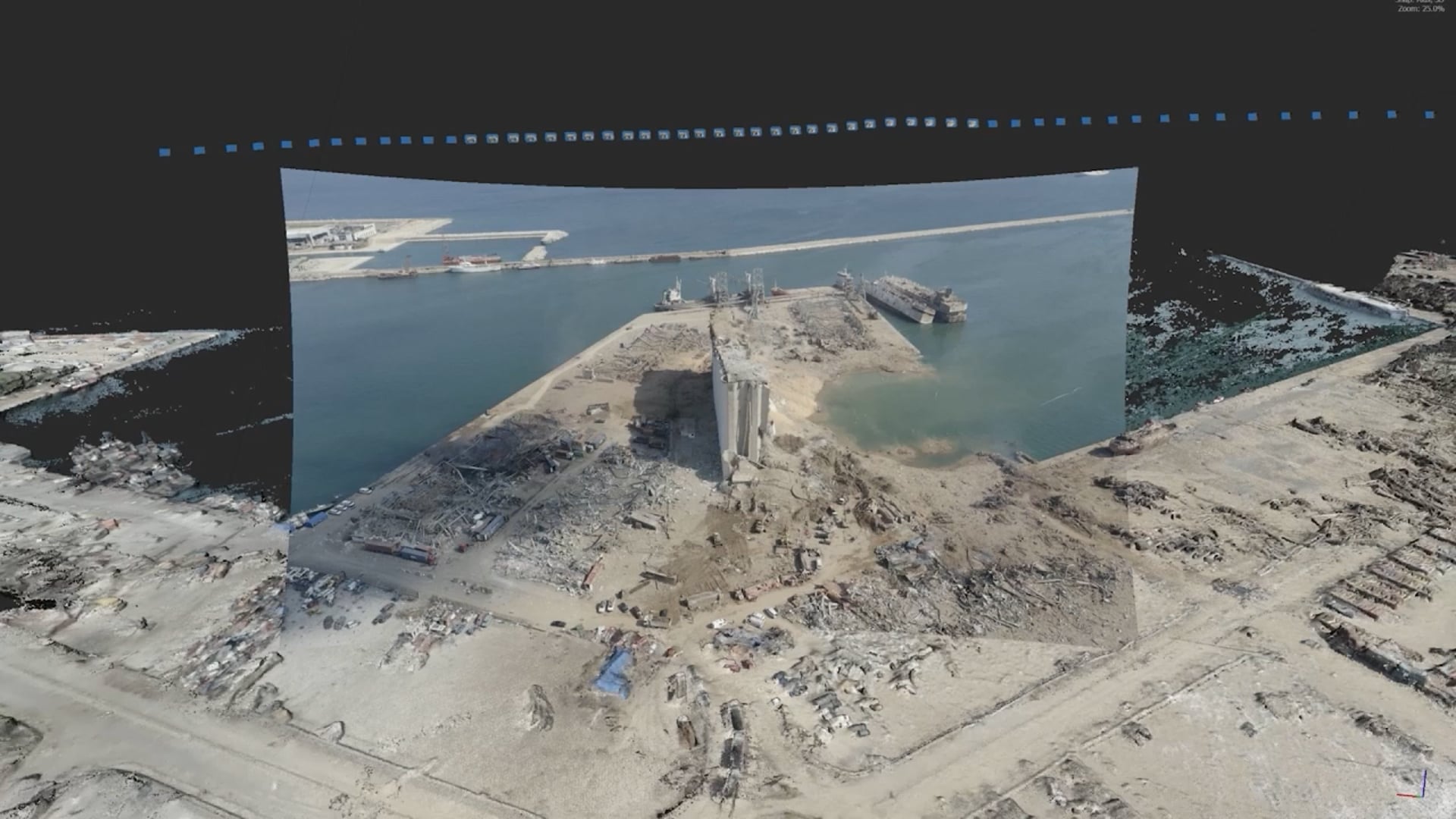
Following the 2020 Beirut port explosion, the city's grain silos suffered a prolonged period of steady ruination. To understand how the gradual destruction of a ruin happened behind state cordons in the nearly two-year period since the blast, Febrayer and FA reconstructed the site to present a unified account of the state’s mismanagement of this important site of material evidence and memory.
I.89 The Beirut Port Explosion: The Welders
Date of Incident
4 Aug 2020
Location
Beirut, Lebanon
Forums
Media
In Partnership With
Febrayer Network
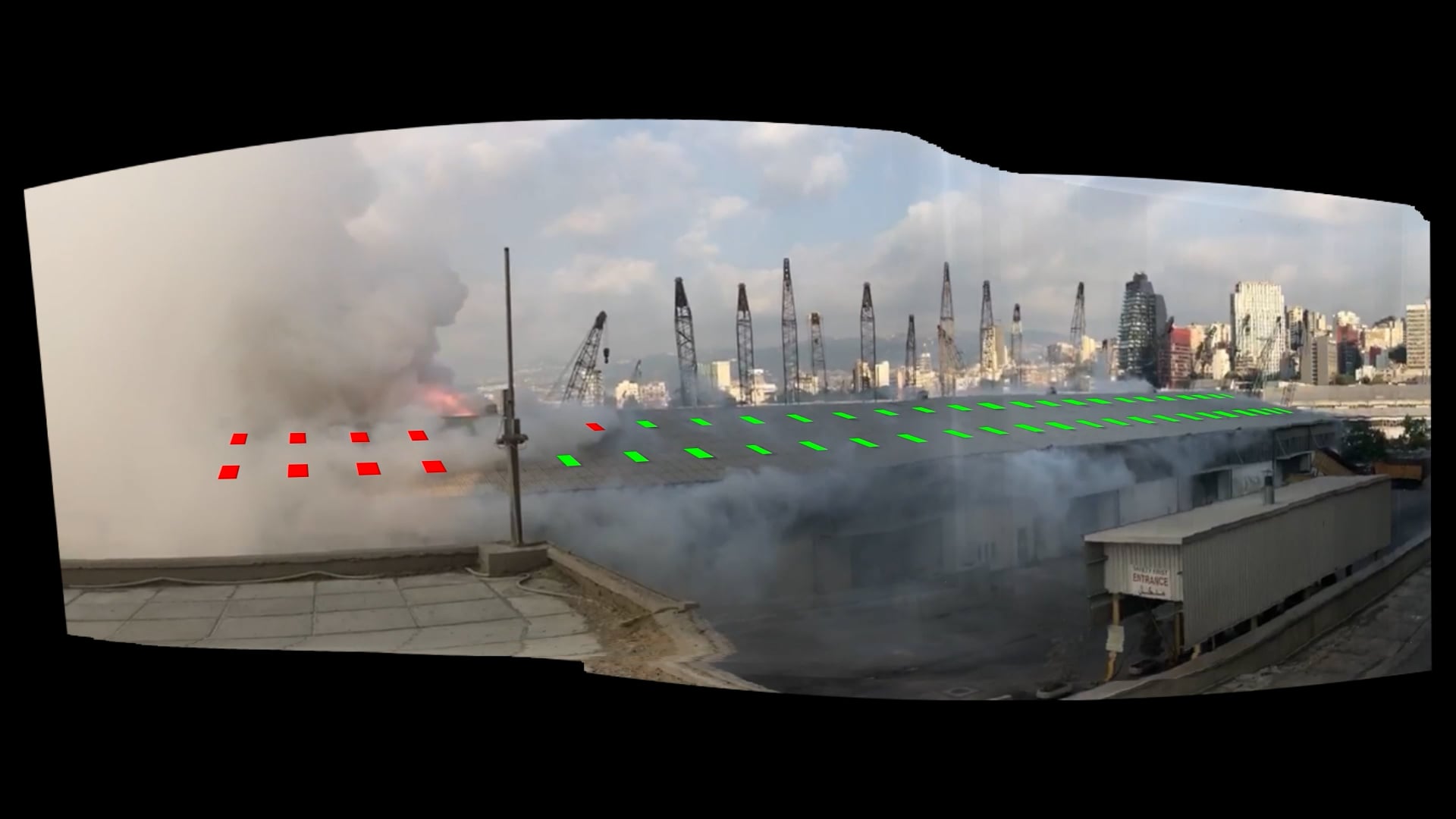
This investigation examines the validity of the most widely accepted theory to explain what triggered the deadly blast in the port of Beirut on 4 August 2020. Lebanese and international authorities, as well as the FBI and the Lebanese Internal Security, claimed the fire that in turn instigated the explosion was caused by the shoddy work of Syrian welders—but our analysis challenges these claims.
I.88 Restituting Evidence: Genocide and Reparations in German Colonial Namibia
Date of Incident
1904 - 1908
Location
Otjozondjupa, Omaheke, and Khomas, Namibia
Forums
Media
In Partnership With
The Ovaherero/Ovambanderu Genocide Foundation (OGF), Forensis
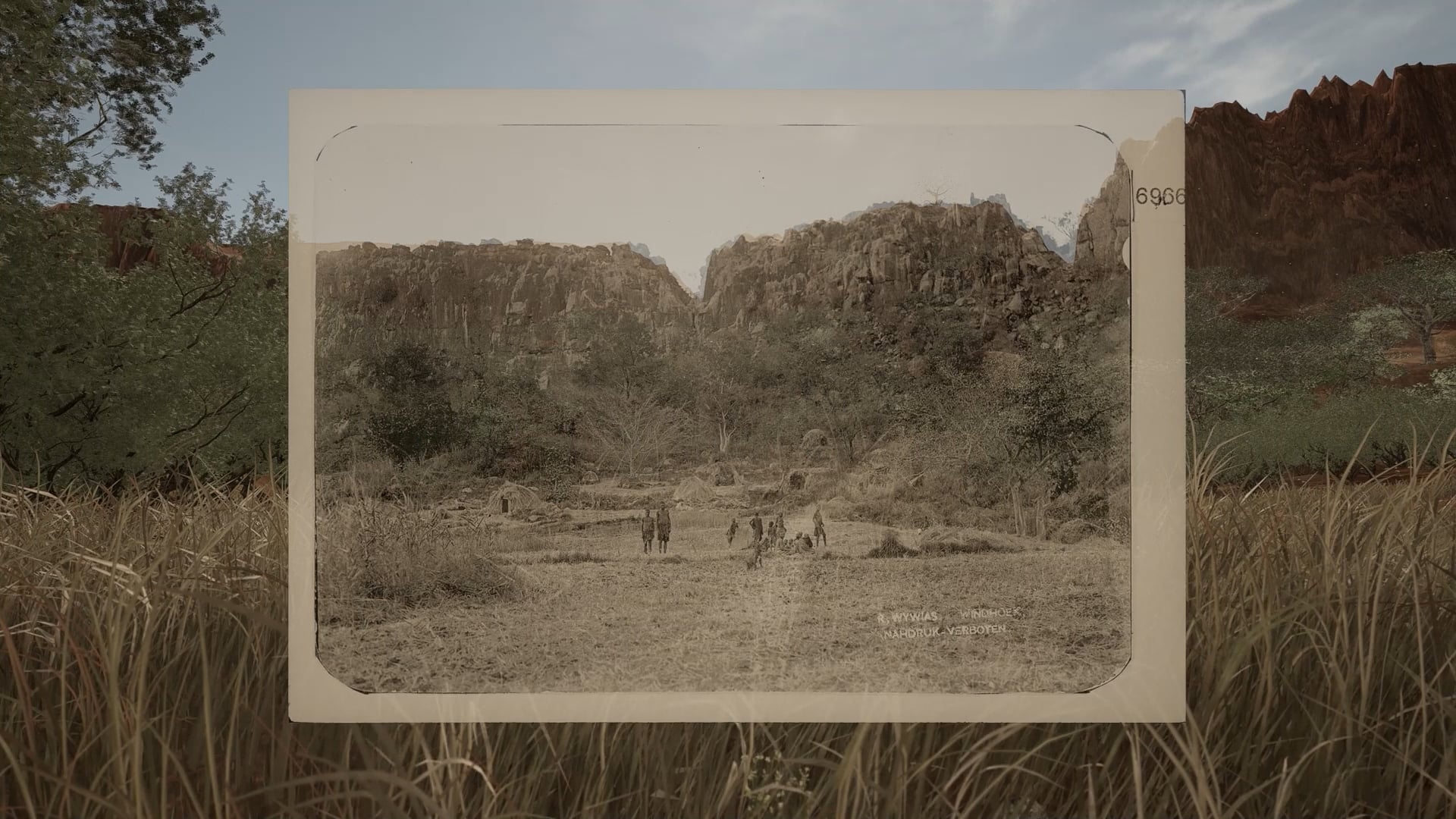
From 1904–1908, Germany committed genocide against the Herero, Mbanderu and Nama peoples in their colony of ‘South-West Africa’ (present-day Namibia). FA/Forensis partnered with genocide activists from descendant communities to begin to produce a body of digital evidence that can be leveraged in support of demands for land restitution and reparations.
I.87 Shireen Abu Akleh: The Extrajudicial Killing of a Journalist
Date of Incident
11 May 2022
Location
Jenin, Palestine
Forums
Legal Process, United Nations, Human Rights Report
In Partnership With
Al-Haq, Al Haq’s Forensic Architecture Investigation Unit
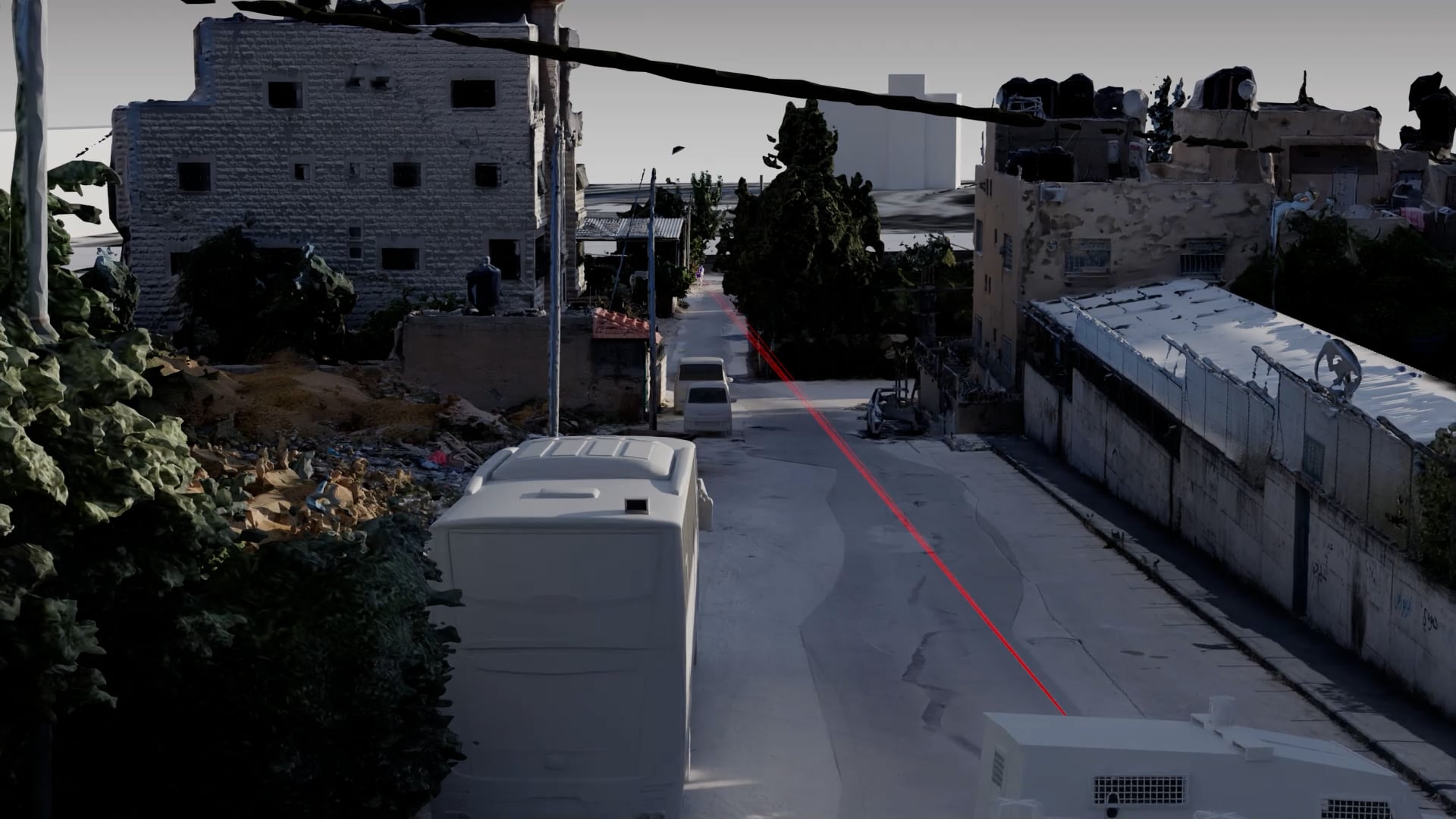
On 11 May 2022, while reporting on a raid by Israeli occupying forces on the Jenin refugee camp, Palestinian journalist Shireen Abu Akhleh was fatally shot by a convoy of IOF military vehicles. With Al-Haq, we showed that she and her colleagues were explicitly targeted in an unprovoked attack by an IOF marksman despite being identifiable as press, and that she was deliberately denied medical aid.
I.86 The Raid on Al-Haq's Offices: 18 August 2022
Date of Incident
18 Aug 2022
Location
Ramallah, Palestine
Forums
Legal Process, Media
In Partnership With
Al-Haq
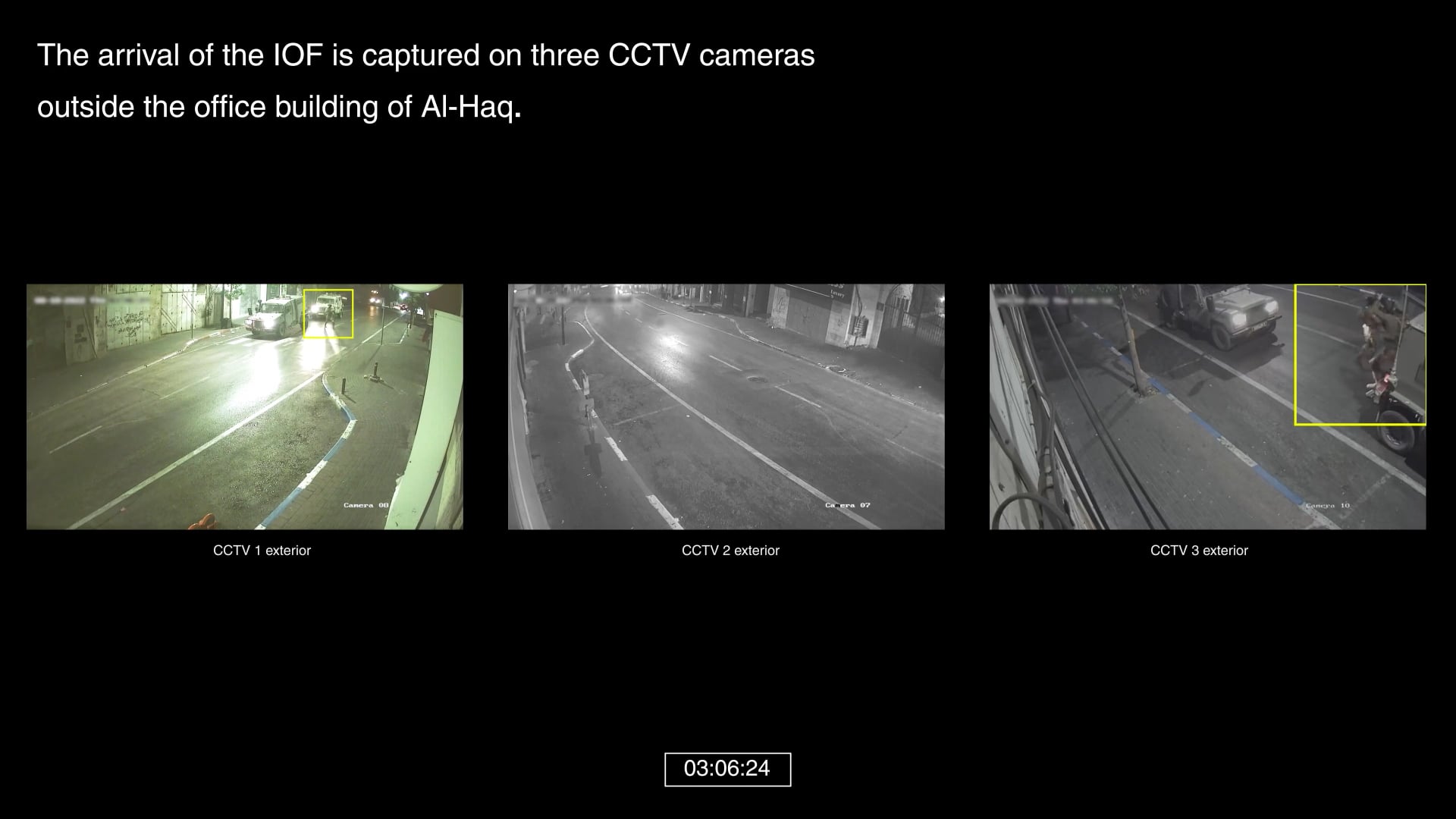
On 18 August 2022, Israeli occupation forces raided the offices of Al-Haq alongside six other Palestinian human rights groups. Working with Al-Haq's new Forensic Architecture Investigation Unit, we analysed available CCTV footage to determine the circumstances of the raid and expose Israeli apartheid practices against civil society organisations.
I.84 Gold Mining and Violence in the Amazon Rainforest
Date of Incident
2019 - Ongoing
Location
Yanomami Territory
Forums
Media
In Partnership With
The Climate Litigation Accelerator (CLX)
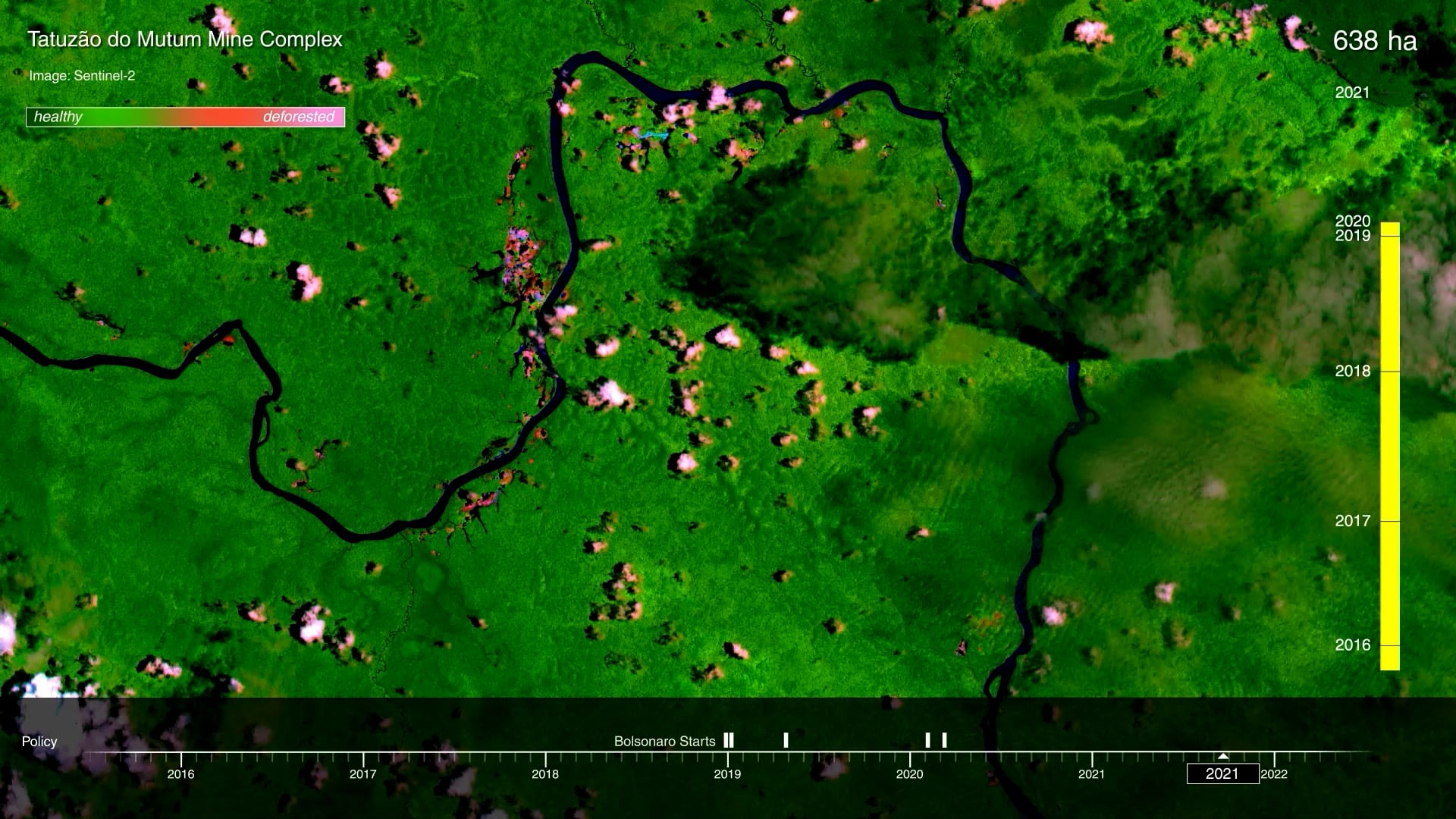
This investigation demonstrates how the Bolsonaro administration’s policies led directly to a rapid spread of destructive gold mining in the Brazilian Amazon and increasing violence against Indigenous communities.
I.83 Sheikh Jarrah: Ethnic Cleansing in Jerusalem
Date of Incident
12 May 2021
Location
Sheikh Jarrah, Jerusalem
Forums
Media
Commissioned By
Self-Initiated
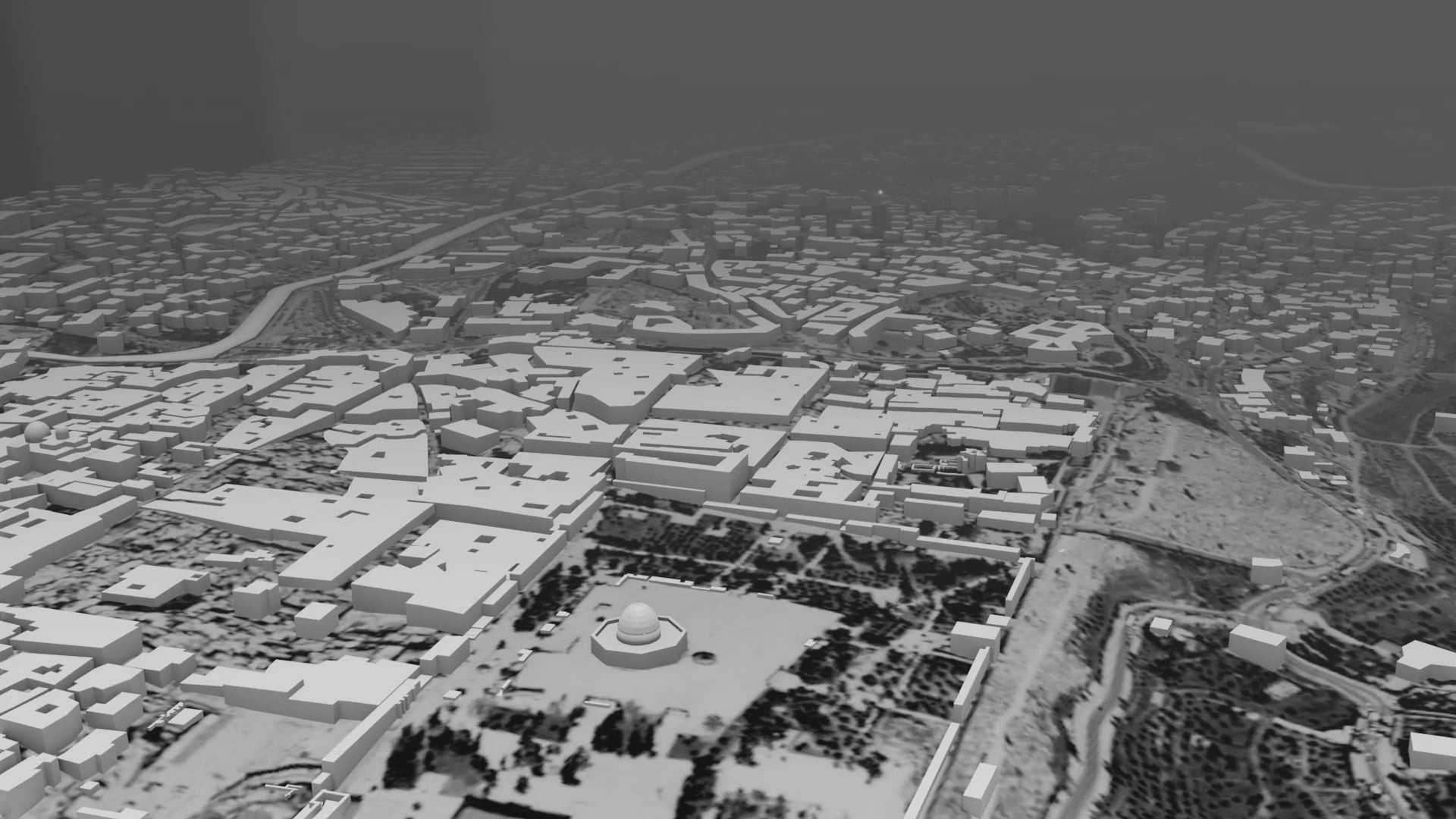
This interactive urban narrative explains the ways in which Palestinian families in Sheikh Jarrah are being forcibly displaced, and their struggle with Israeli courts and settler groups. The story traverses multiple scales starting from homes invaded by settlers, and moves to the street, neighbourhood, city and the land, showing how colonial practices and apartheid planning displace Palestinians.
I.82 Russian Strike on the Kyiv TV Tower
Date of Incident
1 Mar 2022
Location
Kyiv, Ukraine
Forums
Exhibition, Media
In Partnership With
The Center for Spatial Technologies (CST)
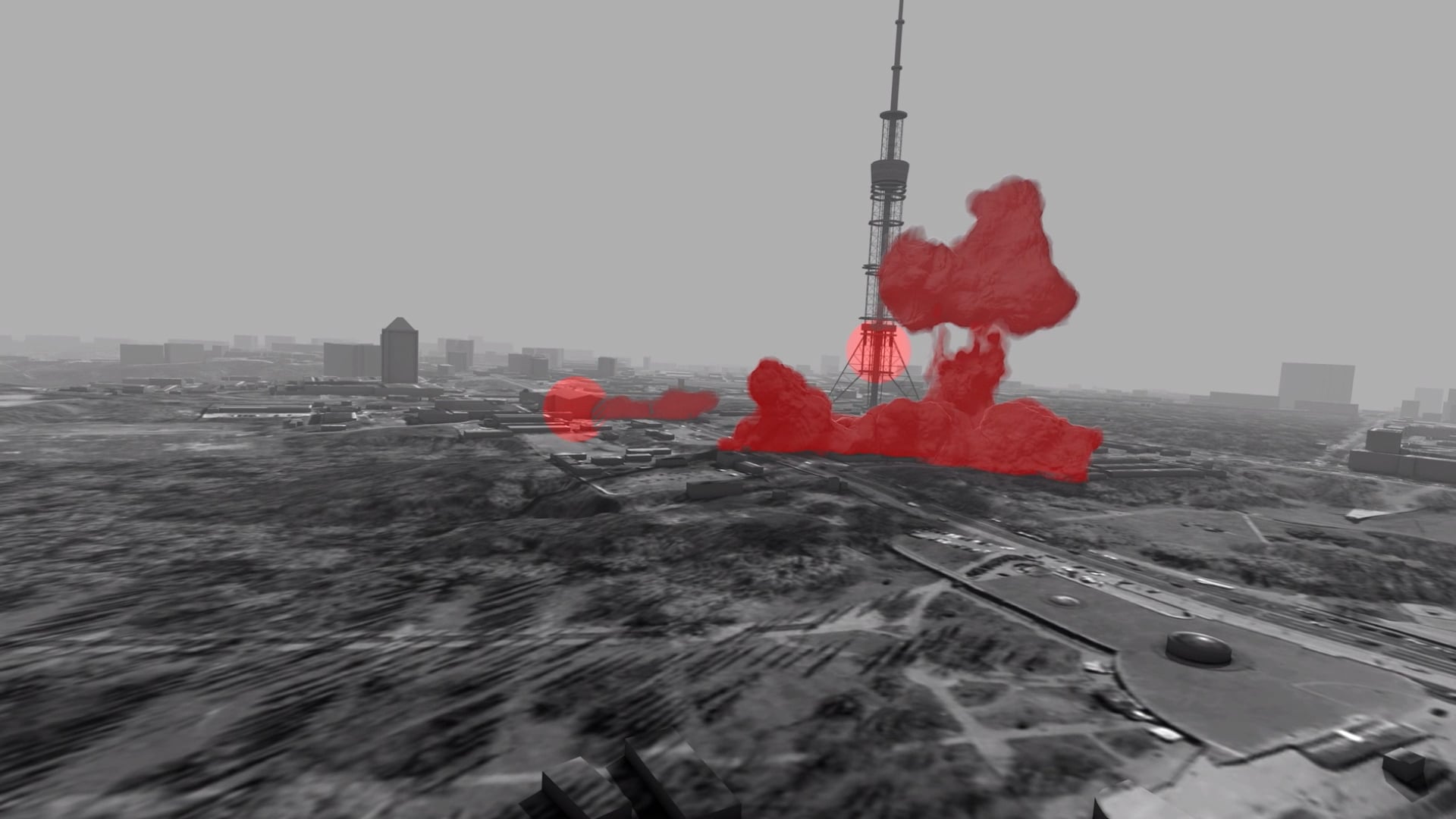
The Russian strike on the Kyiv TV tower and the site of Babyn Yar on 1 March 2022 resulted in civilian casualties and urban destruction—but it also pierced through layers of historical strata, exposing a history of violence, genocide and negation that unfolded on the very same ground. This is the first installation in a new long-term collaboration with the Center for Spatial Technologies.
I.81 Racist Terror Attack in Hanau: The Police Operation
Date of Incident
19 Feb 2020
Location
Hanau, Germany
Forums
Exhibition, Media, Parliamentary Inquiry
Commissioned By
Initiative 19. Februar
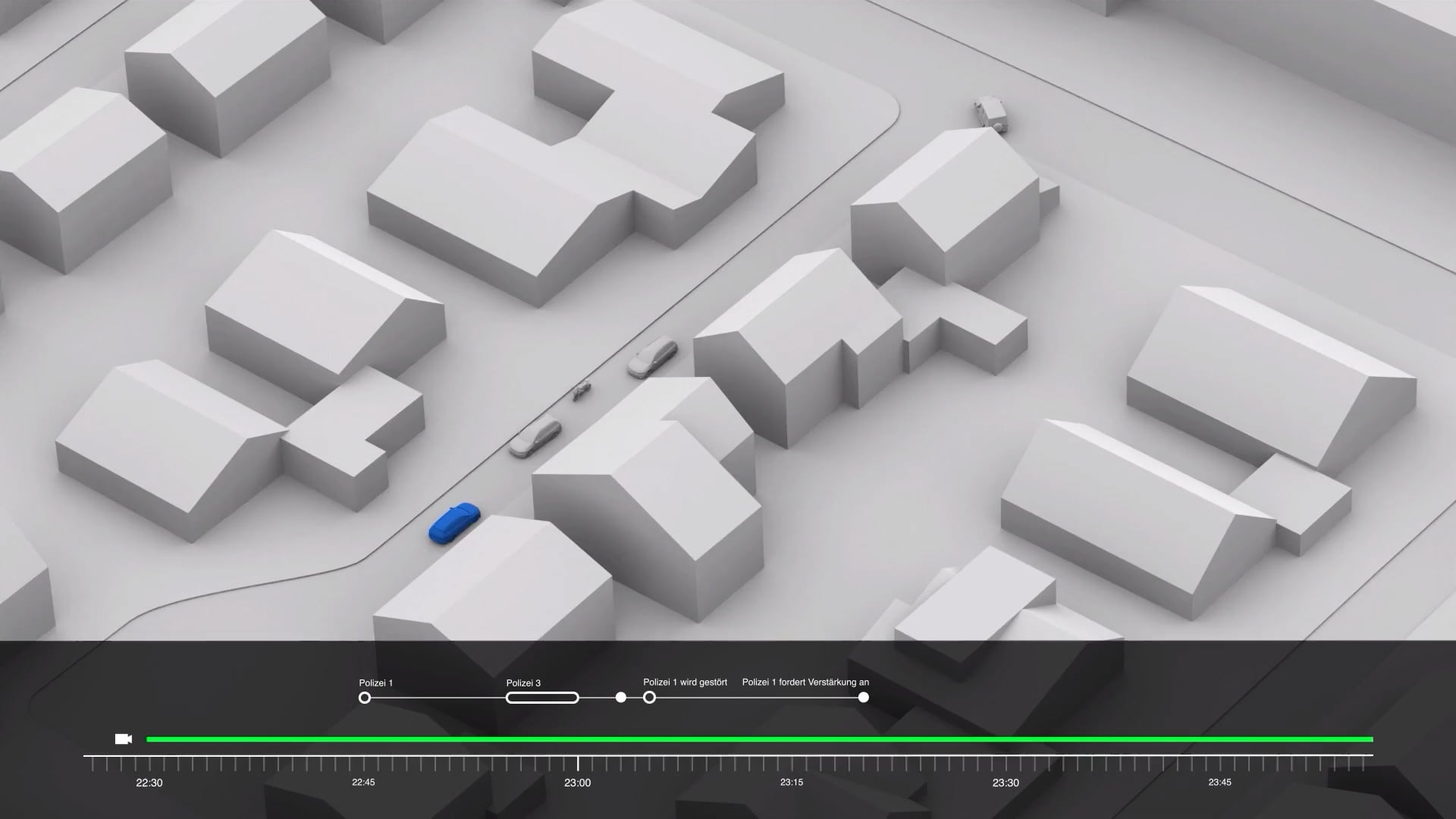
On 19 February 2020, nine people were murdered in a racist terror attack in Hanau, Germany. After the attack, the perpetrator went to his house, where he killed his mother, and himself. Police knew the perpetrator’s address early on but did not storm the house for almost five hours. We were asked by the victims’ families and the Initiative 19. Februar to examine how the police operation unfolded.
I.80 The Shelling of Khudair Warehouse: Chemical Warfare by Indirect Means
Date of Incident
15 May 2021
Location
Gaza, Palestine
Forums
Legal Process, Media
In Partnership With
Al-Haq
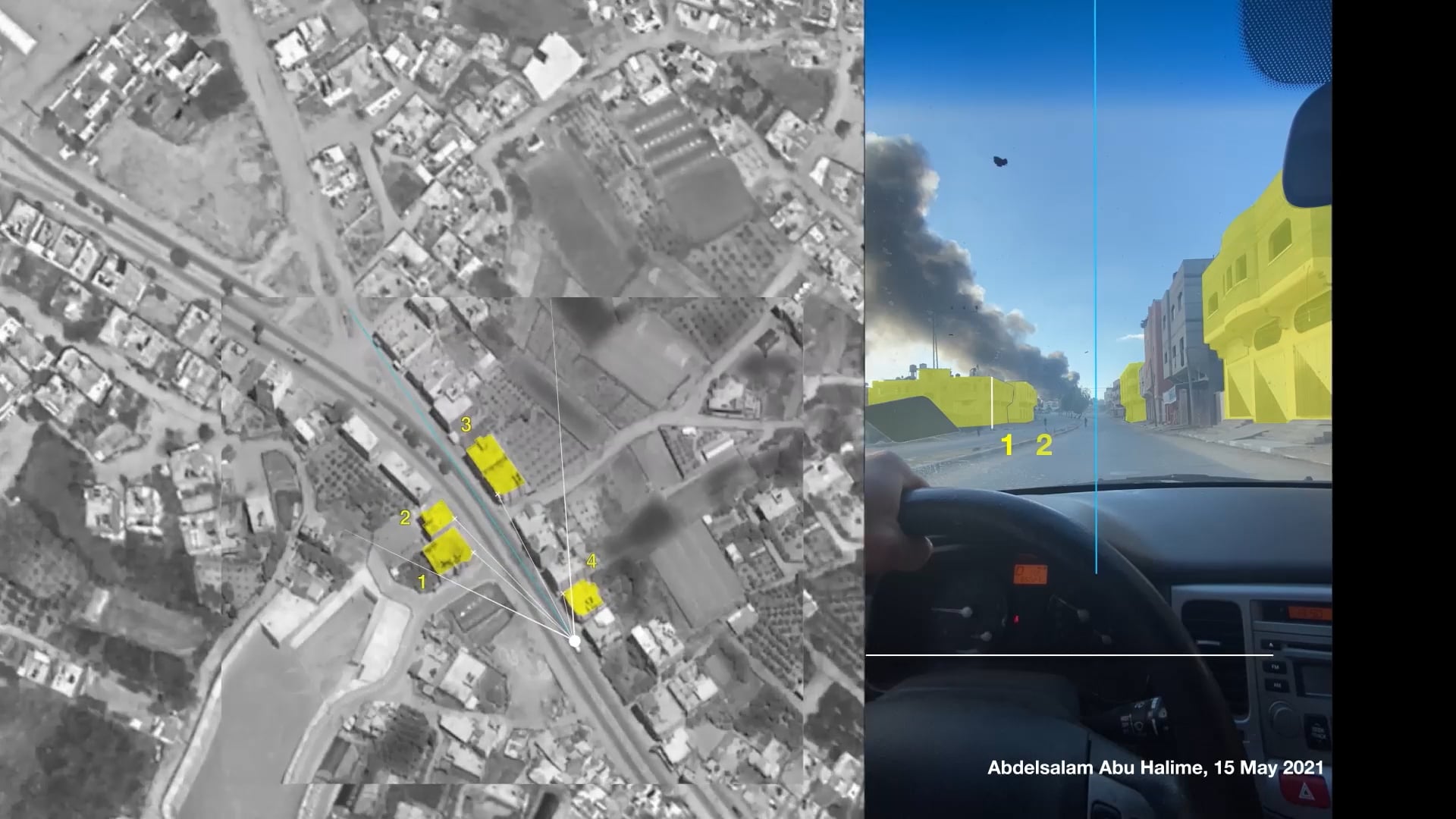
Marking the launch of Al-Haq’s Forensic Architecture Investigation Unit based in Ramallah, we examined the circumstances of the 15 May 2021 Israeli bombing of the Khudair Pharmaceuticals and Agricultural Tools Company in Beit Lahiya—the largest agricultural chemical warehouse in Gaza—as part of the environmental disaster imposed on Palestinians.
I.79 Living Archaeology in Gaza
Date of Incident
7th Century BCE - Ongoing
Location
Gaza
Forums
Legal Process, United Nations, Human Rights Report, Media
Commissioned By
Self-Initiated
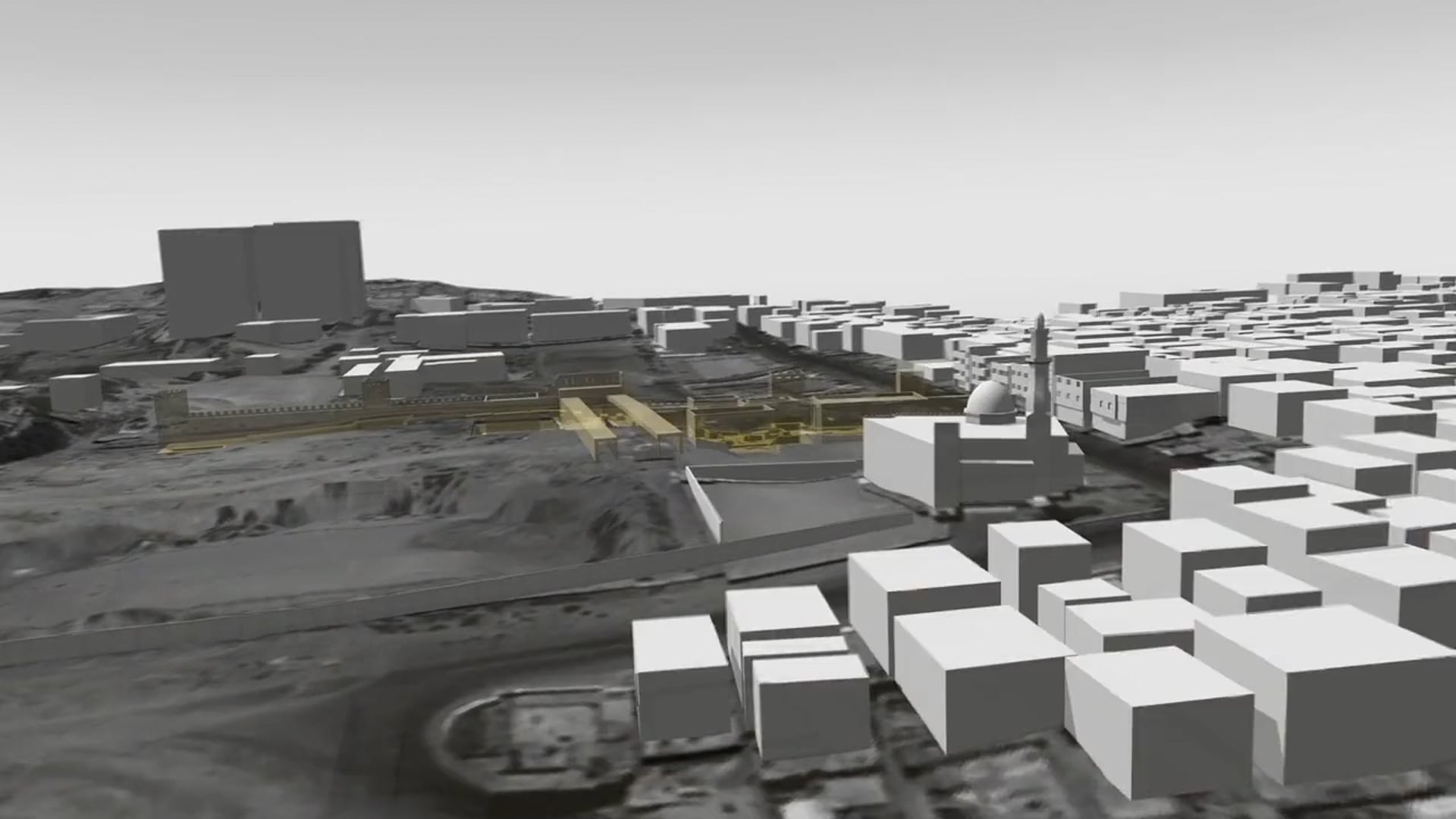
Decades of bombings and humanitarian disaster inflicted by the Israeli occupation have posed a constant threat not only to Palestinian lives but also to their cultural heritage. FA has conducted the first open-source excavation of this remarkable archaeological site along Gaza’s coastline, illustrating the myriad risks it faces.
I.78 Pushbacks Across the Evros/Meriç River: The Case of Parvin
Date of Incident
1 Feb 2020
Location
Evros/Meriç river, Greek-Turkish border
Forums
Legal Process, United Nations, Human Rights Report, Media
Commissioned By
European Center for Constitutional and Human Rights (ECCHR)
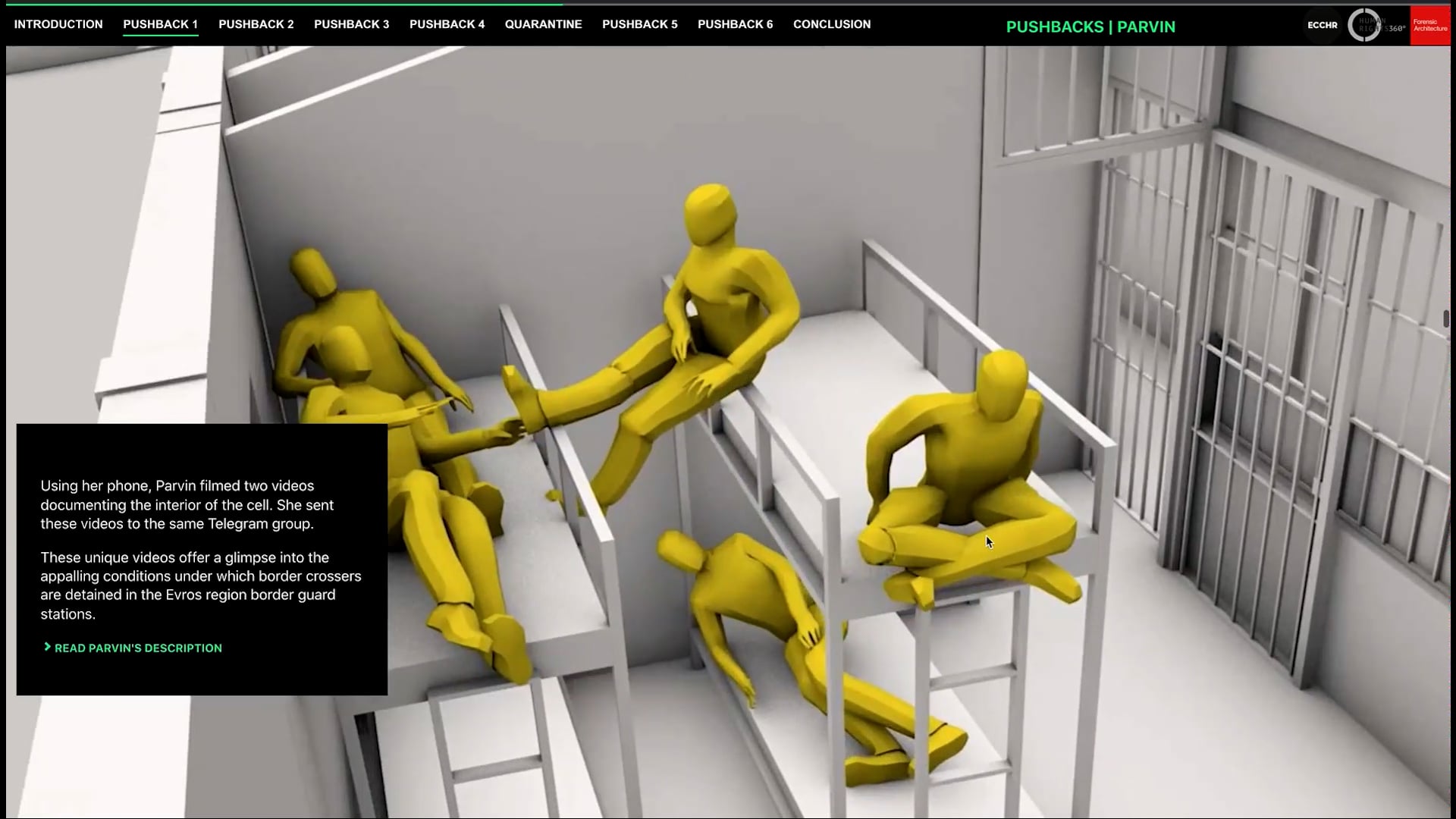
At Europe’s southeastern river border, migrants report being beaten, detained, and illegally ‘pushed back’ to Turkey from Greece by unidentified masked men. Greek and EU authorities refuse to investigate. We worked with Parvin, a young woman from Iran, to analyse evidence she had gathered during her crossings and reconstruct her journey and experiences of ‘pushback’.
I.77 Racist Terror Attack in Hanau: The Arena Bar
Date of Incident
19 Feb 2020
Location
Hanau, Germany
Forums
Media, Parliamentary Inquiry
Commissioned By
Initiative 19. Februar, Lawyers for the Gültekin family
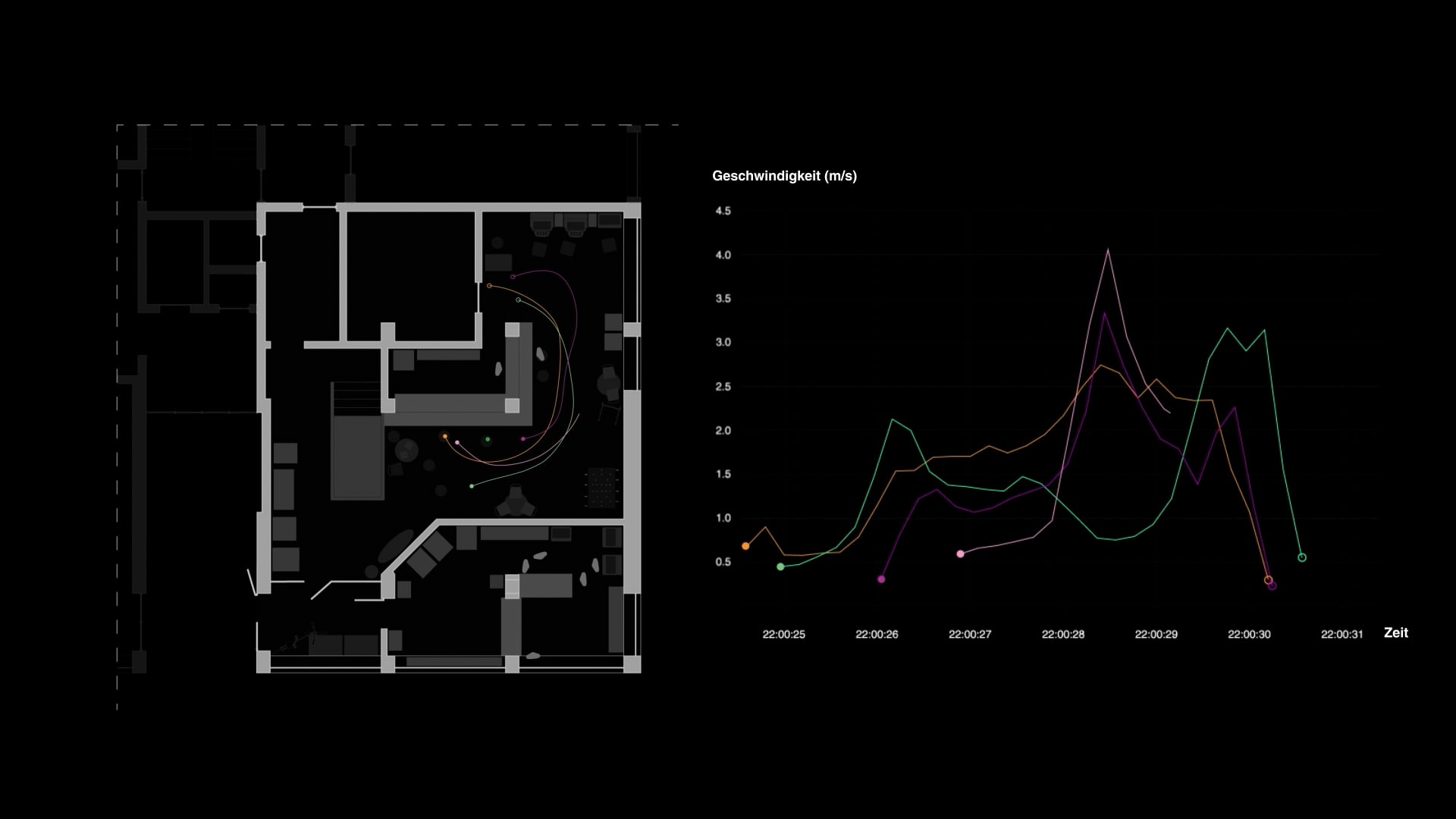
On 19 February 2020, in Hanau, Germany, a racist terror attack left nine people dead, six of them in or near the local Arena bar. There are reports that the bar’s emergency exit was routinely locked, and the victims of the attack didn’t run towards it for that reason. We examined whether, had they tried to do so, and it had been open, they could have survived the attack.
I.76 Dispossession and The Memory of the Earth: Land Dispossession in Nueva Colonia
Date of Incident
1960s to the present day
Location
Nueva Colonia, Urabá Antioqueño, Colombia
Forums
Legal Process, Exhibition, Human Rights Report, Truth Commission, Web Platform
Commissioned By
The Commission for the Clarification of Truth, Coexistence and Non-Repetition of Colombia
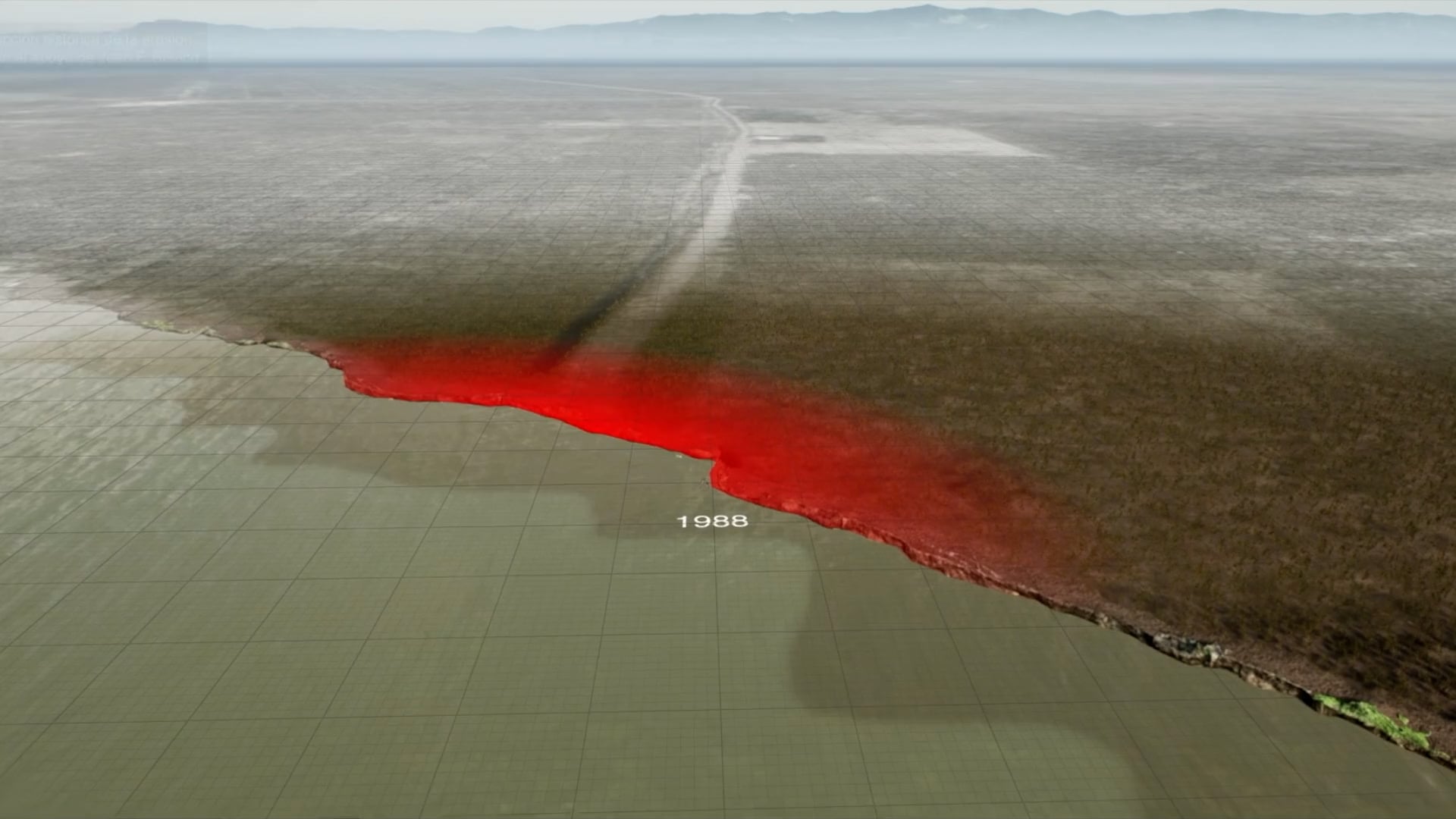
This investigation shows how the dispossession of campesino farmers in the Urabá Antioqueño region of Nueva Colonia was achieved by a combination of physical violence, environmental transformations and legal means.
I.75 The Black Boxes of Disappearance: Enforced Disappearance in the Siege of the Palace of Justice
Date of Incident
6 Nov 1985 - 7 Nov 1985
Location
Bogotá, Colombia
Forums
Legal Process, Exhibition, Media, Truth Commission, Web Platform
Commissioned By
The Commission for the Clarification of Truth, Coexistence and Non-Repetition of Colombia
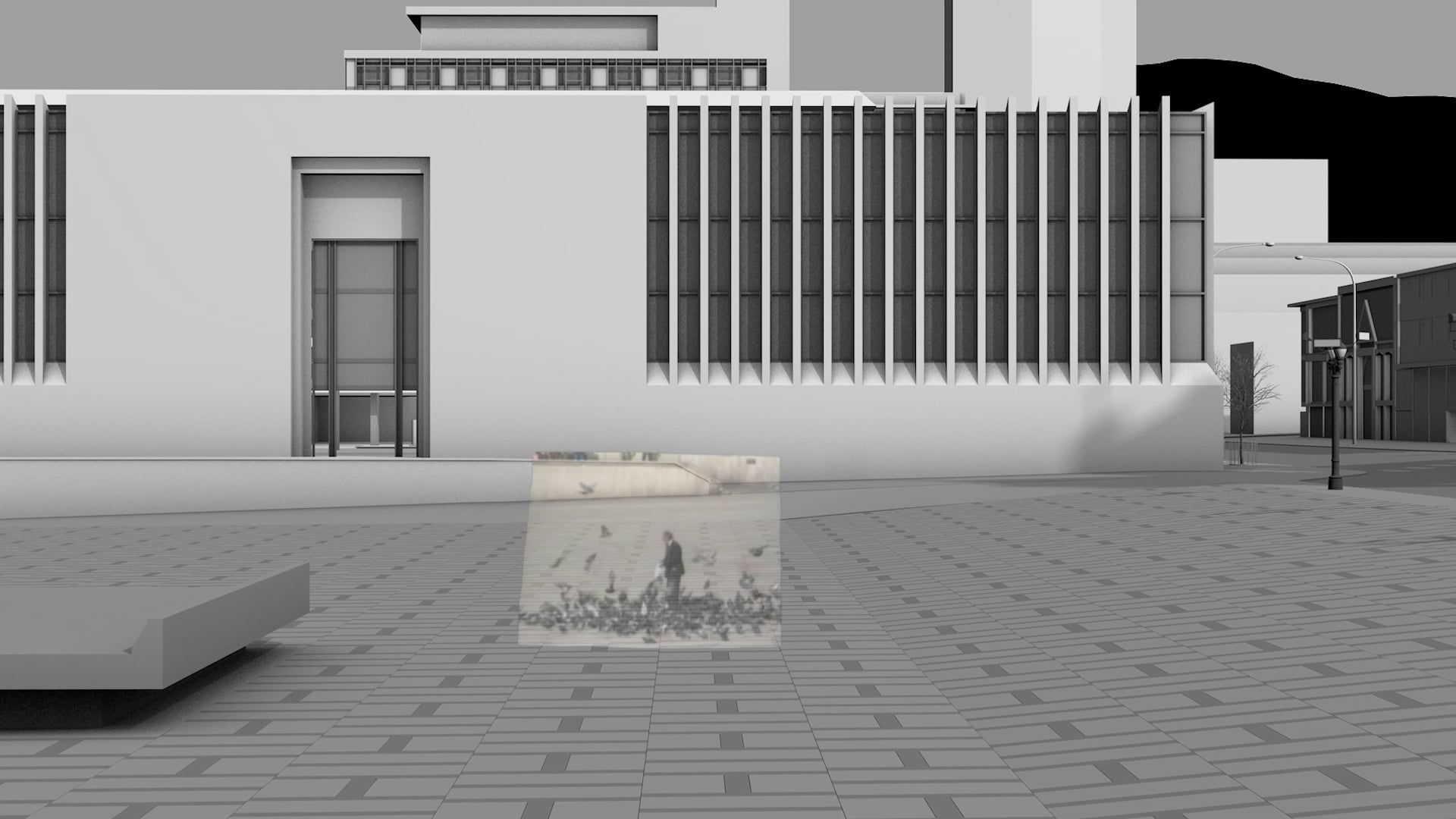
Our investigation examines the actions of the Colombian security forces in the aftermath of the 1985 siege of the Palace of Justice that resulted in the enforced disappearance of cafeteria workers, students, visitors, guerrillas, and judges.
I.74 The Murder of Lucas Villa
Date of Incident
5 May 2021
Location
Pereira, Colombia
Forums
Media
In Partnership With
Bellingcat, Cerosetenta, Baudo Agencia Pública
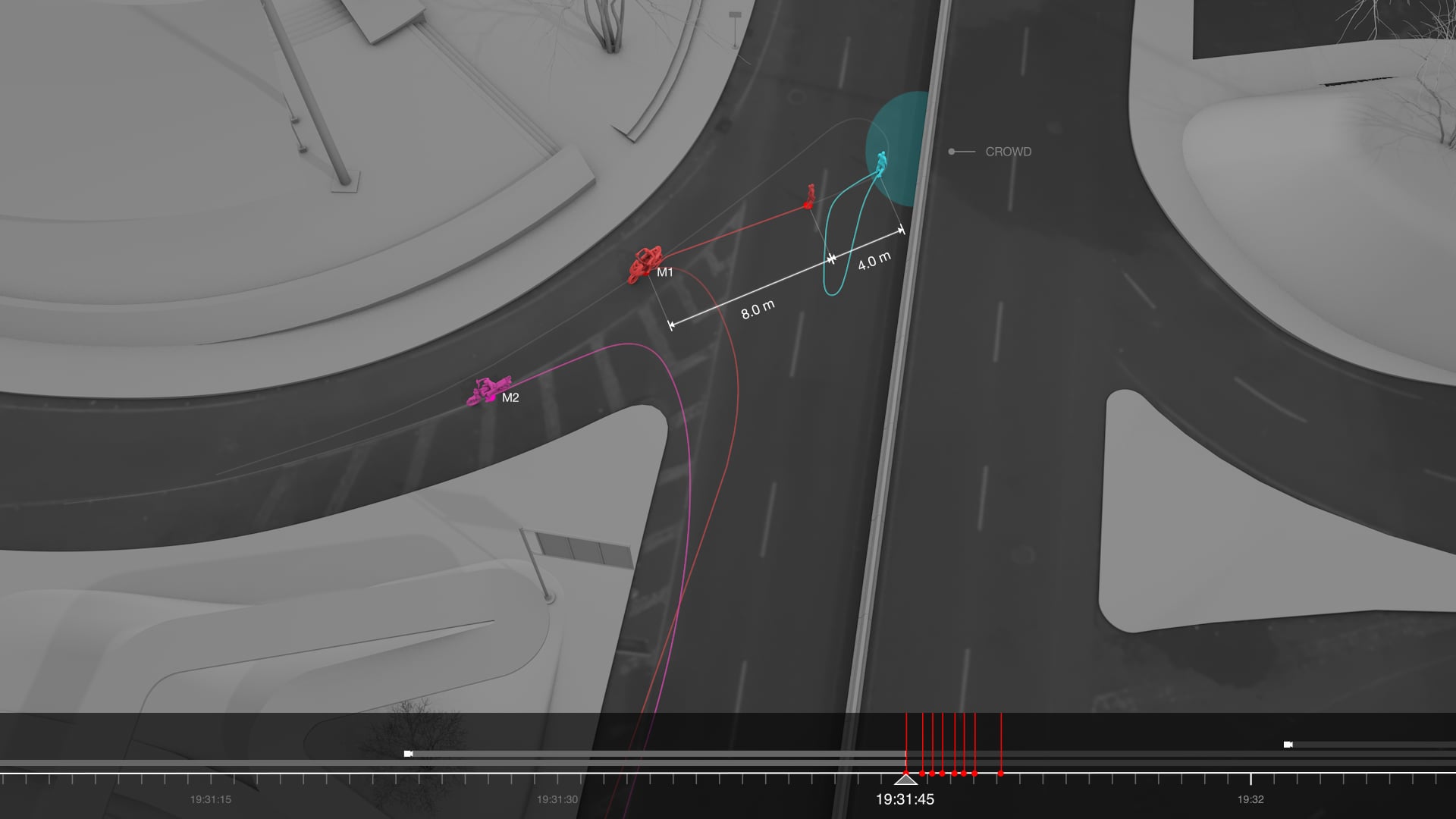
On the 5th of May 2021, Lucas Villa, a Colombian student, was shot and fatally wounded in Pereira, Colombia while participating in the National Strike. Our findings suggest Lucas was targeted in a coordinated assassination.
I.73 Digital Violence: How the NSO Group Enables State Terror
Date of Incident
1 Jan 2015 - Ongoing
Location
At least 45 countries worldwide
Forums
Legal Process, Exhibition, Media, Web Platform
Commissioned By
Self-Initiated
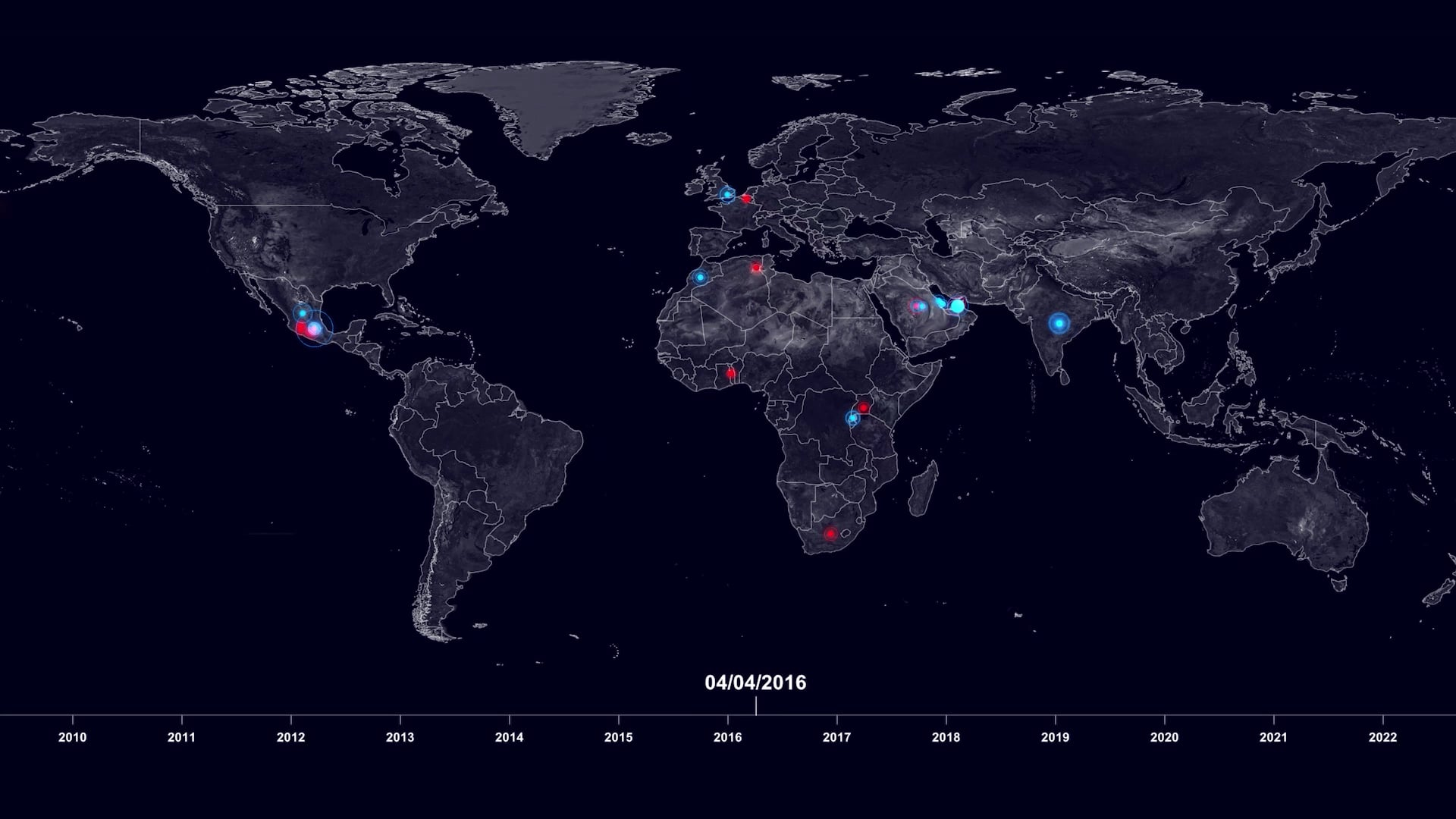
Supported by Amnesty International and the Citizen Lab, Forensic Architecture’s Digital Violence investigation is a multidimensional study of the global use of the malware Pegasus made by Israeli cyber-surveillance company NSO Group.
I.72 Environmental Racism in Death Alley, Louisiana
Date of Incident
1718 - Ongoing
Location
'Death Alley', Louisiana, USA
Forums
Legal Process, United Nations, Exhibition, Media, Web Platform
In Partnership With
RISE St. James
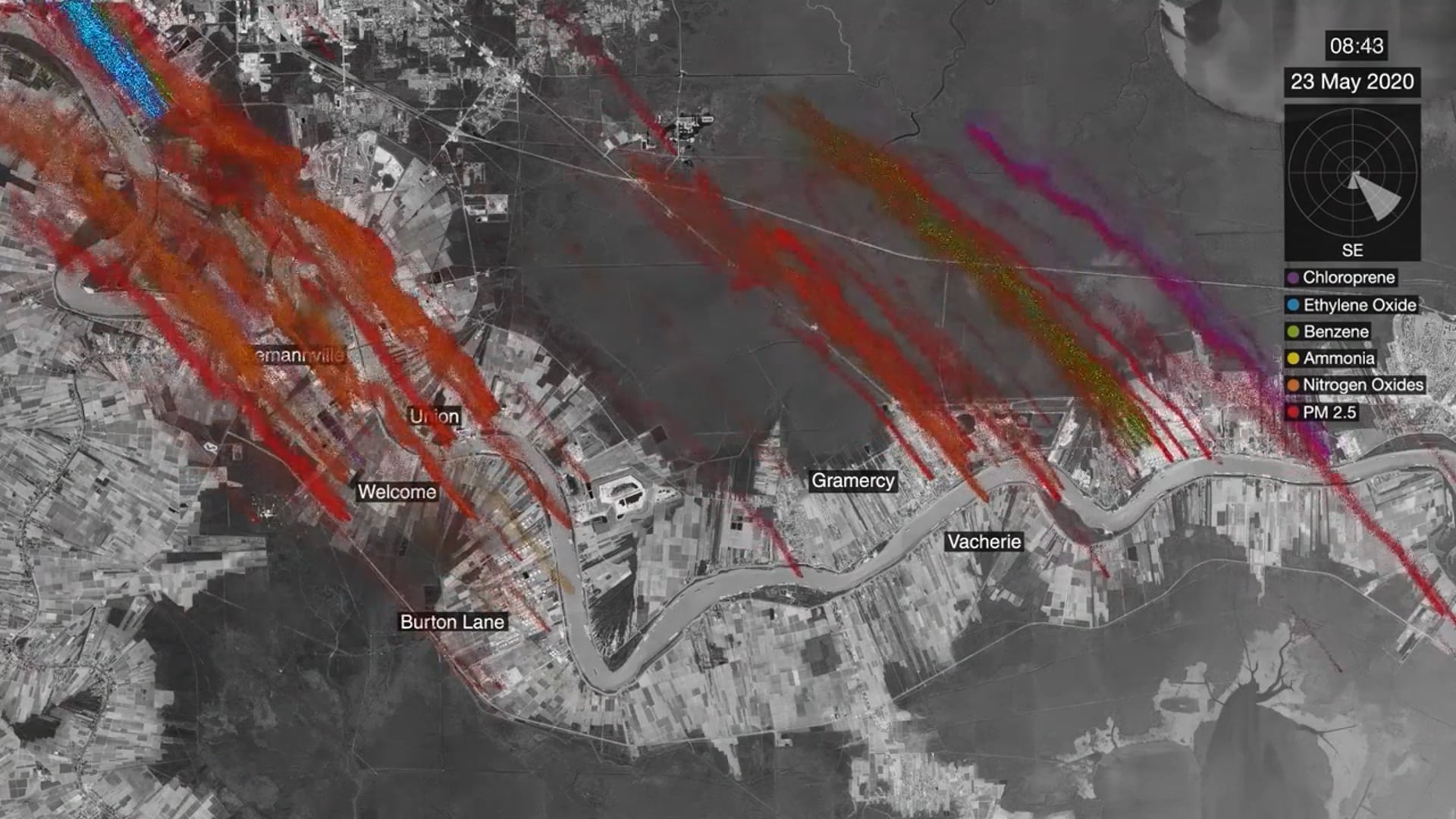
A stretch of the Mississippi River once called 'Plantation Country' is now the 'Petrochemical Corridor', known to those who breathe its toxic air as 'Death Alley'. Using advanced techniques in cartography and fluid dynamics, we worked to support local demands for accountability and reparations.
I.71 European Arms in the Bombing of Yemen
Date of Incident
26 Mar 2015 - Ongoing
Location
Yemen
Forums
Legal Process, Exhibition, Human Rights Report, Web Platform
Commissioned By
European Center for Constitutional and Human Rights (ECCHR)
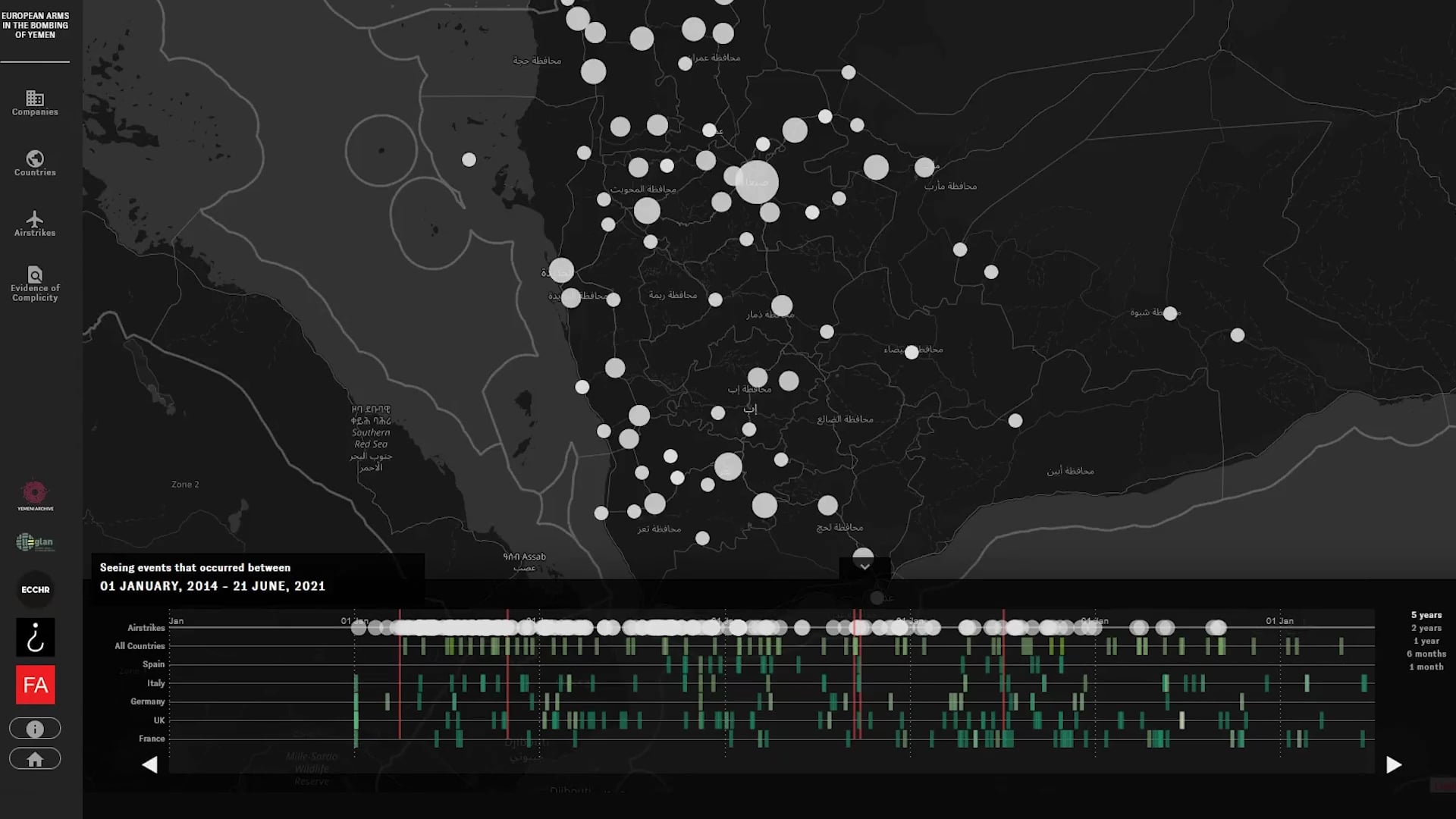
Since 2015, airstrikes by the Saudi-led coalition in Yemen have constituted grave human rights violations. Partners across the Investigative Commons developed an interactive map to reveal the extent to which arms producers and governments in Europe continue to profit from arms exports despite evidence of their substantial contribution to the military operations of the Saudi-led coalition in Yemen.
I.70 Torture and Detention in Myanmar
Date of Incident
1 Feb 2021 - Ongoing
Location
Myanmar
Forums
Media
In Partnership With
Al Jazeera English
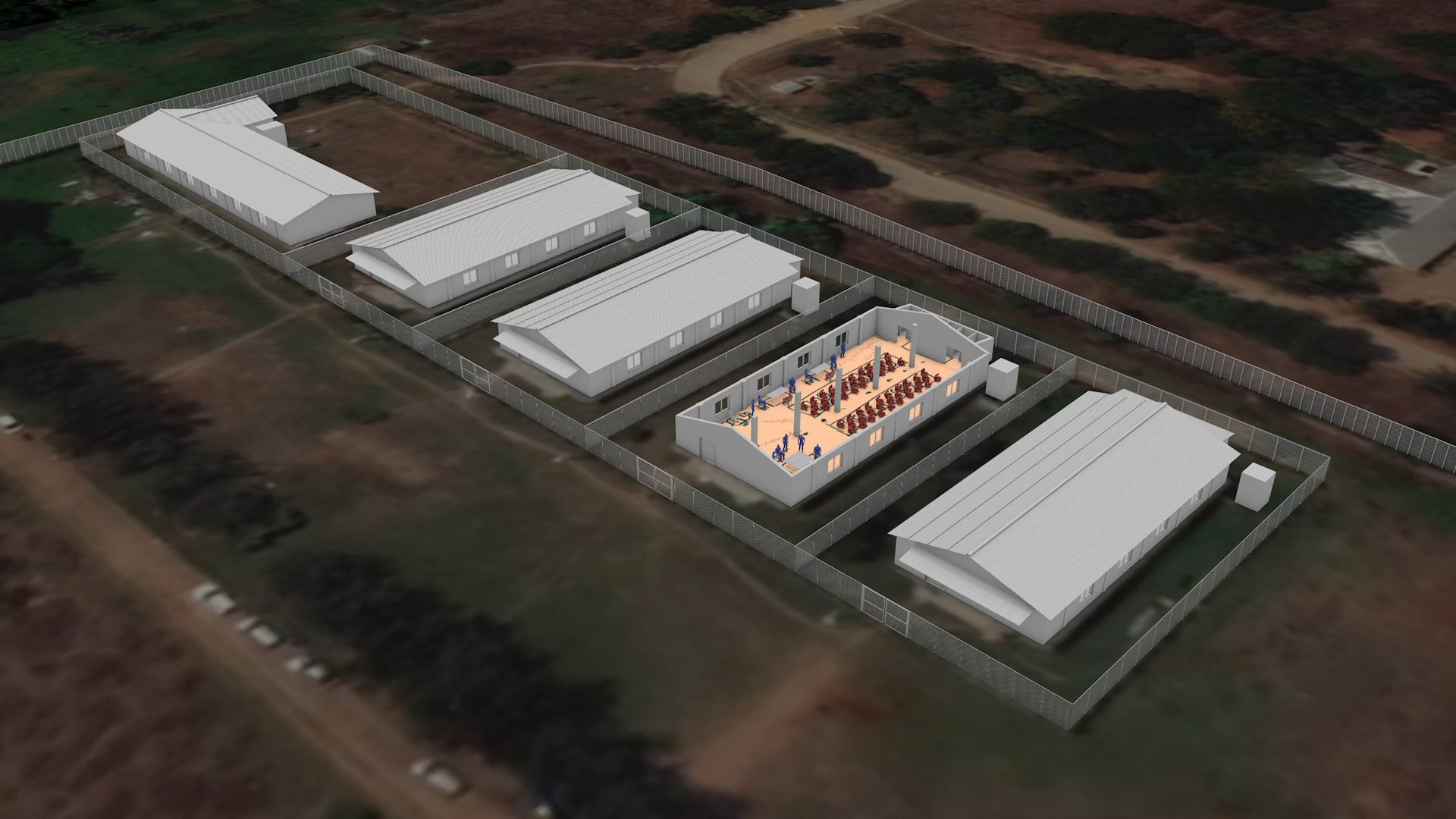
Since the February 1st coup over 6,000 people have been detained in covert facilities in Myanmar. Forensic Architecture was invited by Al Jazeera to verify the location and layout of a detention centre where four witnesses were held.
I.69 The Extrajudicial Execution of Ahmad Erekat
Date of Incident
23 Jun 2020
Location
Palestine
Forums
Legal Process, Human Rights Report, Media
Commissioned By
Self-Initiated
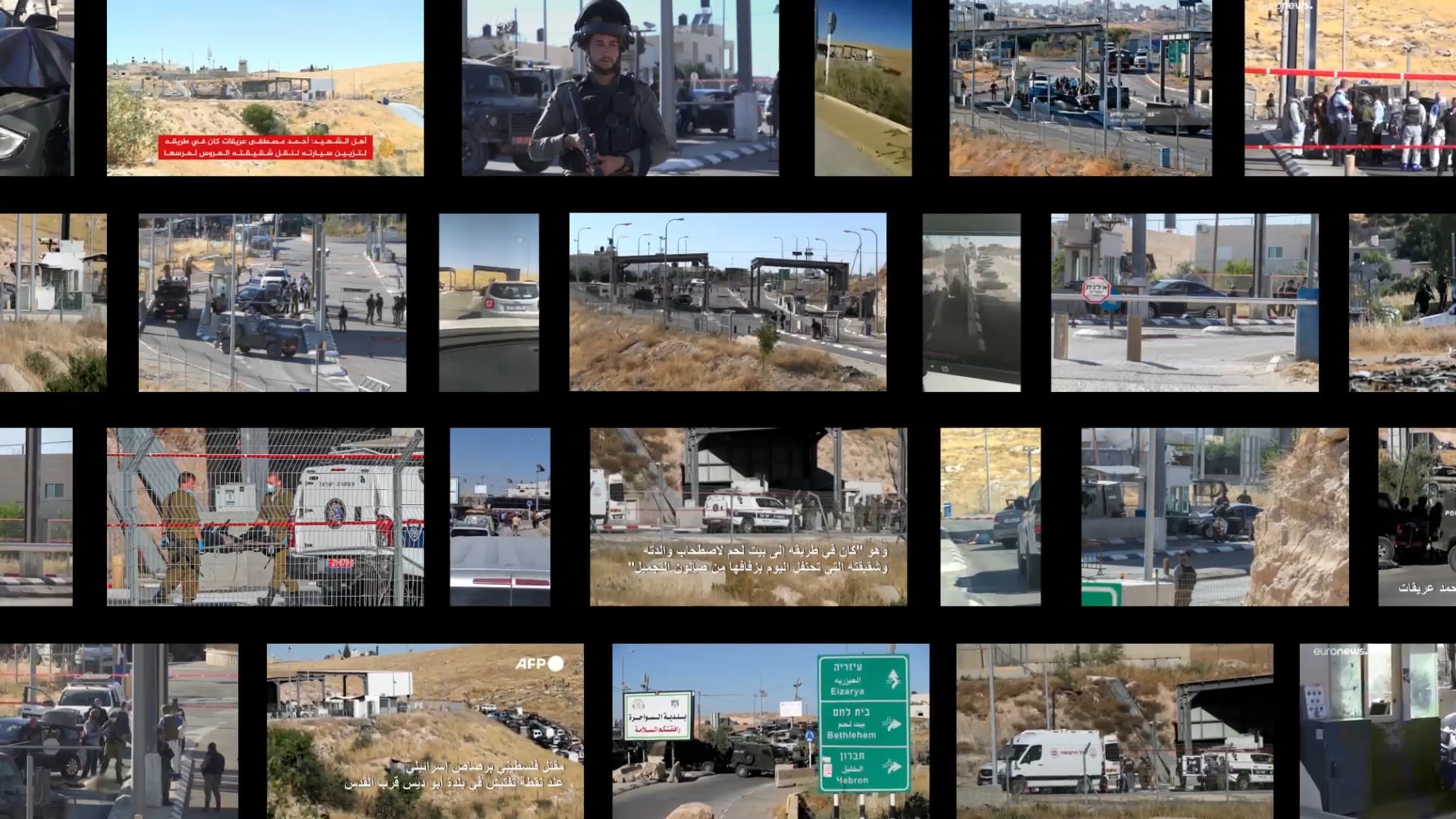
On 23 June 2020, Ahmad Erekat, a 26-year-old Palestinian, was shot by Israeli occupation forces after his car crashed into a booth at an illegal checkpoint in the occupied West Bank in Palestine. Working in collaboration with the Palestinian human rights organization Al-Haq, Forensic Architecture’s Palestine Unit was asked by the Erekat family to examine the incident.
I.68 NSO Group’s Breach of Private Data with ‘Fleming’, a COVID-19 Contact-Tracing Software
Date of Incident
1 Mar 2020 - ongoing
Location
Israel and around the world
Forums
Exhibition, Media
Commissioned By
Self-Initiated
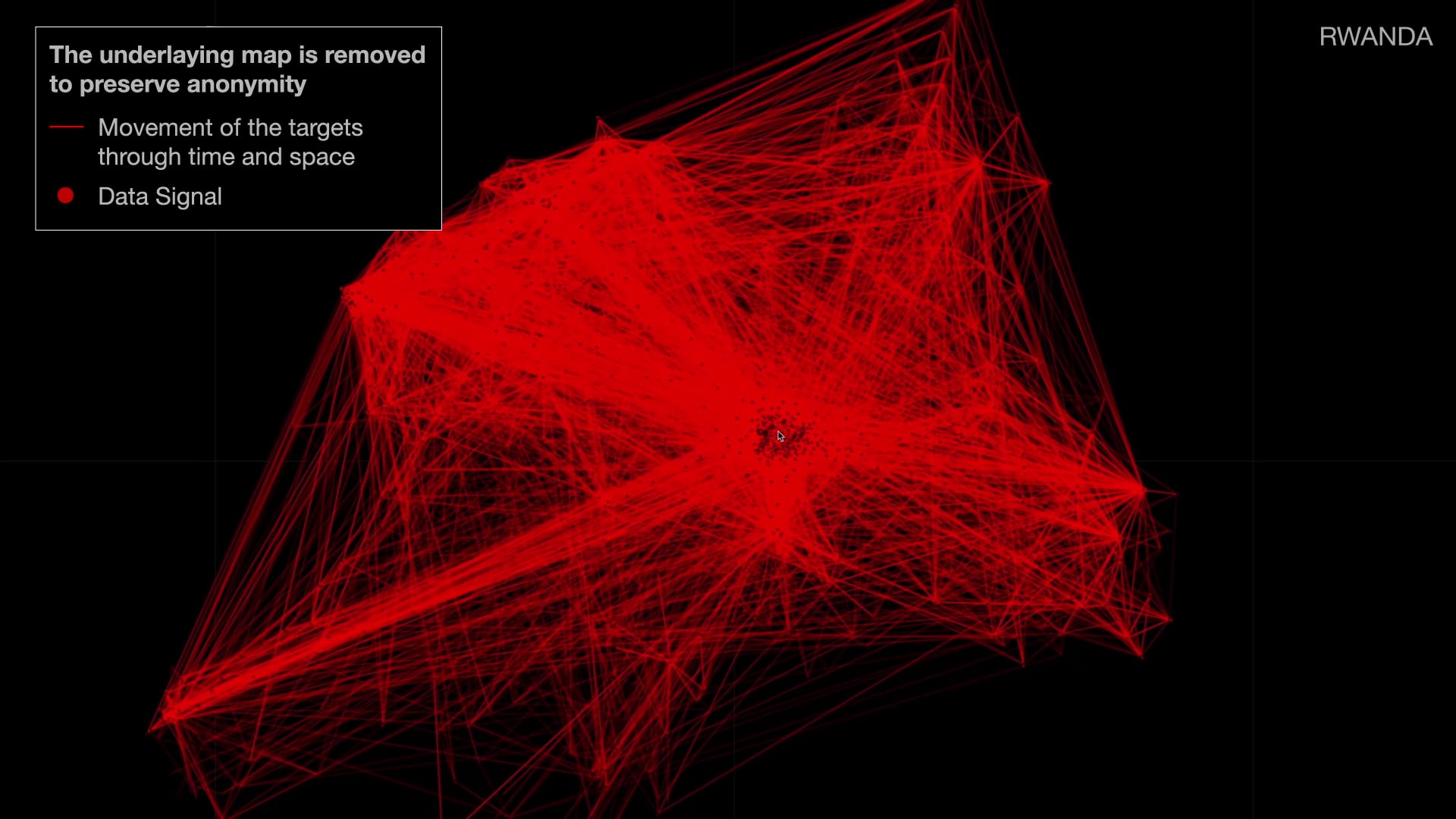
In May 2020, an unprotected database belonging to Israeli cyber-weapons manufacturer NSO Group’s COVID-19 contact tracing software called 'Fleming' was left exposed. NSO denied there was a security breach. Forensic Architecture analysed a sample of the exposed database, which suggested that the data was based on ‘real’ personal data belonging to unsuspecting civilians.
I.67 Tear Gas in Plaza de la Dignidad
Date of Incident
20 Dec 2019
Location
Plaza de la Dignidad, Santiago de Chile
Forums
Media
Commissioned By
No+lacrimógenas
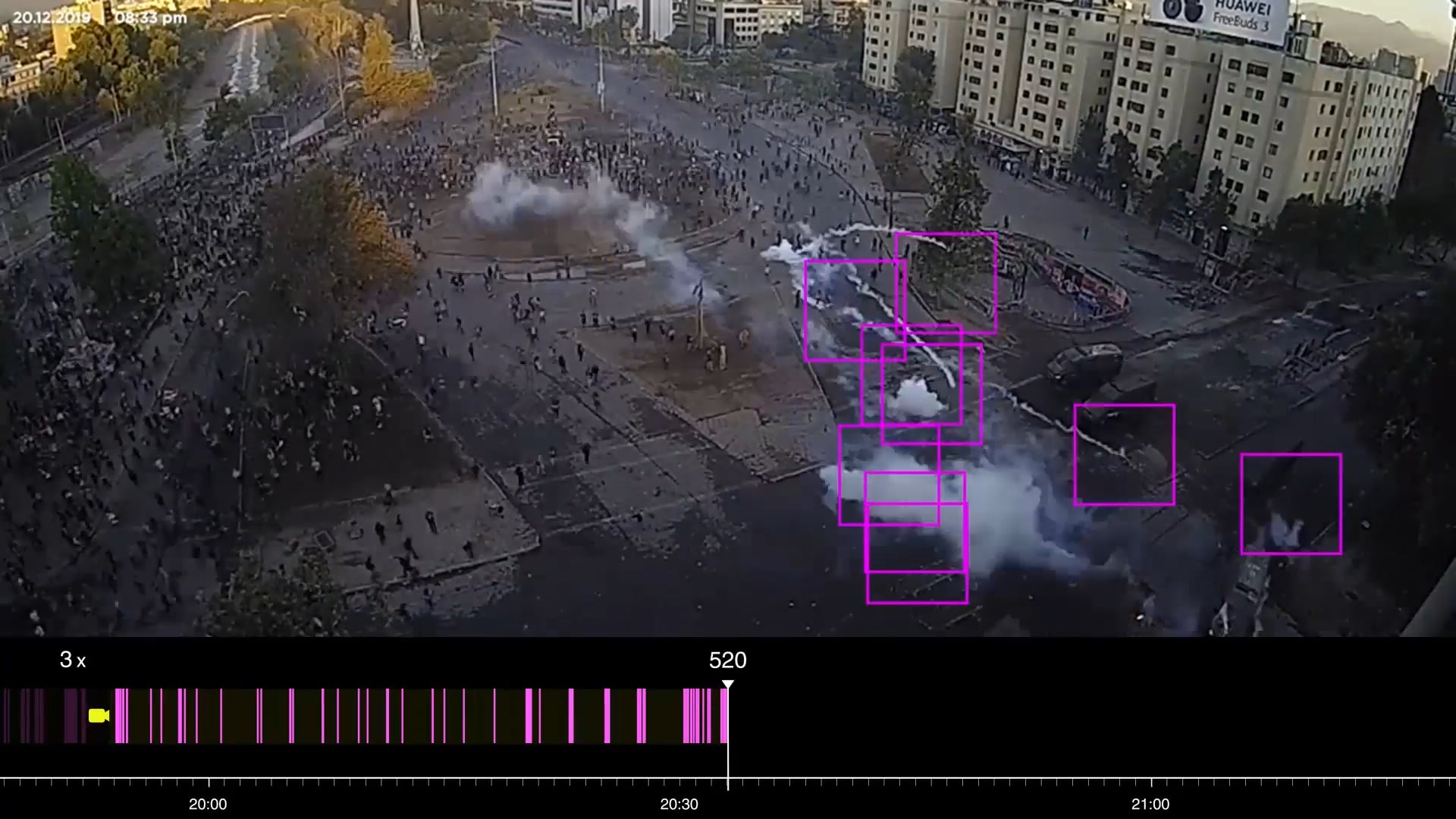
On 20 December 2019, the Chilean security forces used unprecedented quantities of tear gas within a relatively small area against people engaging in peaceful and unarmed protest. Using visual open source analysis and fluid dynamic simulation, we measured the concentration of tear gas in air and on the ground to estimate the scale of health risks posed on civilians on this day.
I.66 The Killing of Zineb Redouane
Date of Incident
1 Dec 2018
Location
Rue des Feuillants, Marseille
Forums
Media
In Partnership With
Disclose
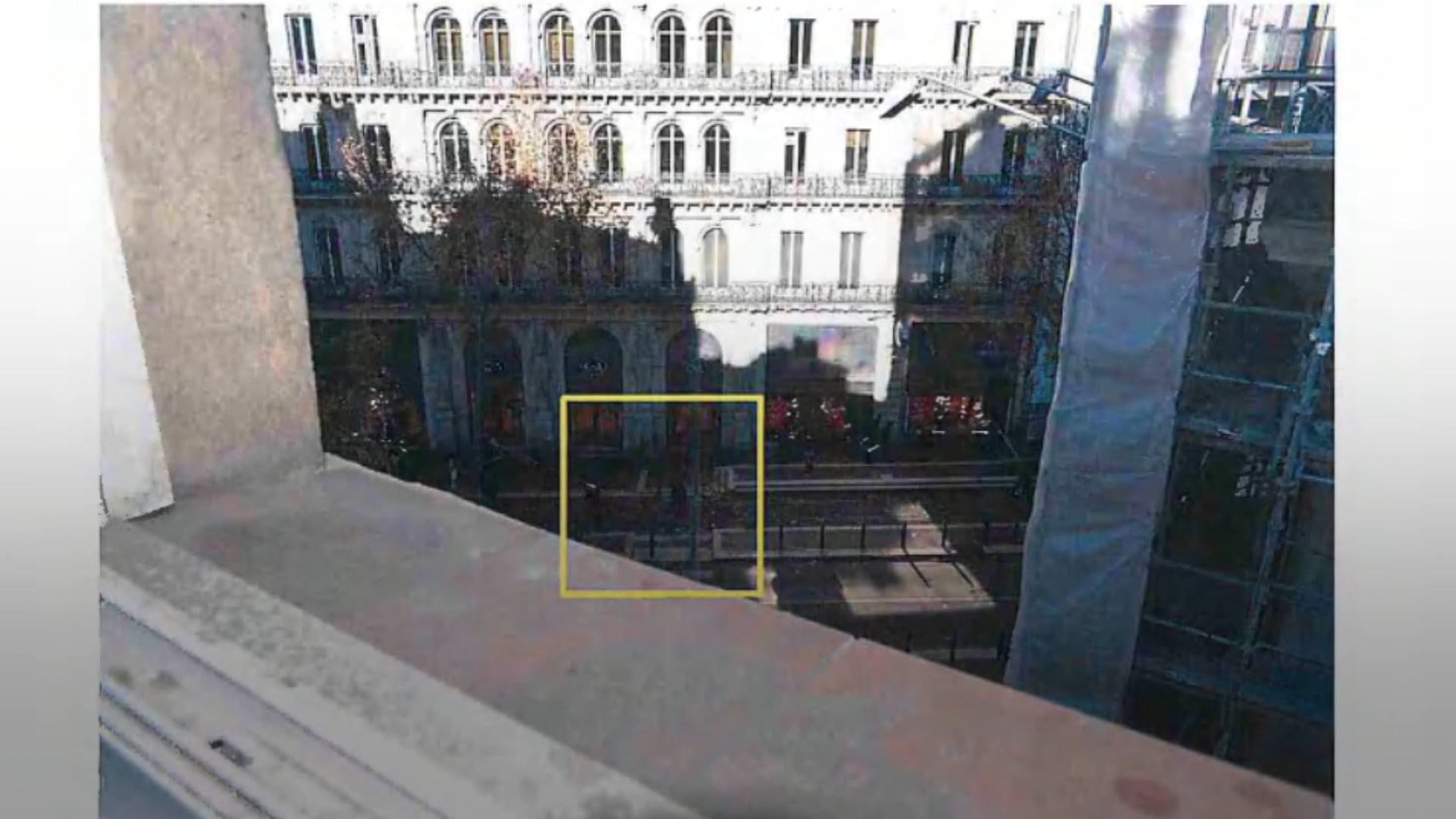
80-year-old Zineb Redouane was fatally wounded by a tear gas grenade as she stood at the window of her fourth-floor apartment, as protests continued in the streets outside. A ballistics report cleared the officer who fired the shot of wrongdoing. Working with Disclose, we re-examined the case.
I.65 The Beirut Port Explosion
Date of Incident
4 Aug 2020
Location
Beirut, Lebanon
Forums
Media
In Partnership With
Mada Masr
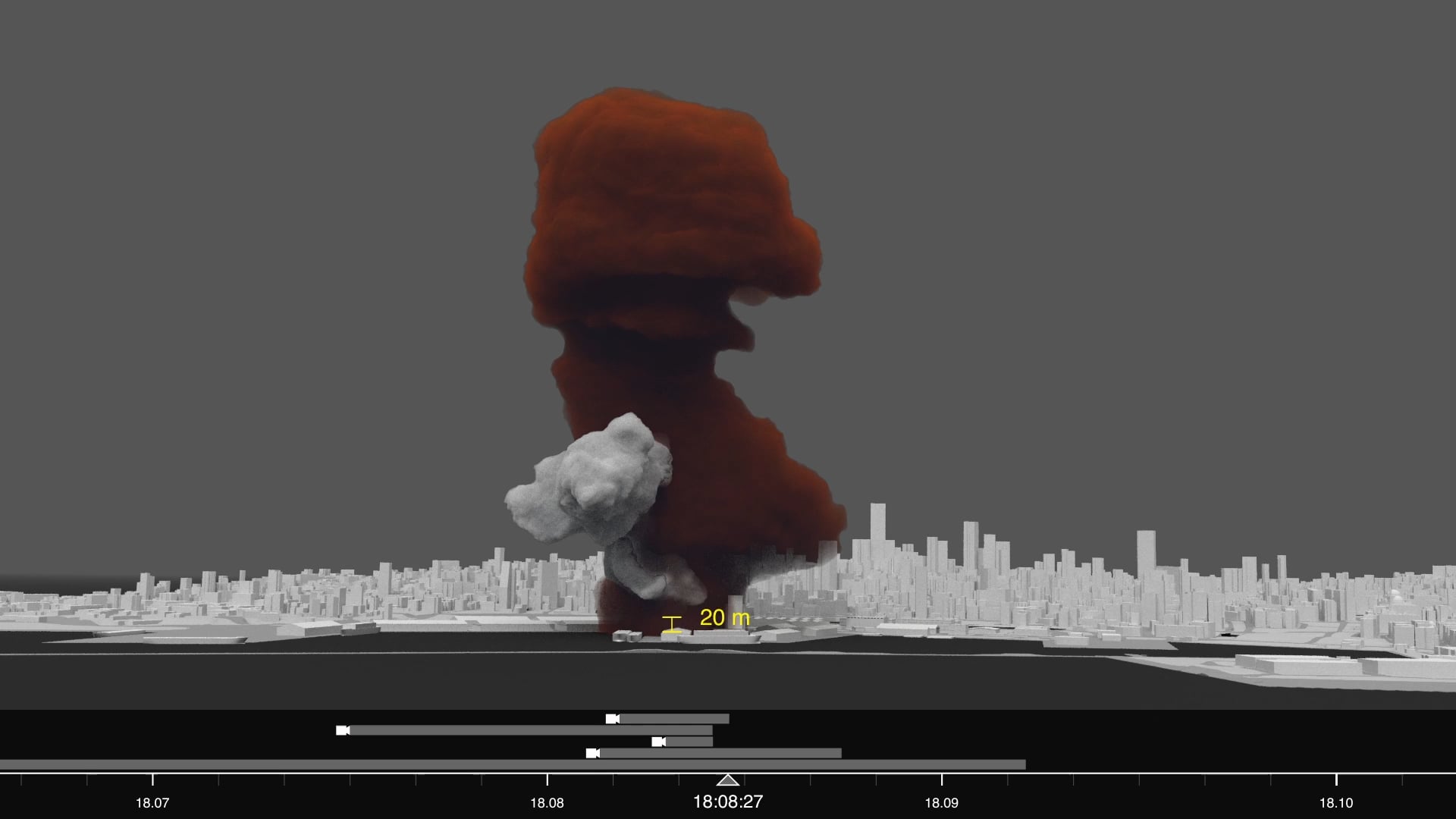
The explosions that ripped through the port of Beirut in 2020 devastated the city, leaving as many as 300,000 homeless. Following calls for an independent investigation, we mapped the contents of the warehouse where the blast originated and the spread of fire that instigated it, and have released our 3D models of the incident as a free resource for investigators and civil society.
I.64 Intentional Fires in Papua
Date of Incident
2011 - 2016
Location
West Papua, Indonesia
Forums
Media
In Partnership With
Greenpeace International
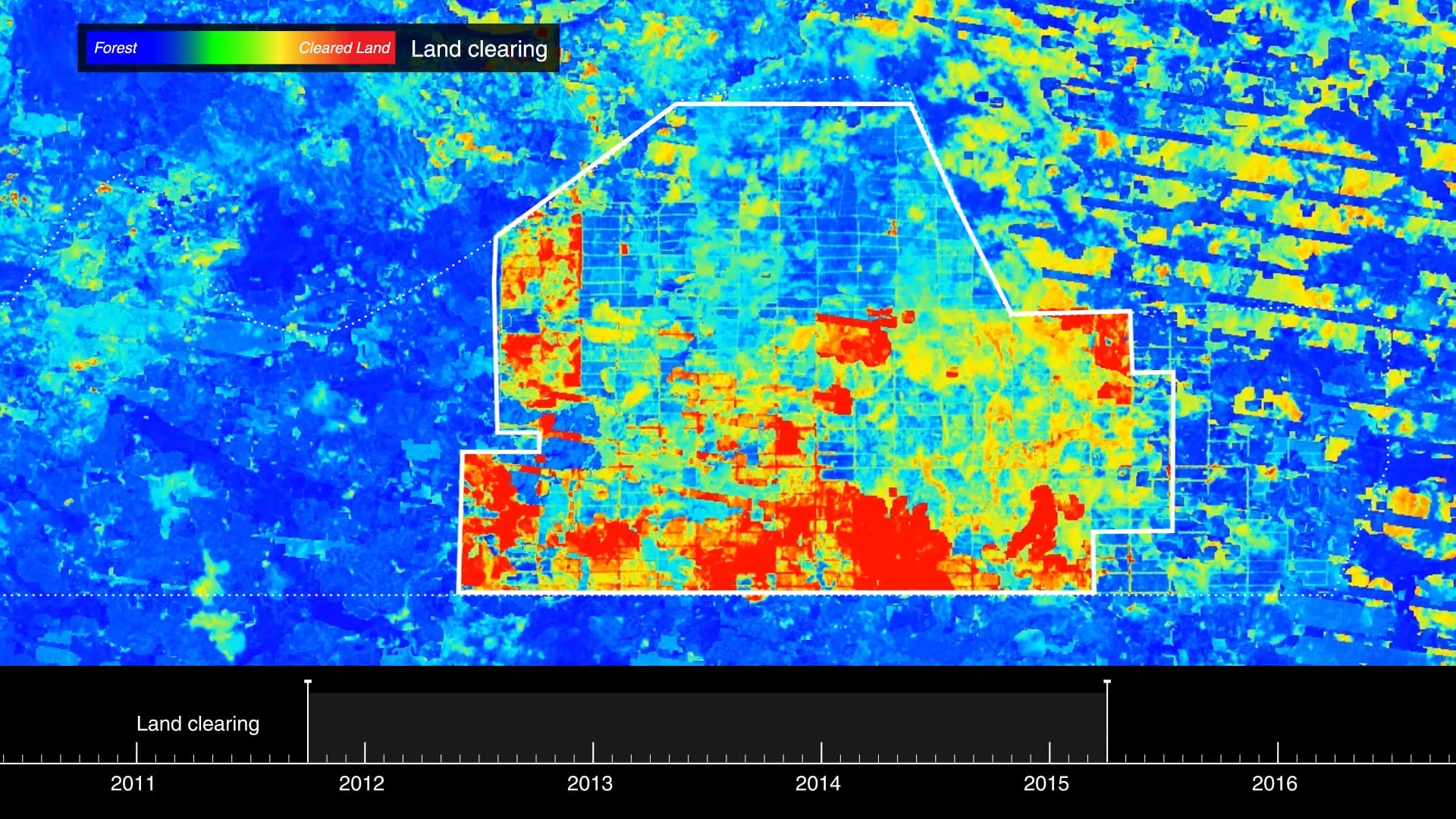
An Indonesian-Korean palm oil conglomerate named Korindo intentionally used fires as part of the process of clearing vast areas of forest in remote areas of the Indonesia province of Papua.
I.63 The Death of Adama Traoré
Date of Incident
19 Jul 2016
Location
Beaumont-Sur-Oise, Paris, France
Forums
Media
In Partnership With
Le Monde
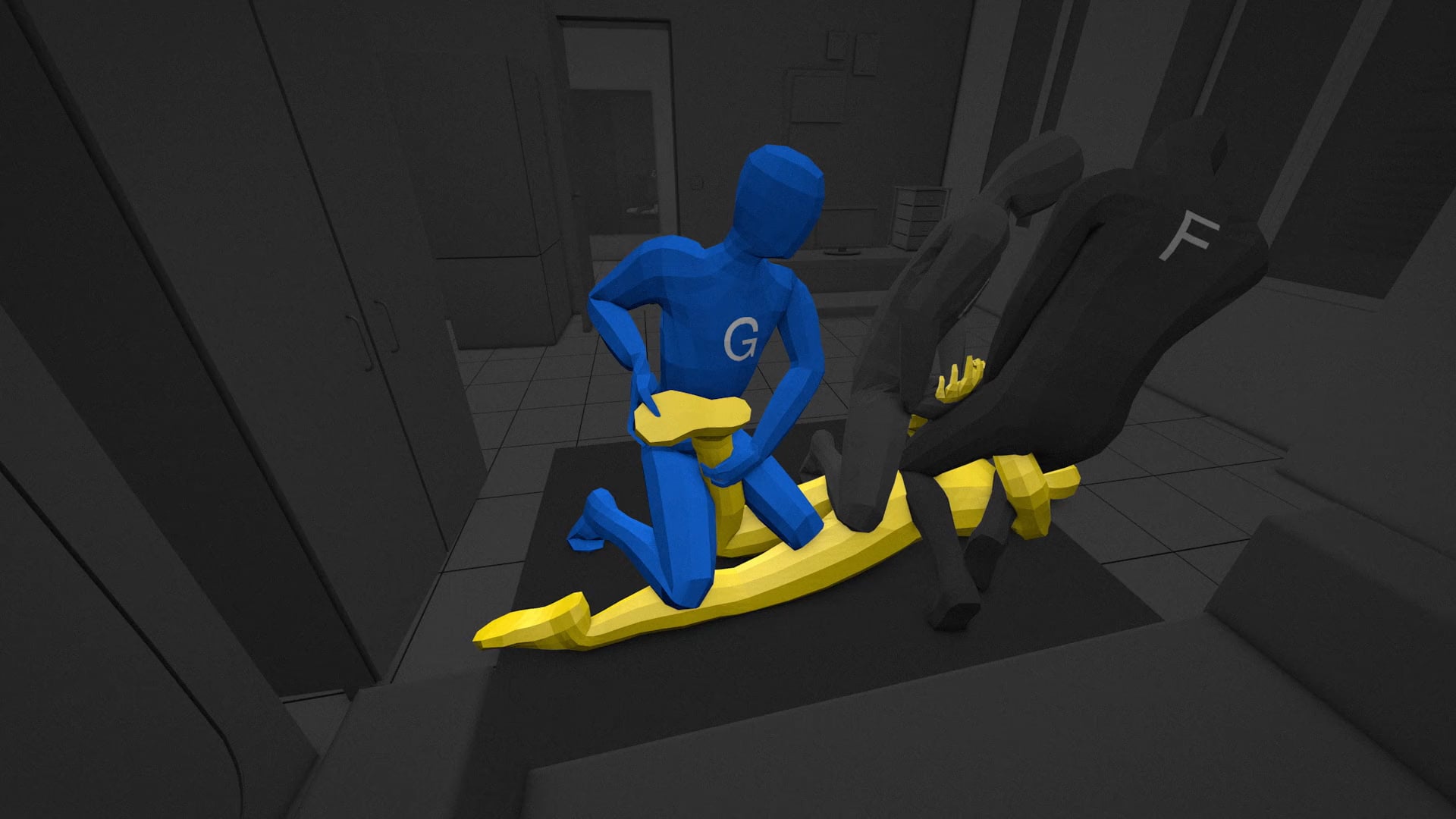
The 2016 death of a man in police custody raised troubling questions, but medical examiners later cleared the officers involved of any wrongdoing.
We built multiple reconstructions of each key moment of the incident, exposing contradictions in the officers' accounts, and gaps between the official account, and the evidence.
I.60 Police Brutality at the Black Lives Matter Protests
Date of Incident
25 May 2020 - Ongoing
Location
Minneapolis, MN and across the US
Forums
United Nations, Web Platform
In Partnership With
Bellingcat
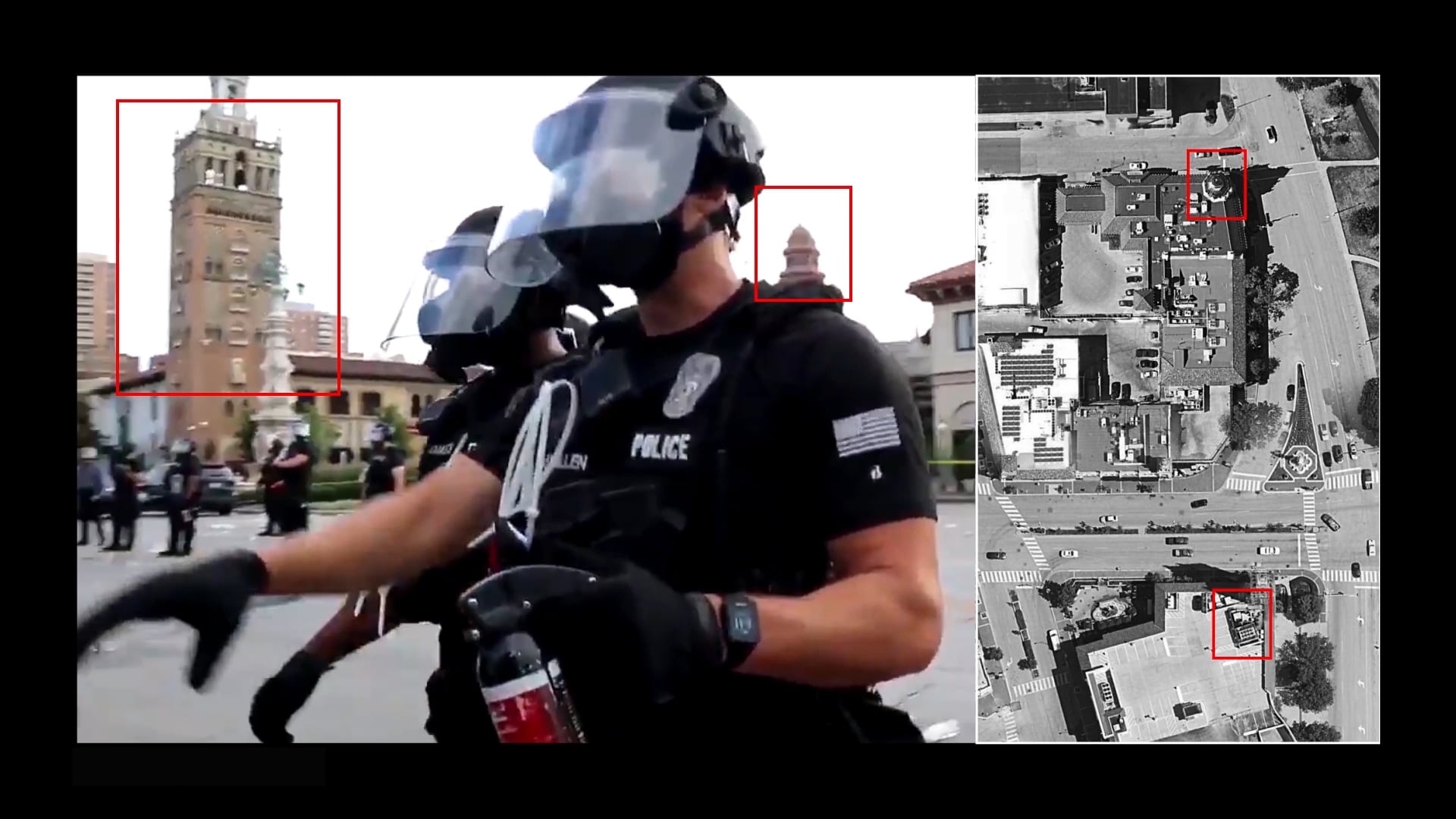
Protests against racialized police violence have swept the US, following the killings of George Floyd and others. Those protests have themselves been met with egregious brutality by police. With Bellingcat, we built a comprehensive archive of that systemic violence, to support accountability efforts.
I.62 Pushbacks Across the Evros/Meriç River: Situated Testimony
Date of Incident
1 Oct 2016
Location
Evros/Meriç river, Greek-Turkish border
Forums
Legal Process, Human Rights Report, Media
In Partnership With
HumanRights360
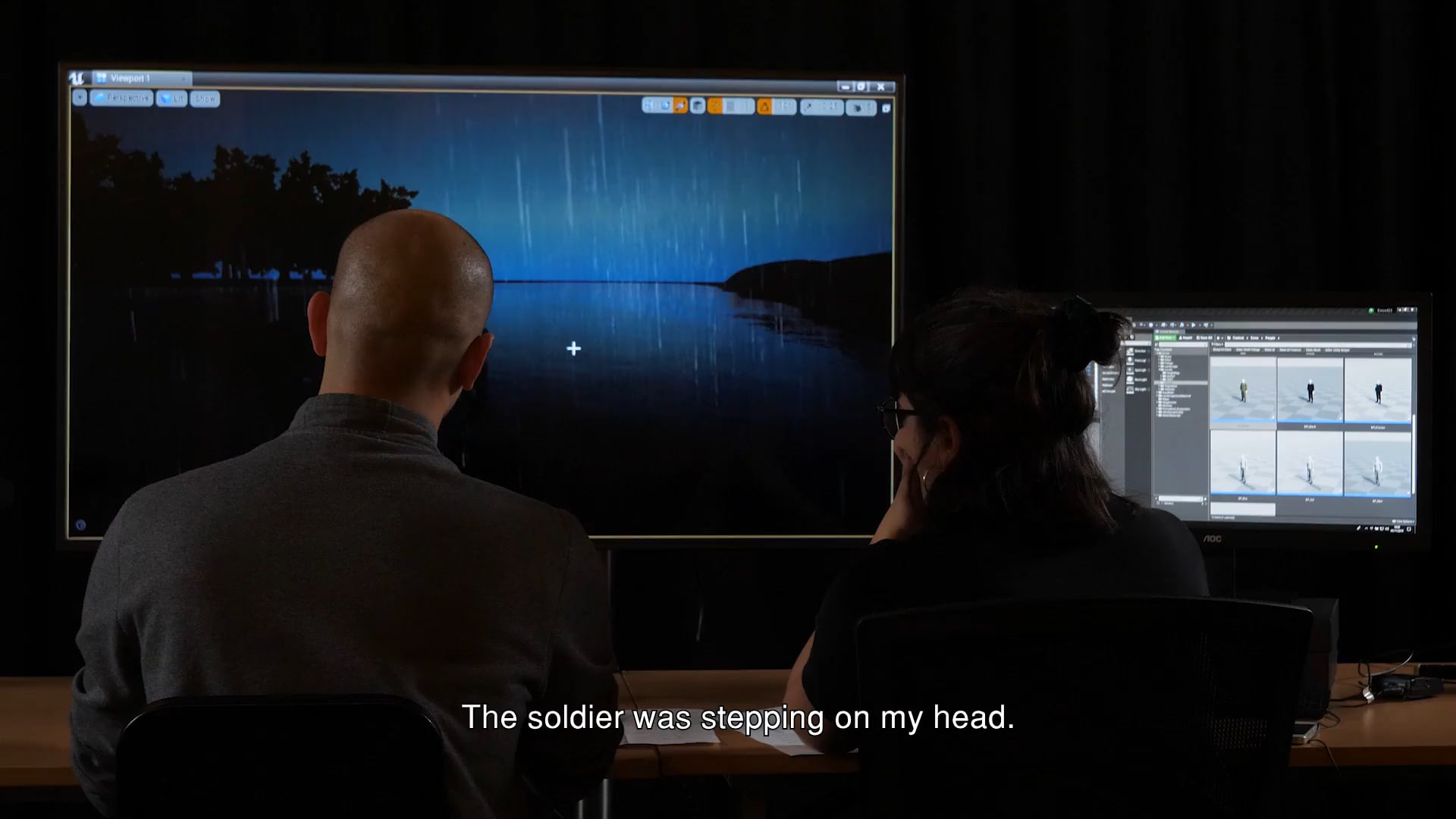
At Europe’s southeastern river border, migrants report being beaten, detained, and illegally ‘pushed back’ to Turkey from Greece by unidentified masked men. Greek and EU authorities refuse to investigate. We used architectural and gaming software to gather evidence that proves the practice is widespread and systematic.
I.61 The Killing of Muhammad al-Arab
Date of Incident
2 Mar 2020
Location
Evros/Meriç river delta
Forums
Legal Process, Media, Parliamentary Inquiry
In Partnership With
Self-Initiated
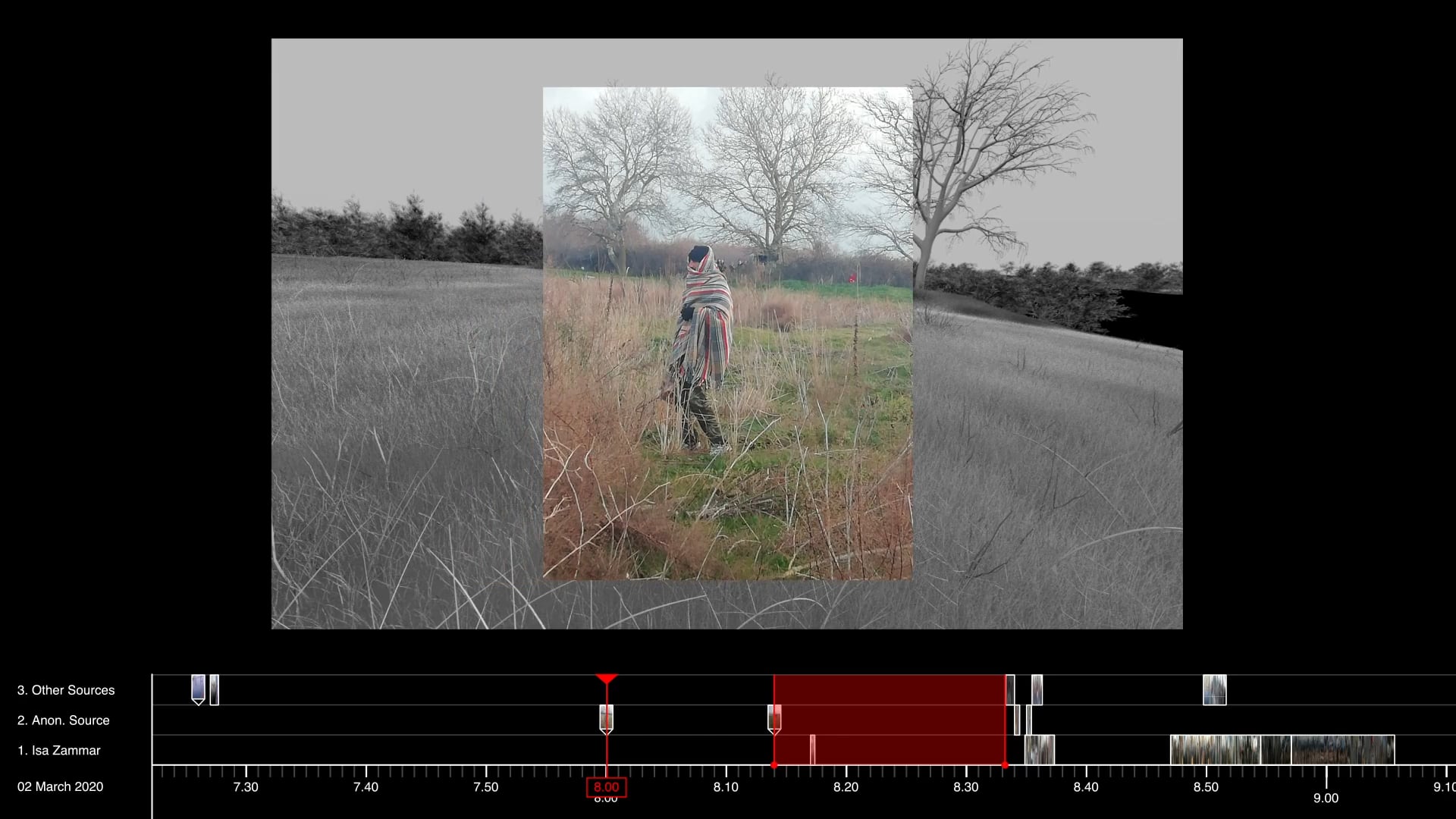
When Turkey mobilized refugees and migrants to cross into Greece, reports emerged that Greek forces had responded with live fire, causing casualties.
We confirmed that, despite Greece’s denials, automatic rounds were fired from the Greek side of the border and one person, Muhammad al-Arab, was shot dead near a group of armed Greek soldiers.
I.59 Pushbacks in Melilla: ND and NT v. Spain
Date of Incident
13 Aug 2014
Location
Melilla, Spain
Forums
Legal Process, Media
In Partnership With
European Center for Constitutional and Human Rights (ECCHR)
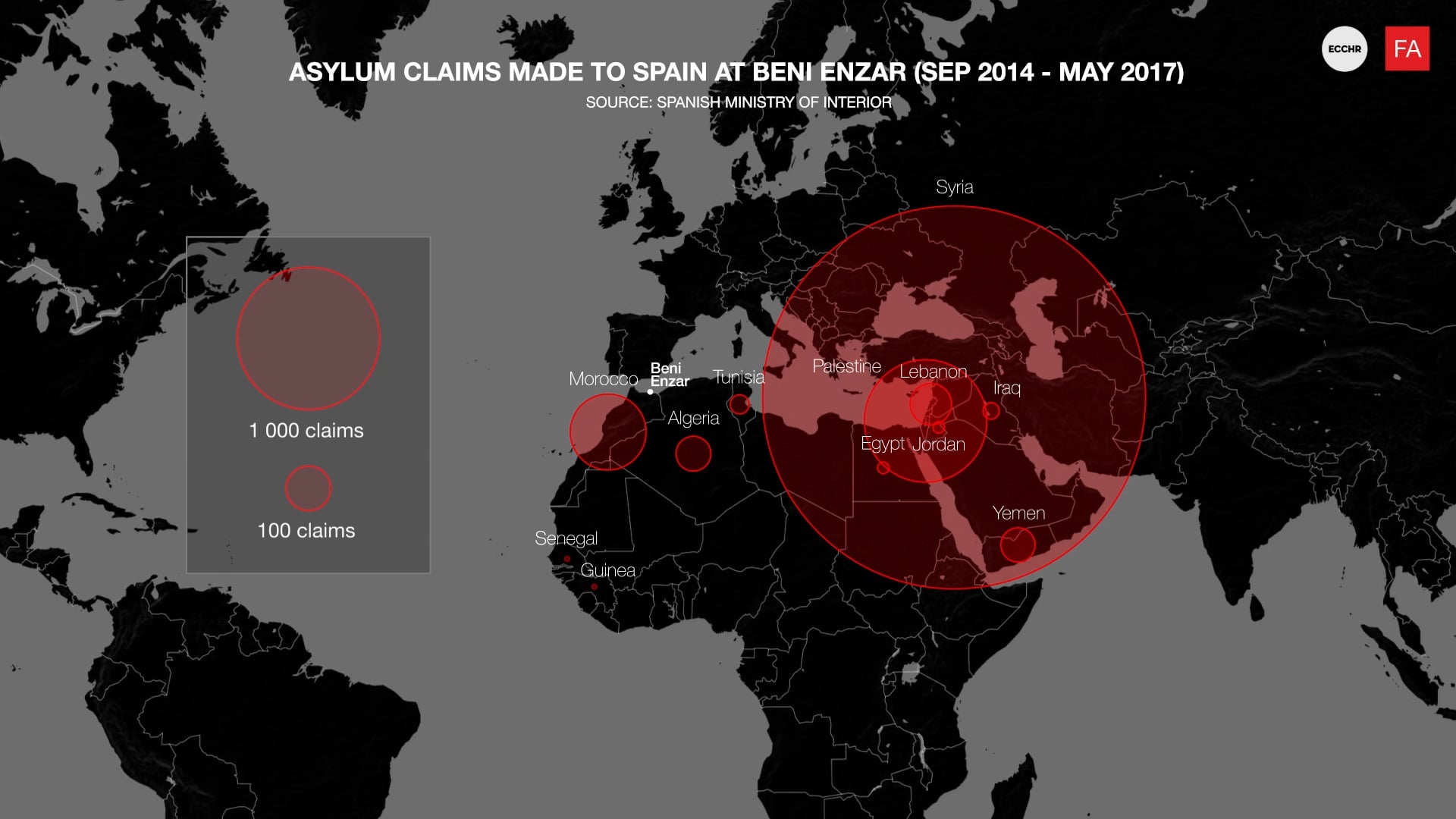
The case of ND and NT v. Spain was the first trial at the European Court of Human Rights to address pushbacks at Europe’s land borders. The Court’s decision to acquit Spain was based on a gross distortion of facts.
Using data from asylum applications and spatial analysis, we demonstrate that no legal routes to ask for protection are available to Black migrants from Sub-Saharan Africa.
I.58 The Killing of Mark Duggan
Date of Incident
4 Aug 2011
Location
Tottenham, North London
Forums
Legal Process, Exhibition, Media
Commissioned By
Lawyers for the Duggan family
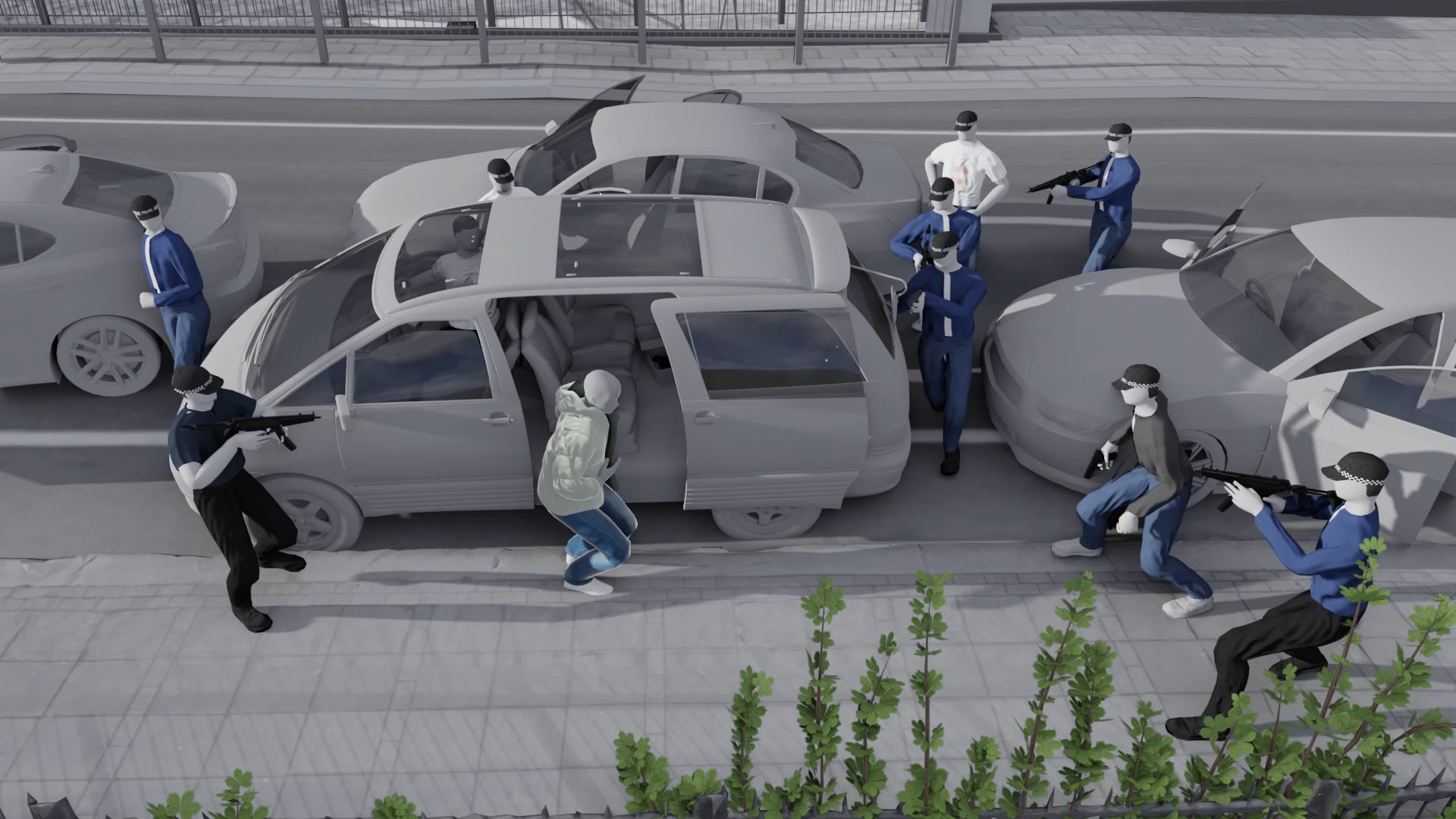
Mark Duggan’s killing by police led to the most widespread social unrest in the UK in a generation. A decade on, what happened remains unclear.
Using information in the public domain, we analysed both the event of the shooting, and the official investigations, in closer detail than ever before.
I.55 The Killing of Muhammad Gulzar
Date of Incident
4 Mar 2020
Location
Kastanies/Pazarkule border crossing, Evros/Meriç region
Forums
Media
In Partnership With
Bellingcat, Lighthouse Reports
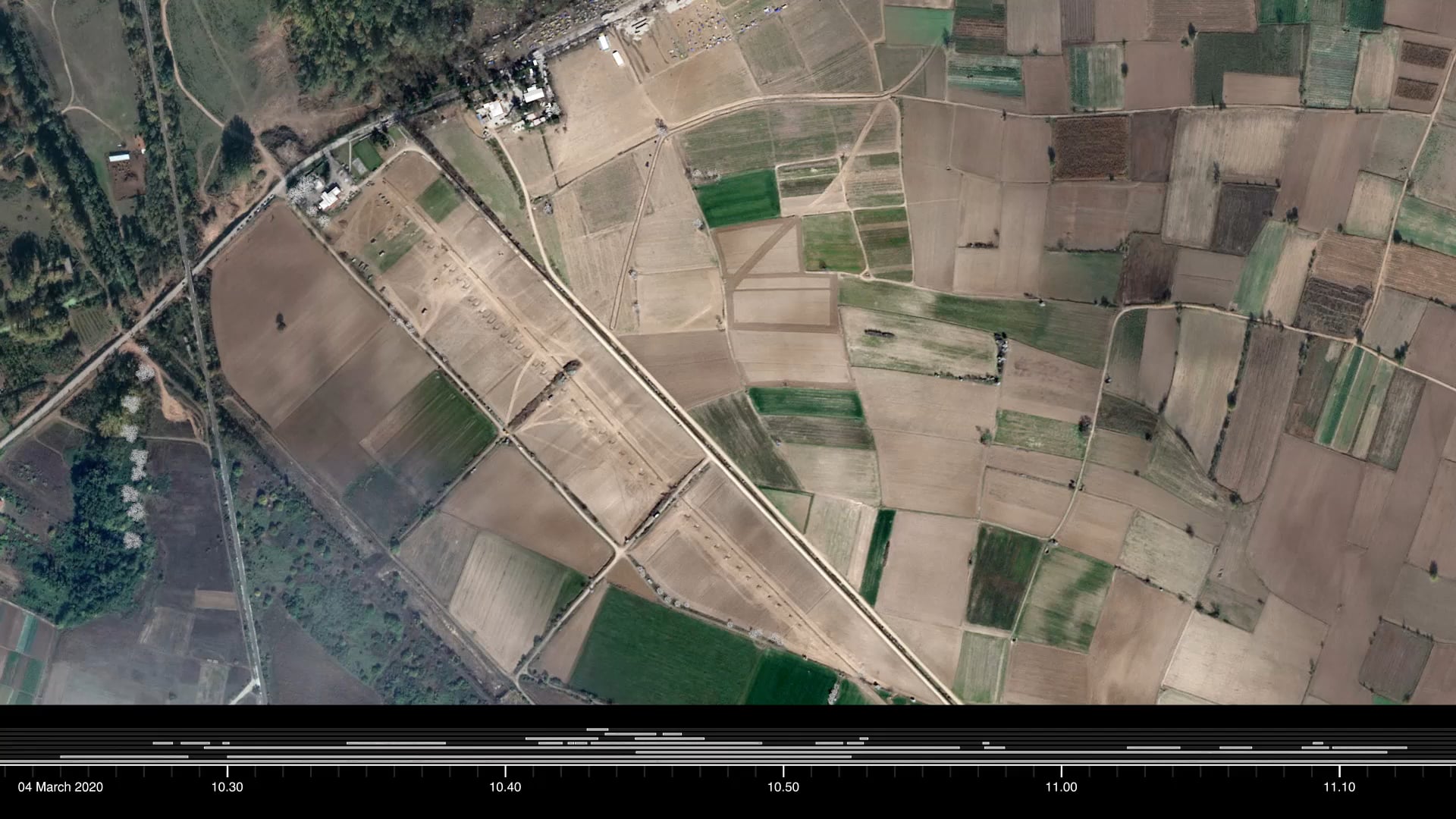
After Turkey started encouraging refugees and migrants to cross the Evros/Meriç land border into Greece, reports emerged that Greek forces had responded with live fire, causing multiple casualties. Despite Greece’s official denials, we confirmed that live rounds were indeed fired from the Greek side of the border, that several people were wounded, and one person, Muhammad Gulzar, was killed.
I.57 Expulsions Platform
Date of Incident
1 Jan 2014 - 1 Jan 2017
Location
Cordillera del Condór, Ecuadorian Amazon
Forums
Web Platform
Commissioned By
CASCOMI (Comunidad Amazónica de Acción Social Cordillera del Cóndor Mirador)
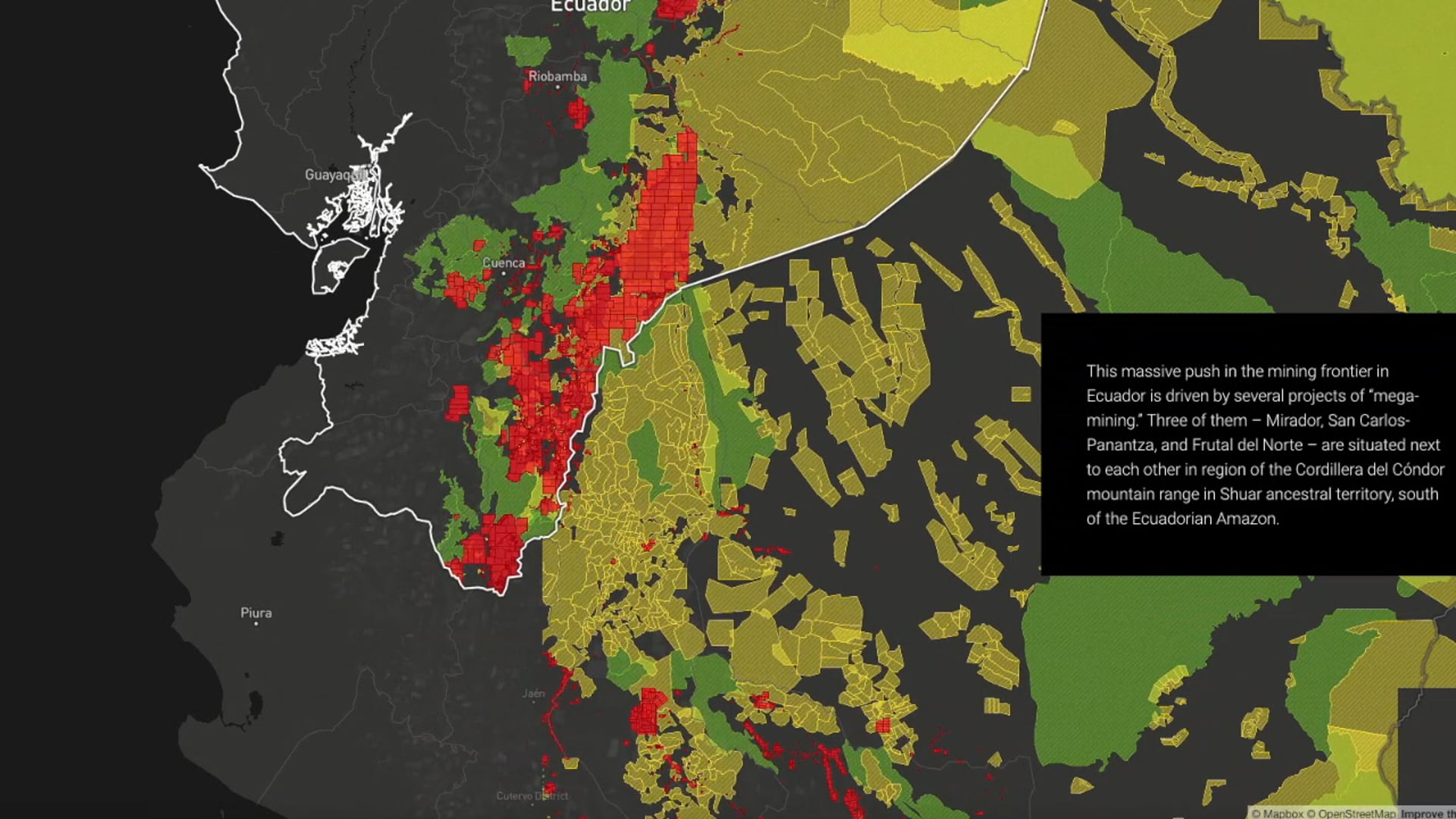
Forced displacements and archaeological destruction in the mega-mining project Mirador in the Cordillera del Cóndor, Ecuadorian Amazonia.
I.54 Model Zoo
Date of Incident
Various
Location
Various
Forums
Exhibition, Media
In Partnership With
Bellingcat, Amnesty International, Open source contributors
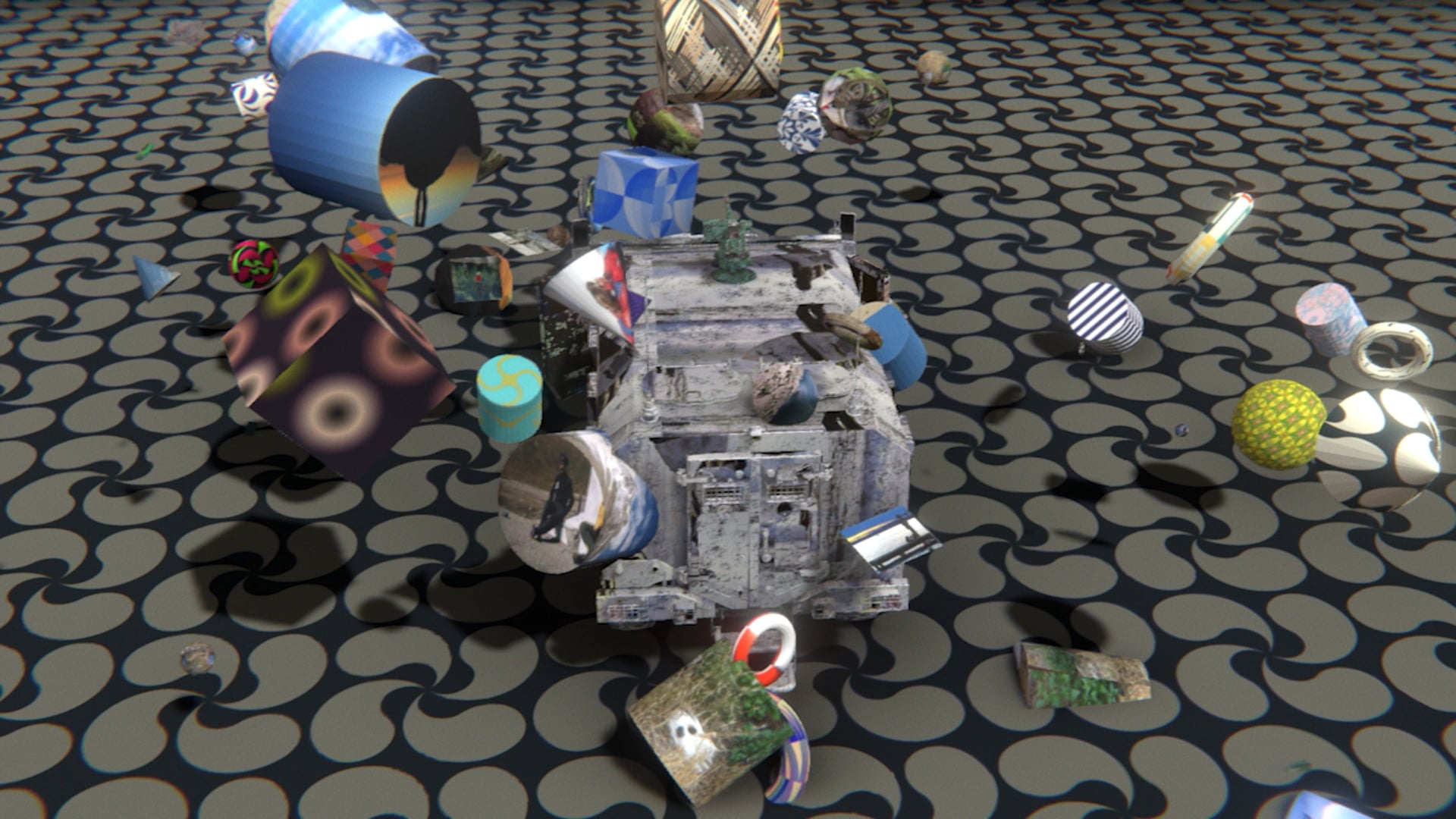
Since 2018, Forensic Architecture has been working with ‘synthetic images’—photorealistic digital renderings of 3D models—to train machine learning classifiers. Model Zoo includes a growing collection of 3D models of munitions and weapons, as well as the different classifiers trained to identify them making a catalogue of some of the most horrific weapons used in conflict today.
I.53 The Beating of Faisal al-Natsheh
Date of Incident
28 Feb 2014
Location
Occupied Hebron, Palestine
Forums
Exhibition, Media
In Partnership With
Breaking the Silence
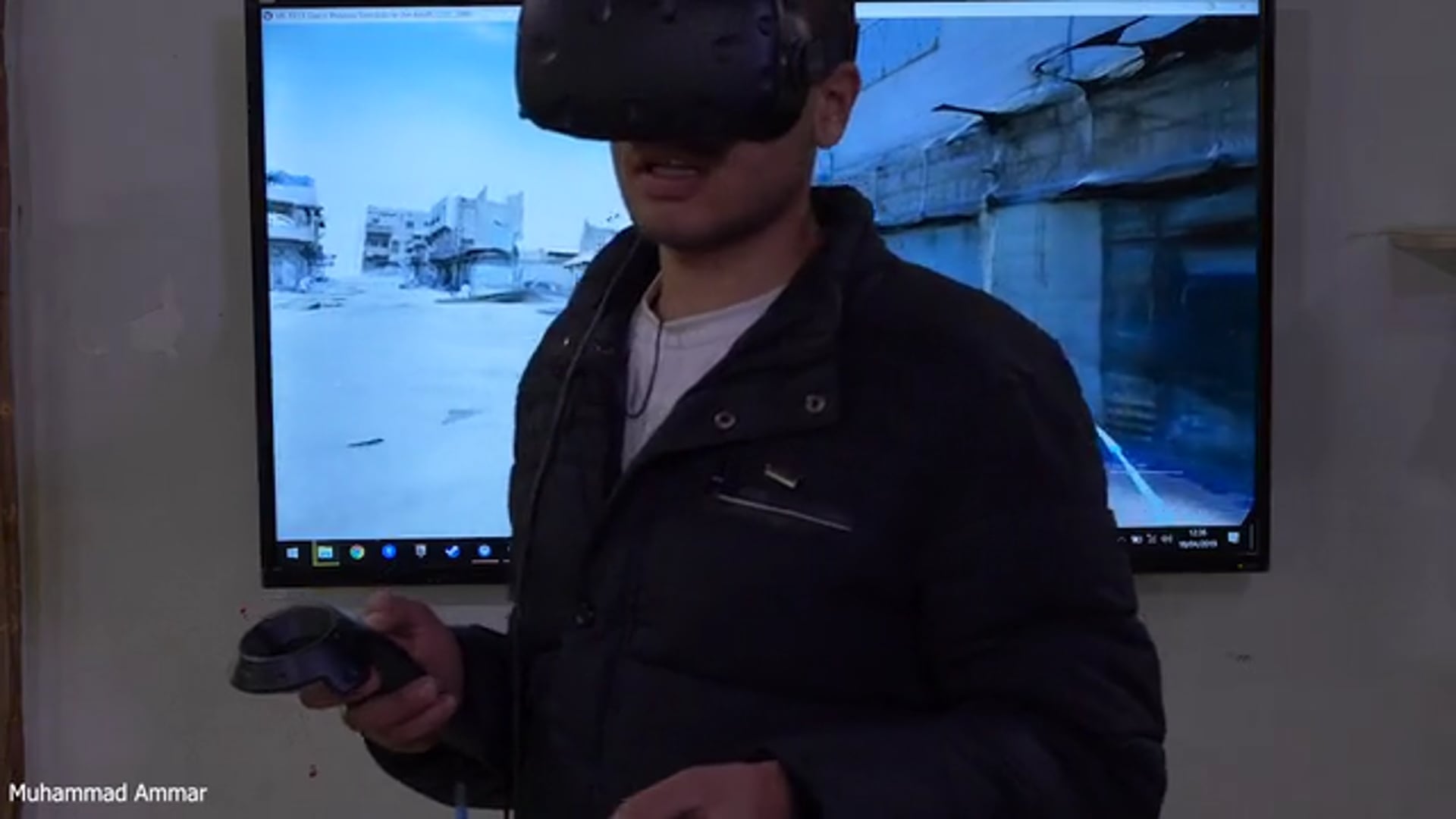
In 2017, an Israeli soldier, now member of the NGO Breaking the Silence, confessed to have gravely beaten a Palestinian man. Following the Israeli state attempts to discount the account, we built a VR tool to collect and cross-reference testimony from the soldier and other witnesses.
I.52 Shipwreck at the Threshold of Europe, Lesvos, Aegean Sea
Date of Incident
28 Oct 2015
Location
Aegean Sea, Lesvos
Forums
Exhibition, Media
Commissioned By
Self-Initiated
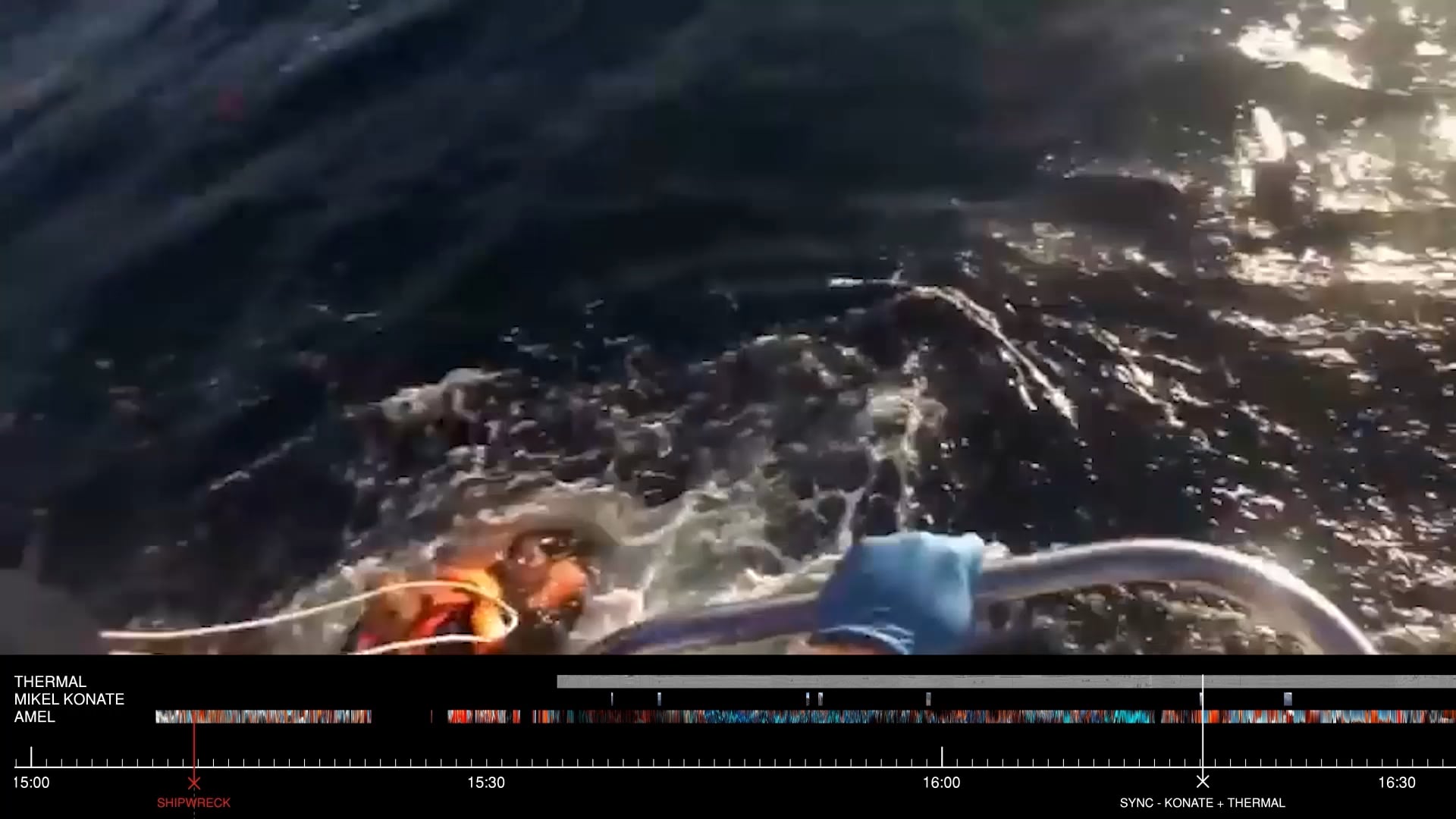
The death of more than 40 people off the coast of Lesvos in October 2015 was the single deadliest incident in Europe's 'long summer of migration'. One of the survivors, Amel Alzakout, recorded the shipwreck on a waterproof wrist camera. Her footage provides a unique, situated perspective of this tragic event at the threshold of Europe.
I.51 Pushbacks Across the Evros/Meriç River: The case of Ayşe Erdoğan
Date of Incident
4 May 2019 - 5 May 2019
Location
Evros/Meriç river, Greece/Turkey
Forums
Legal Process, Media
In Partnership With
HumanRights360
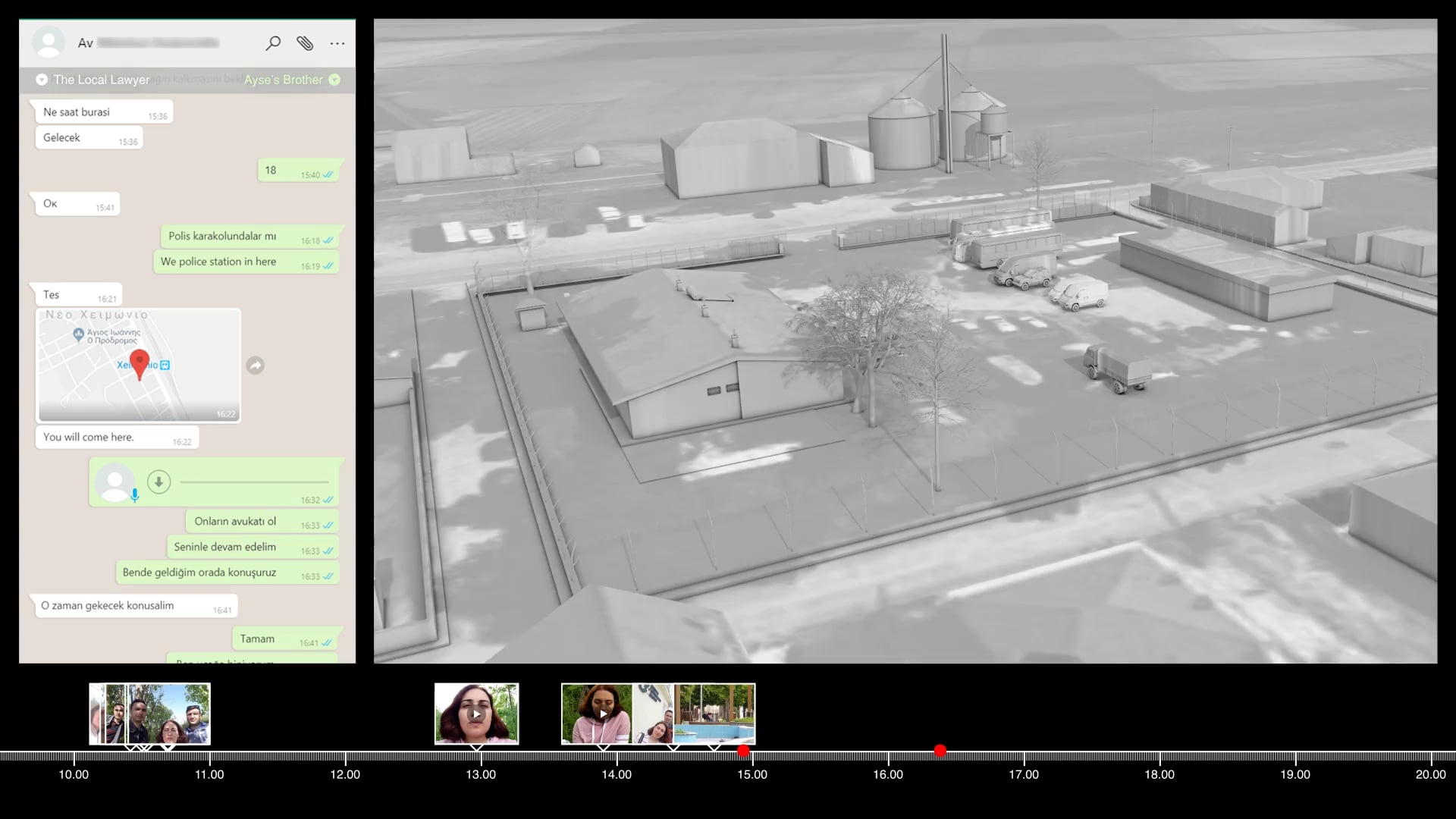
Ayşe Erdoğan crossed the Evros/Meriç river into Greece in 2019, fleeing persecution in Turkey. She and two friends recorded their journey. Using messages, location data, photos, and videos, we confirmed they had reached Greece before being ‘pushed back’, and arrested and imprisoned in Turkey.
I.49 Privatised Push-Back of the Nivin
Forensic Oceanography
Date of Incident
1 Nov 2018
Location
Central Mediterranean
Forums
Legal Process, United Nations
Commissioned By
Self-Initiated
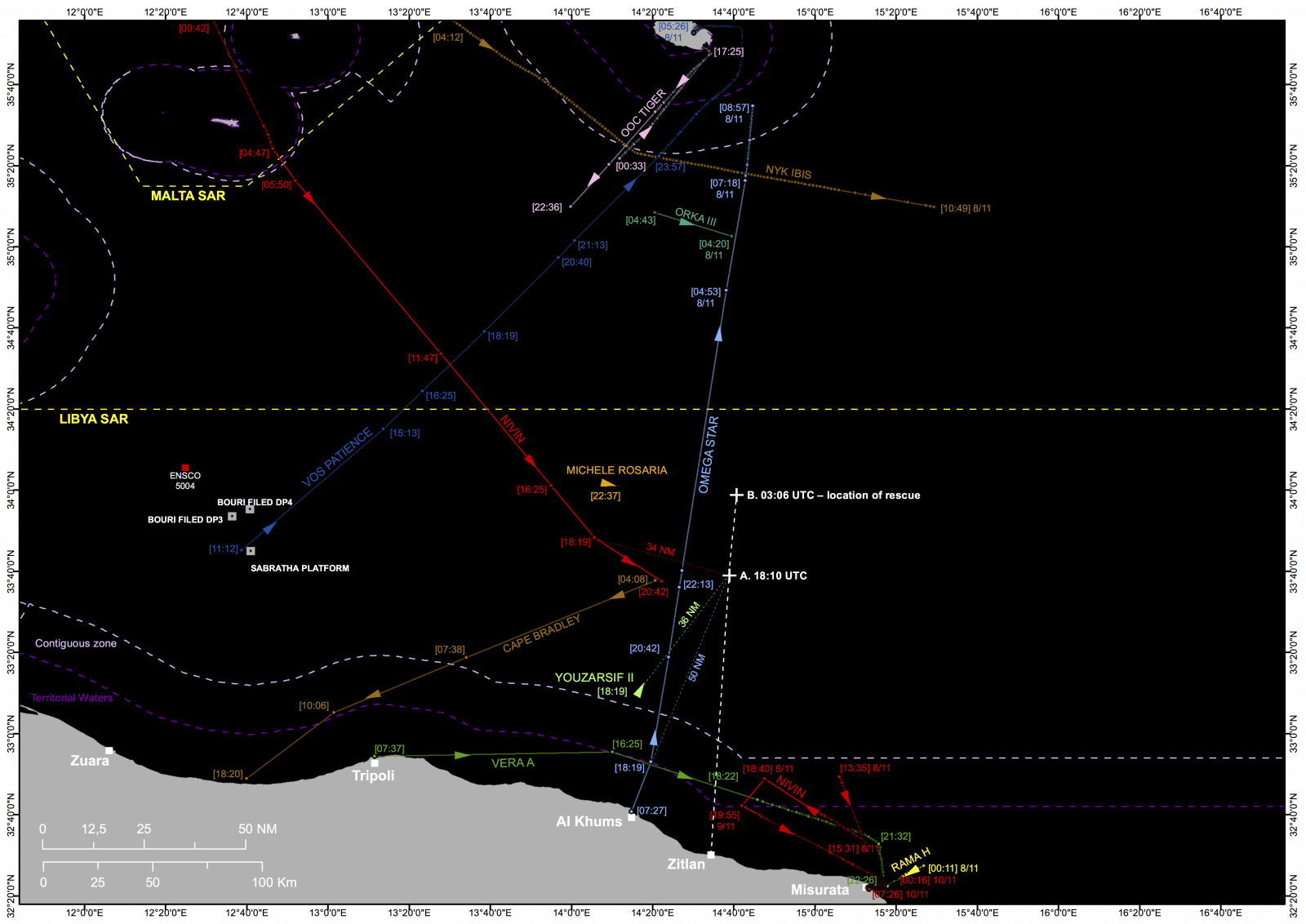
Five months after Italy began to close its ports to migrants rescued at sea, a vessel carrying 93 people was spotted in the southern Mediterranean. The Italian and Libyan Coast Guards enlisted a private merchant ship to rescue the migrants and forcefully return them to Libya. Using tracking data and testimonies, Forensic Oceanography exposed a new mode of privatised border security.
I.50 Pushbacks Across the Evros/Meriç River: Analysis of video evidence
Date of Incident
17 Sep 2019
Location
Evros/Meriç river, Greece/Turkey border
Forums
Legal Process, Media
In Partnership With
Der Spiegel, HumanRights360
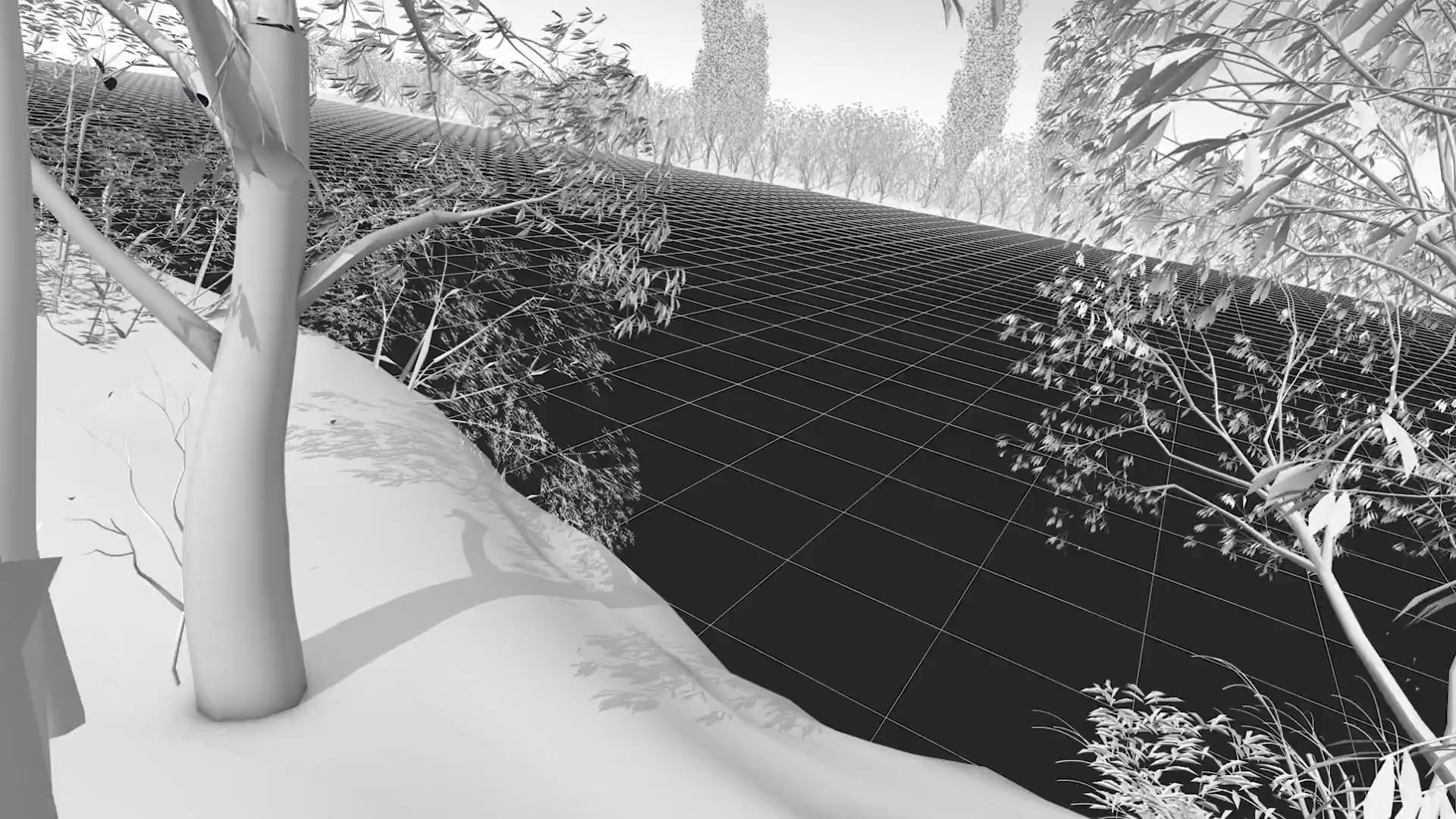
At southeastern Europe’s river border, refugees report being beaten, detained, and illegally ‘pushed back’ to Turkey from Greece by unidentified masked men. Working with Der Spiegel, we analysed the first footage of a pushback in progress, and tried to identify those responsible.
I.48 Oil and Gas Pollution in Vaca Muerta
Date of Incident
2 Jan 2013 - Ongoing
Location
Vaca Muerta, Argentina
Forums
Media
In Partnership With
The Guardian
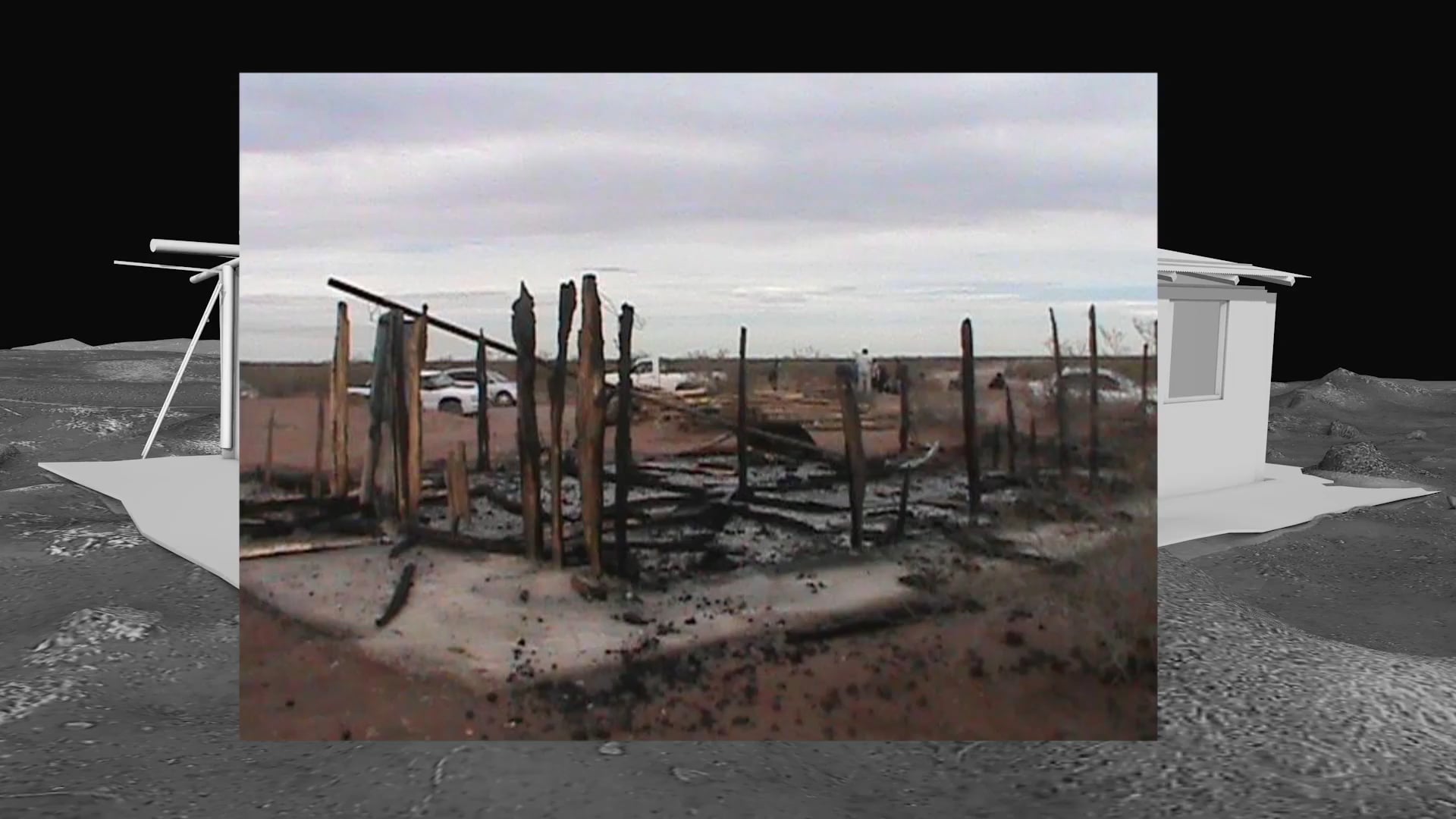
Vaca Muerta is one of the world's largest fossil fuel resources. The 2013 arrival of the international oil and gas industry to the region has irreversibly changed its landscape, inflicting widespread environmental damage. We used satellite images and anthropological reports to investigate the industry's impact upon the traditional ways of life of the indigenous Mapuche people who live there.
I.47 The Killing of Harith Augustus
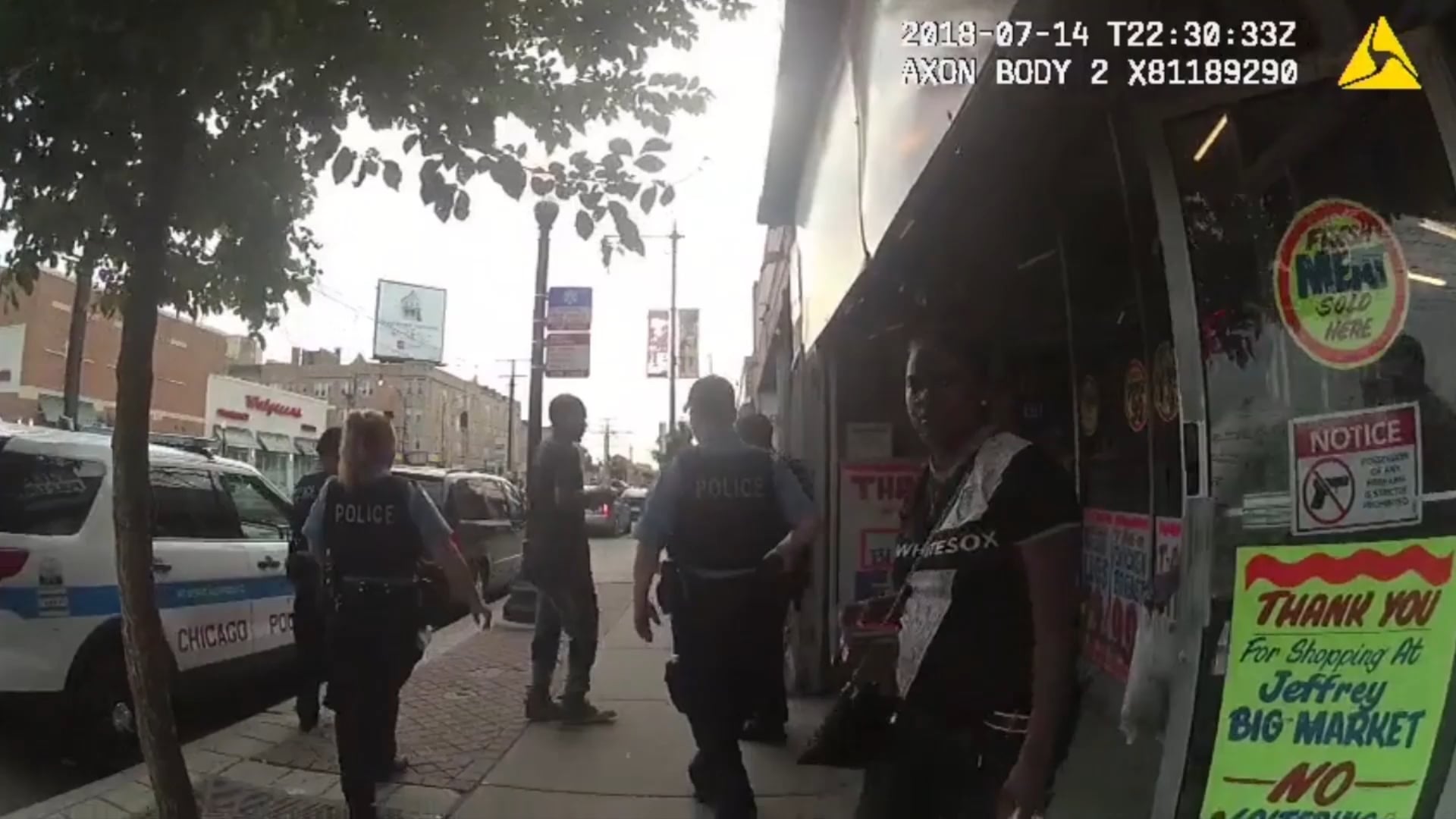
Date of Incident
14 Jul 2018
Location
South Shore, Chicago
Forums
Exhibition
In Partnership With
Invisible Institute
When police shot Harith Augustus to death not far from his South Shore barbershop, the Chicago police called it a legitimate 'split-second' decision. We unpacked that split second at six different time scales, from milliseconds to years. Our investigation uncovered multiple violations by Chicago police, including, not for the first time, withholding critical video evidence from the public.
I.46 The Battle of Ilovaisk
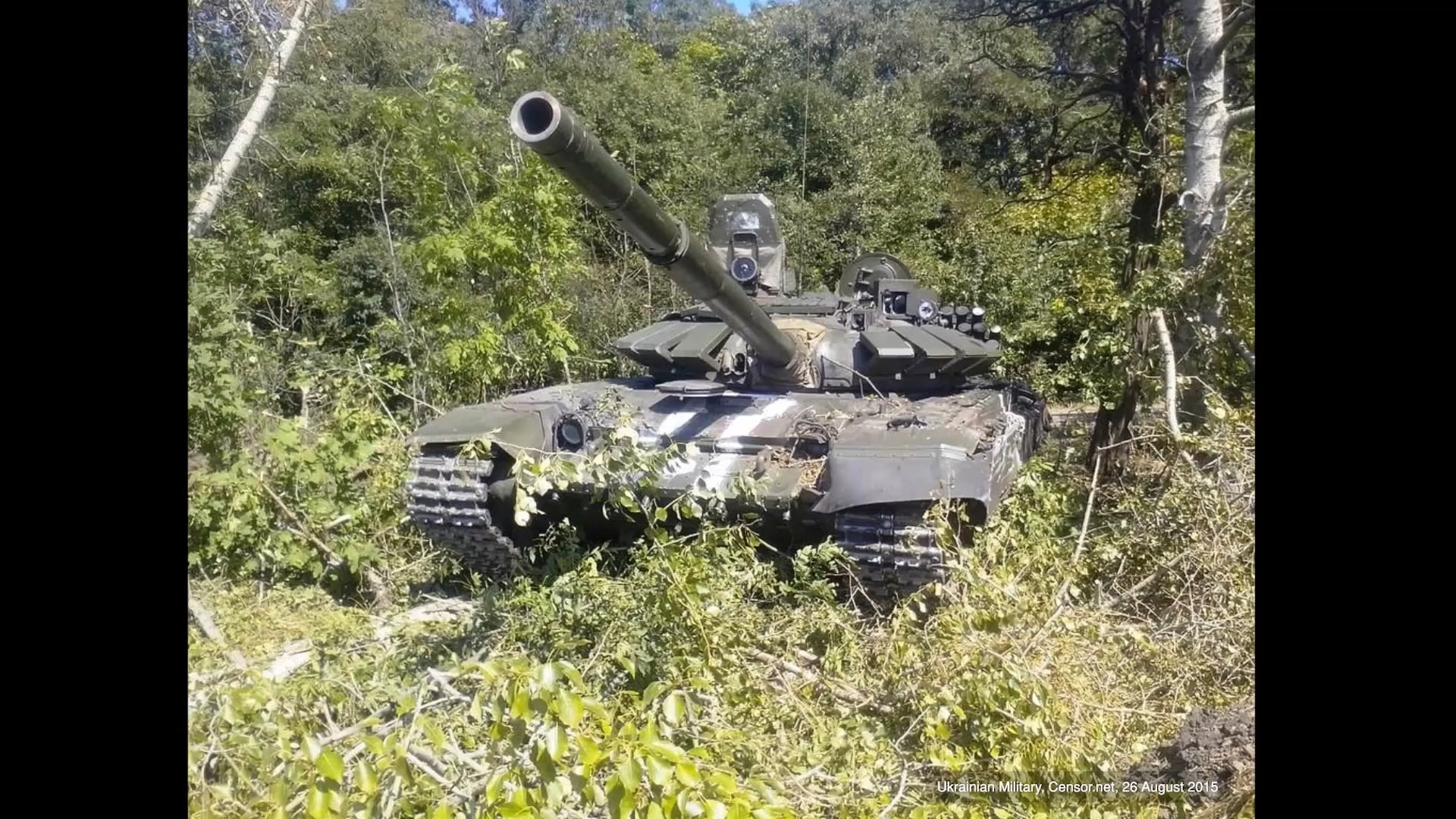
Date of Incident
24 Aug 2014 - 3 Sep 2014
Location
Ilovaisk, Ukraine
Forums
Legal Process, Media
Commissioned By
European Human Rights Advocacy Centre (EHRAC)
The victory of pro-Russian separatists over the Ukrainian army in the battle for control of Ilovaisk was a defining moment in the 2014 conflict in eastern Ukraine.
We used machine learning to search for evidence of Russian military involvement.
I.45 Herbicidal Warfare in Gaza
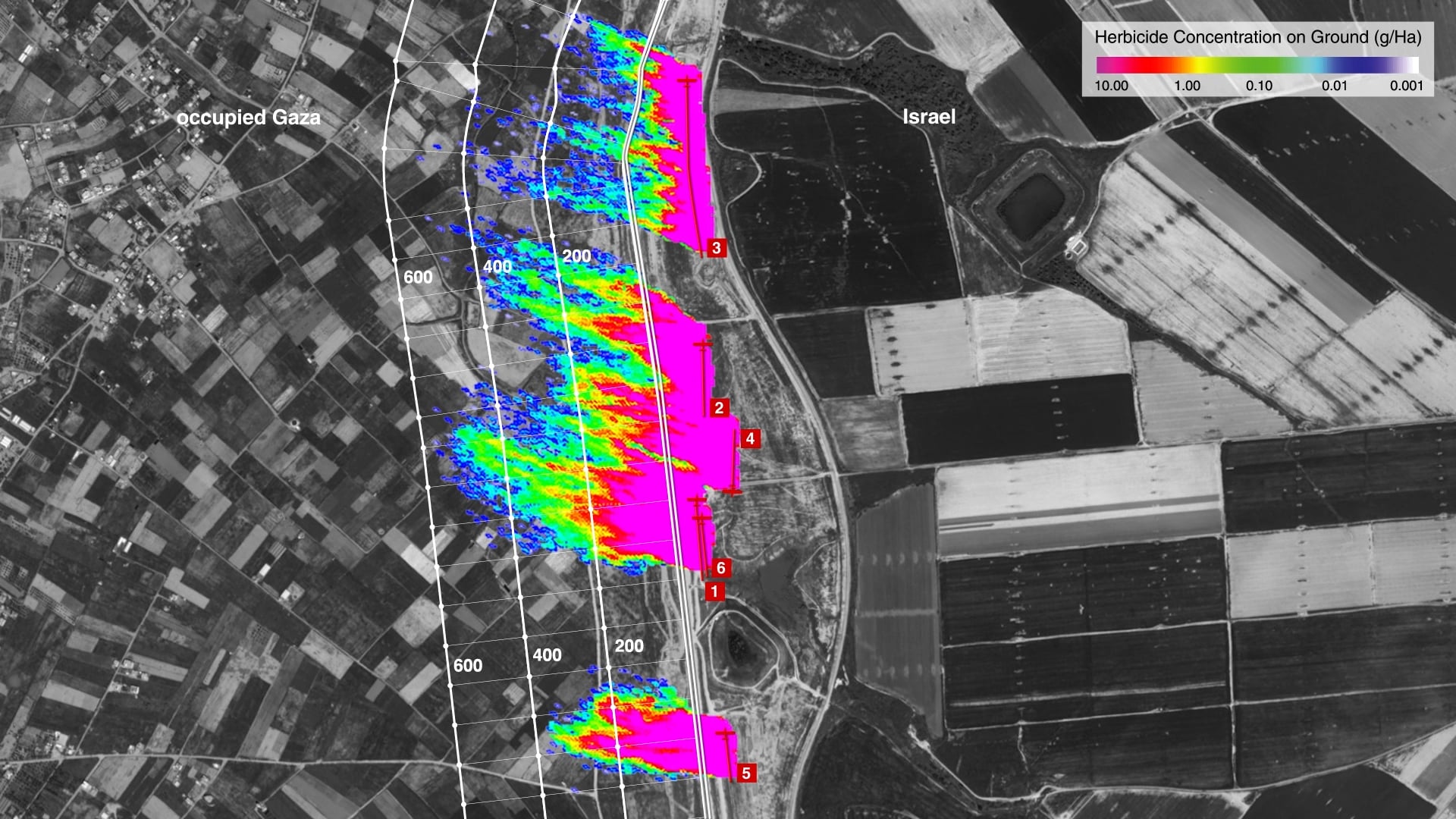
Date of Incident
1 Jan 2014 - Ongoing
Location
Khan Younes, Gaza, Occupied Palestinian Territories
Forums
Exhibition, Media
Commissioned By
Self-Initiated
Since 2014, Israeli military bulldozing of agricultural and residential lands along the eastern border of occupied Gaza has been complemented by unannounced aerial spraying of crop-killing herbicides. Piecing together farmer testimonies, satellite imagery, and drift analysis, we investigated the unique destructive signature of a single spraying event in April 2017, along the border in Khan Younes.
I.44 Conquer and Divide
Date of Incident
1 Jan 1967 - Ongoing
Location
Occupied Palestinian Territories
Forums
Web Platform
In Partnership With
B’Tselem
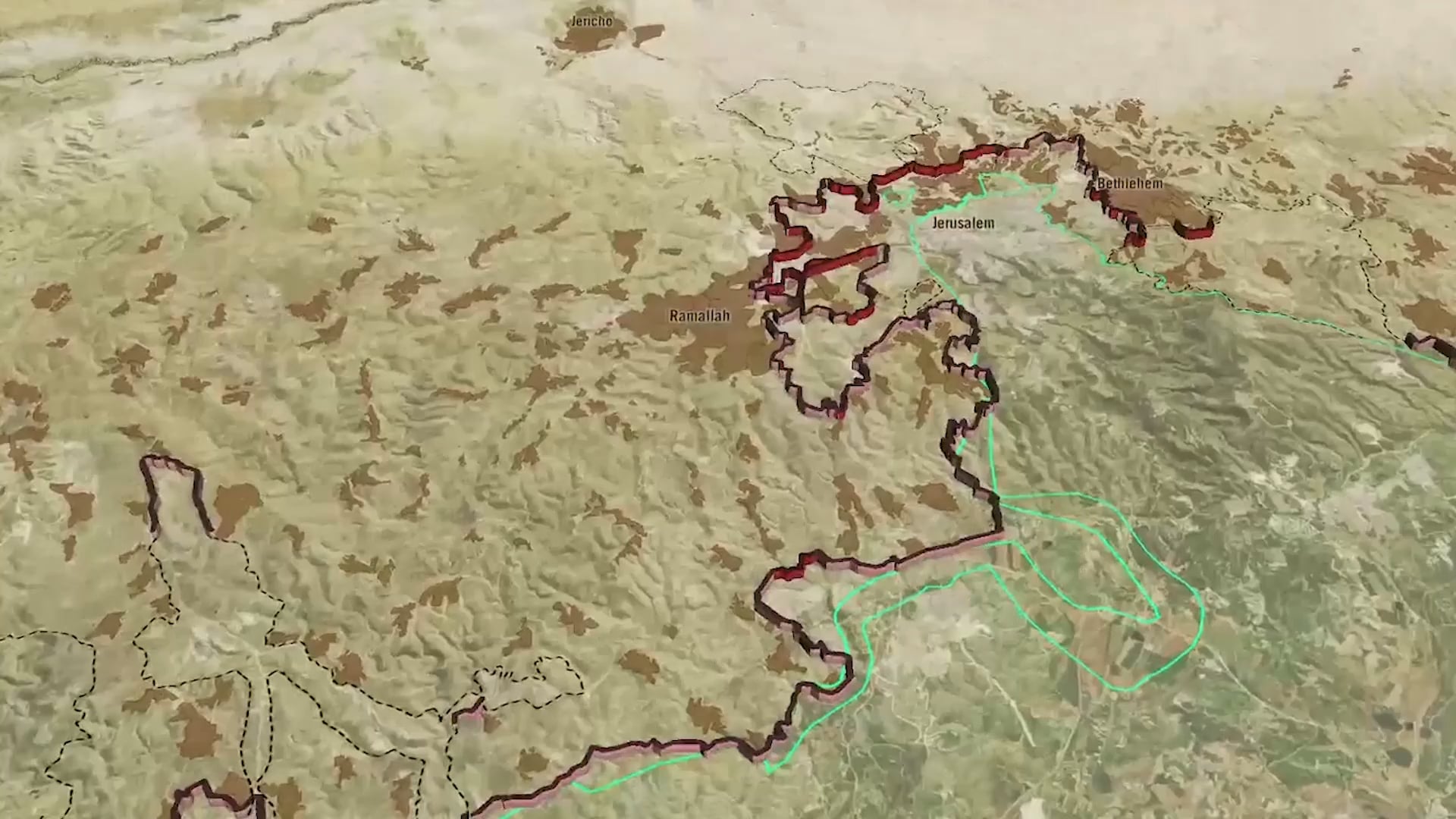
In 1967, Israel occupied the West Bank and the Gaza Strip. In the five decades that followed, the state of Israel has chipped away at Palestinian space through legislative, legal, and military means, restricting the freedoms of Palestinian civilians, and denying them their rights. In partnership with B'Tselem, we told that story through an interactive, scrolling cartography.
I.43 Triple-Chaser
Date of Incident
26 Nov 2018
Location
Tijuana-San Diego border, US/Mexico; Gaza, Palestine; and around the world
Forums
Exhibition, Media
In Partnership With
Praxis Films
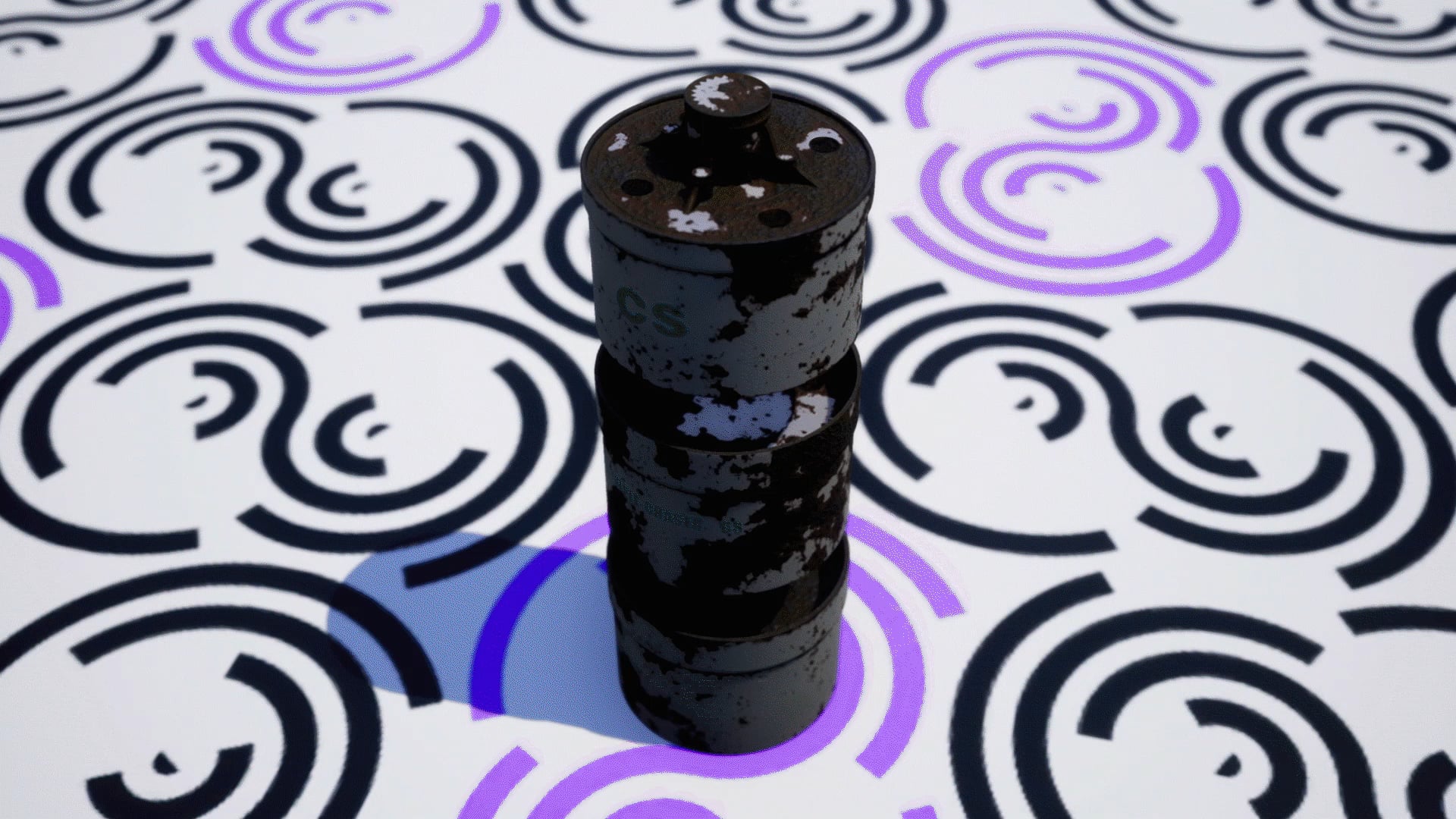
When US border agents fired tear gas grenades at civilians, including children, photographs linked the grenades to the Safariland Group, which is owned by Warren B. Kanders, the vice chair of the board of trustees of the Whitney Museum of American Art. In response to our invitation to the Whitney Biennial 2019, we developed machine learning classifiers to search for Safariland munitions online.
I.40 The Killing of Rouzan al-Najjar
Date of Incident
1 Jun 2018
Location
Khuzaa, Gaza
Forums
Media
In Partnership With
The New York Times
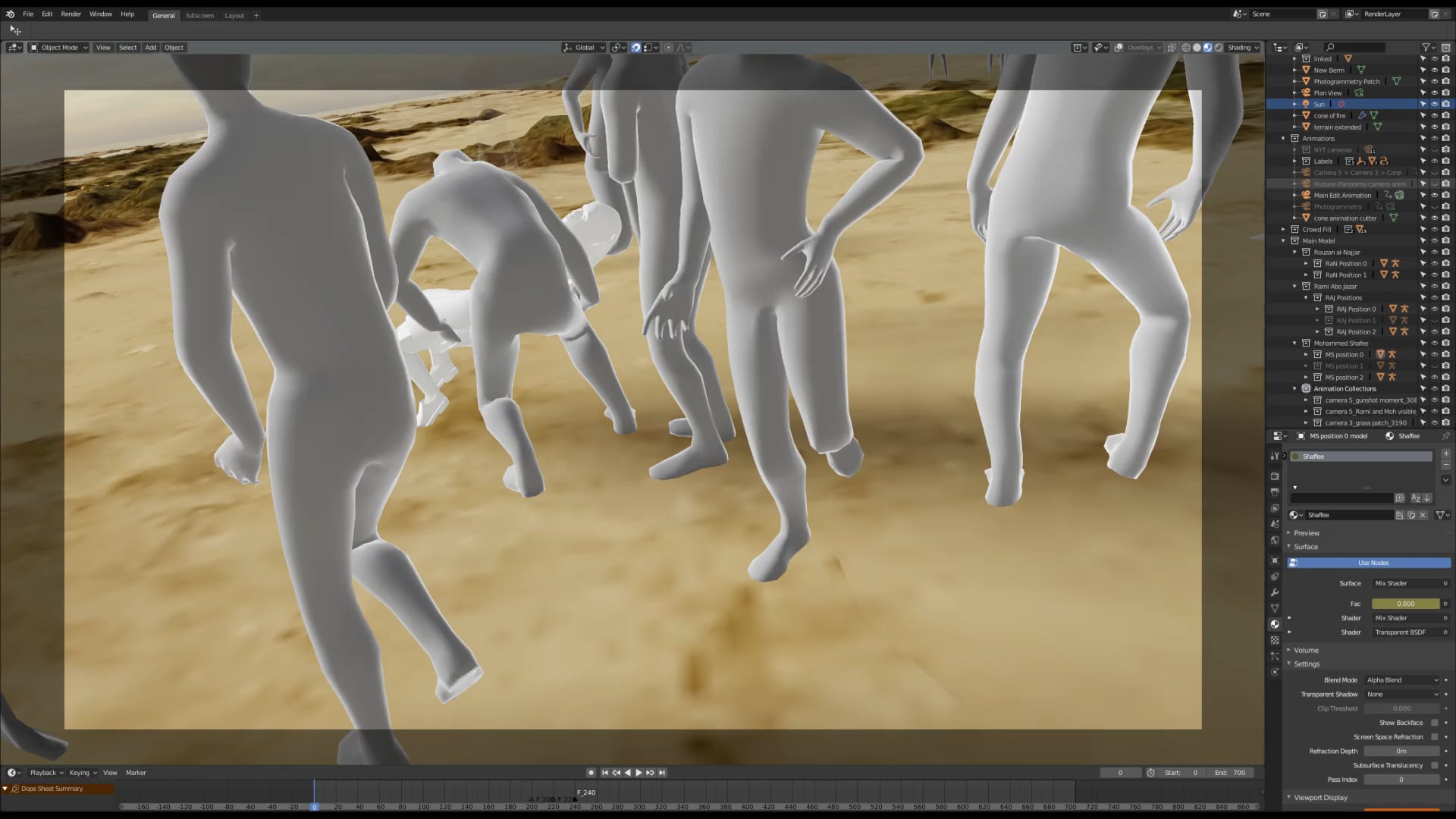
Amid the chaos and violence of the Great March of Return, a young Palestinian medic is struck and killed by a sniper's bullet. Together with the New York Times we used photogrammetry, video analysis, and figure modelling to locate the victim among the crowd at the moment she was shot, and traced a line of fire back to a sand berm on the Israeli side of the border fence.
I.41 Chemical Attacks in Al Lataminah
Date of Incident
30 Mar 2017
Location
Al Lataminah, Syria
Forums
Media
Commissioned By
Bellingcat
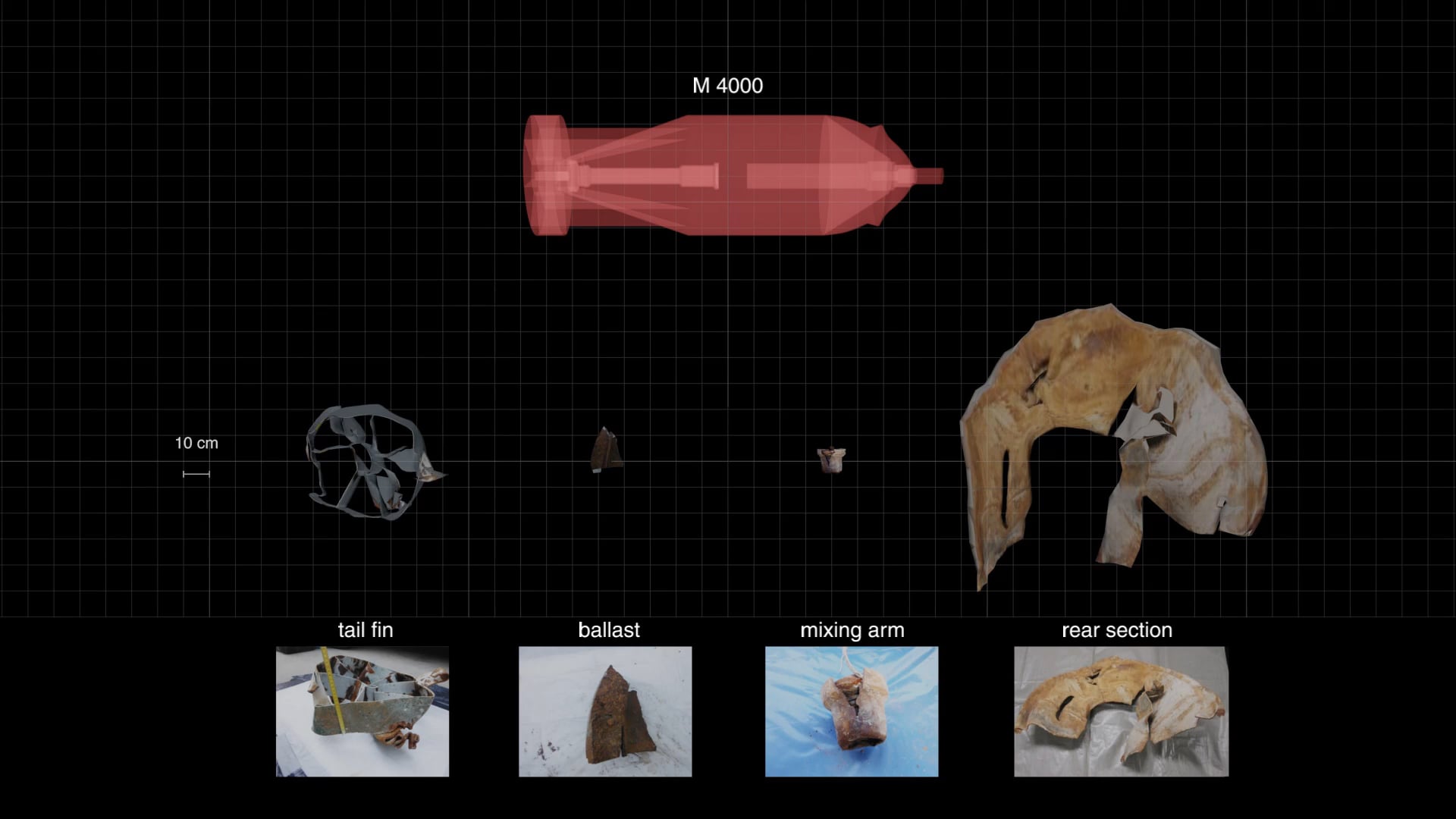
When the Syrian regime was accused of chemical weapons attacks, Russia's foreign ministry held a press conference to defend their allies. But the information presented there gave away important clues that Syria had indeed been responsible. Building on the work of Bellingcat, we built a digital model of the M4000 chemical bomb in which to bring together those physical clues.
I.42 The Killing of Zak Kostopoulos
Date of Incident
21 Sep 2018
Location
Athens, Greece
Forums
Legal Process, Exhibition
Commissioned By
The Kostopoulos family
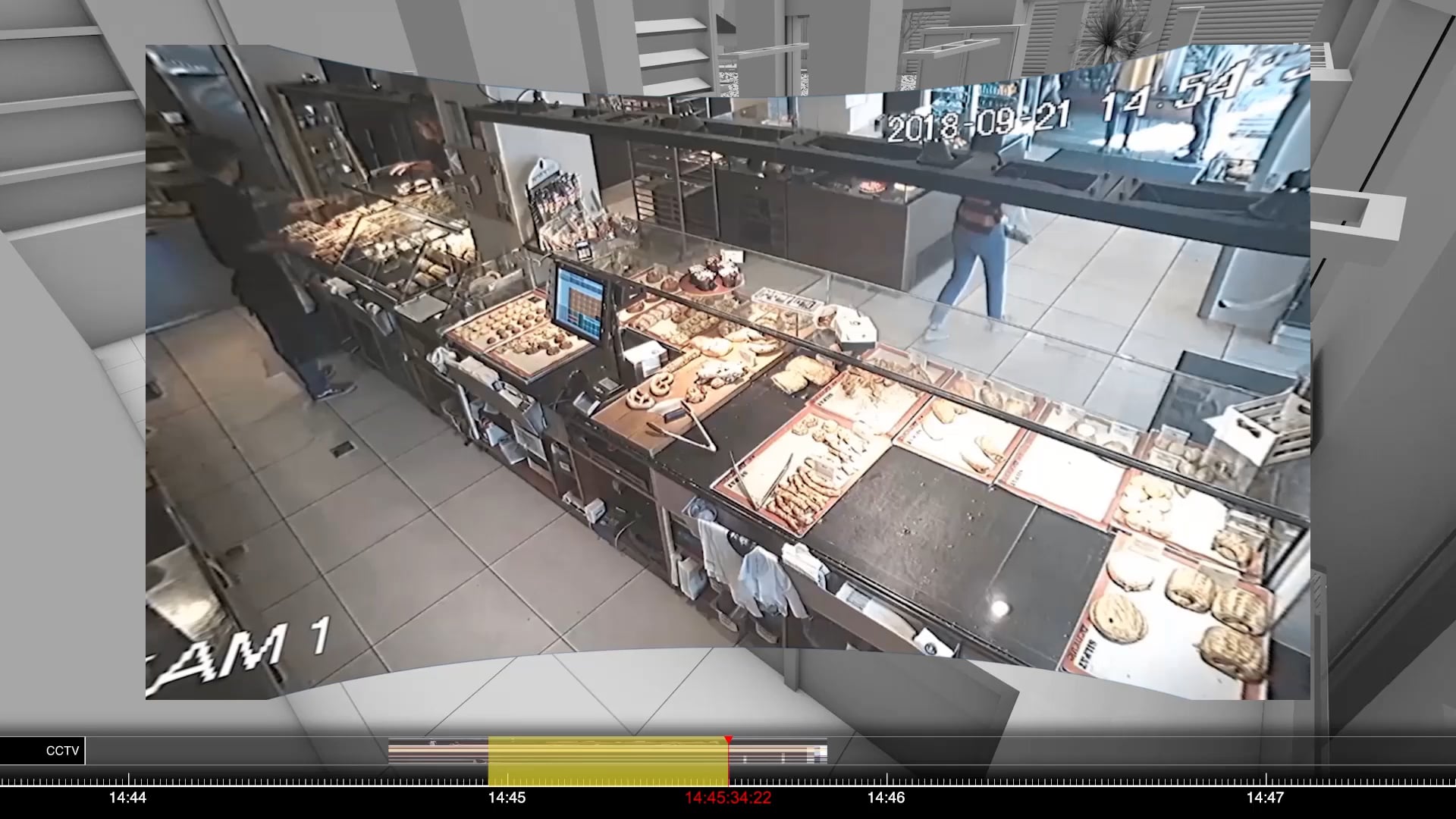
In broad daylight, in a crowded street in central Athens, a young LGBTQ activist is brutally assaulted. Passers-by paused to watch. Police arrived, violently apprehended the young man, and by the time he reached a hospital, he was dead. At the request of his family, we pieced together the available video evidence. What was the motive for the attack? And who is the man in the yellow t-shirt?
I.39 The Killing of Tahir Elçi
Date of Incident
28 Nov 2015
Location
Diyarbakır, Turkey
Forums
Legal Process, Media
Commissioned By
Diyarbakır Bar Association
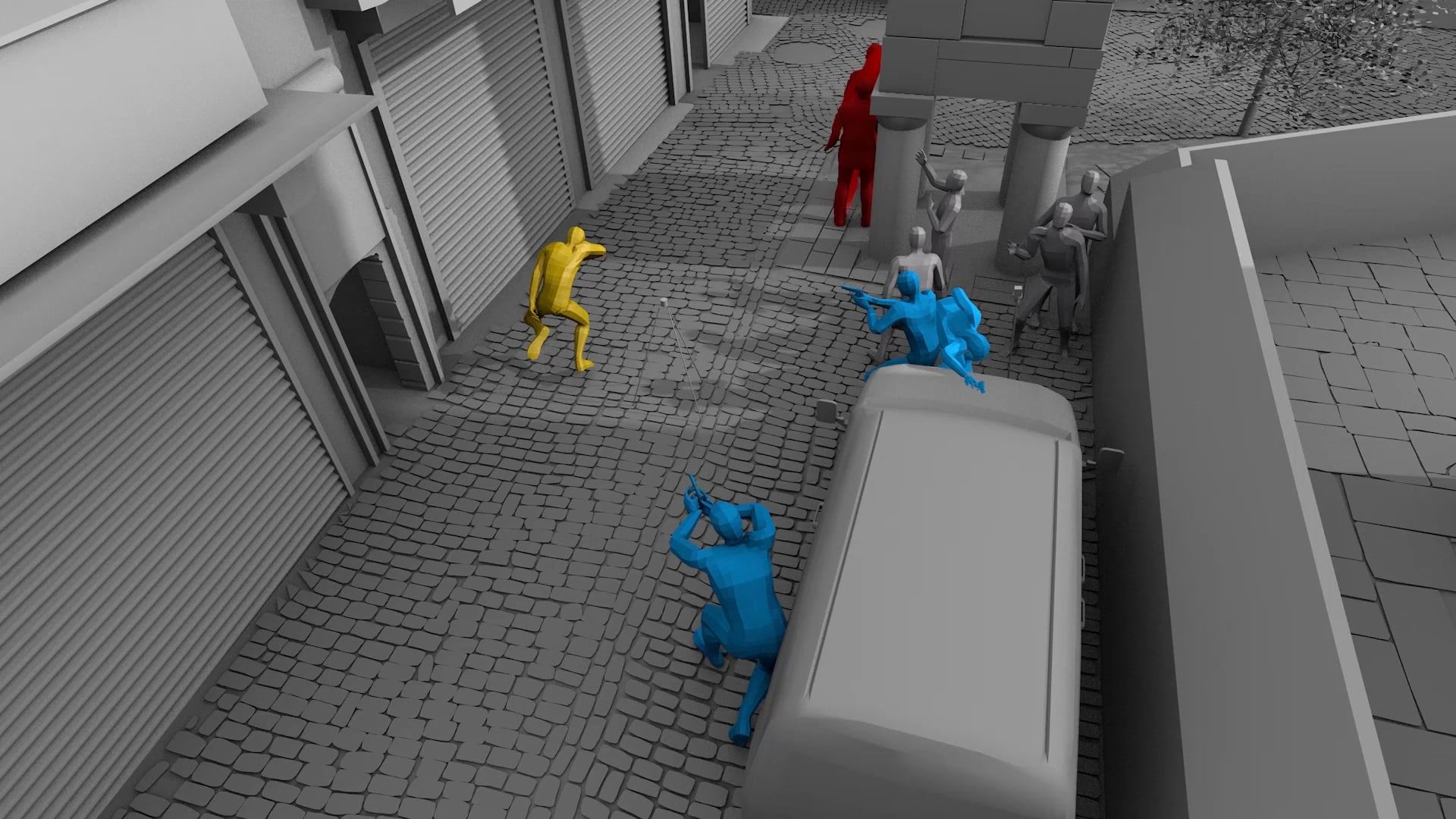
In the context of rising tensions in Turkey's Kurdish-majority regions, Tahir Elçi's killing was a seismic event. The manner of his death was controversial, and only partially documented. We analysed the evidence frame-by-frame, and narrowed down the scope of who should be considered a suspect.
I.19 Killing in Umm al-Hiran
Date of Incident
18 Jan 2017
Location
Umm al Hiran, Negev/Naqab desert
Forums
Legal Process, Exhibition
Commissioned By
Self-Initiated
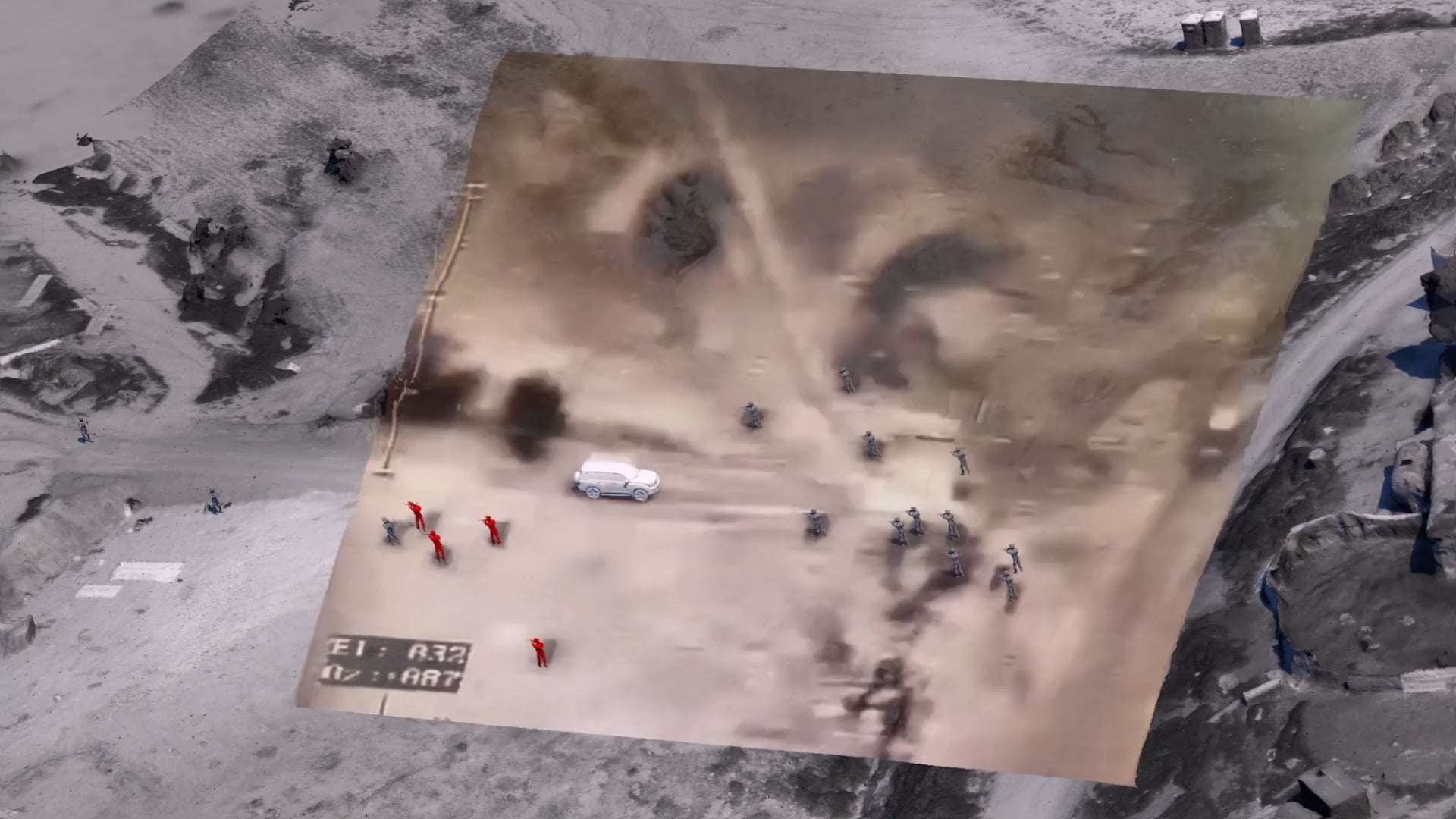
A police raid on an ‘illegalised’ Bedouin village in the Naqab/Negev desert led to the deaths of a local man and an Israeli policeman.
Police quickly blamed the man for what they called a ‘terror attack’. In fact, as we exposed, Israeli police had fired unprovoked on an innocent driver, causing him to crash into them.
I.38 Lethal Warning: The killing of Luai Kahil and Amir al-Nimrah
Date of Incident
14 Jul 2018
Location
Gaza City, Occupied Palestinian Territories
Forums
Media
Commissioned By
B’Tselem
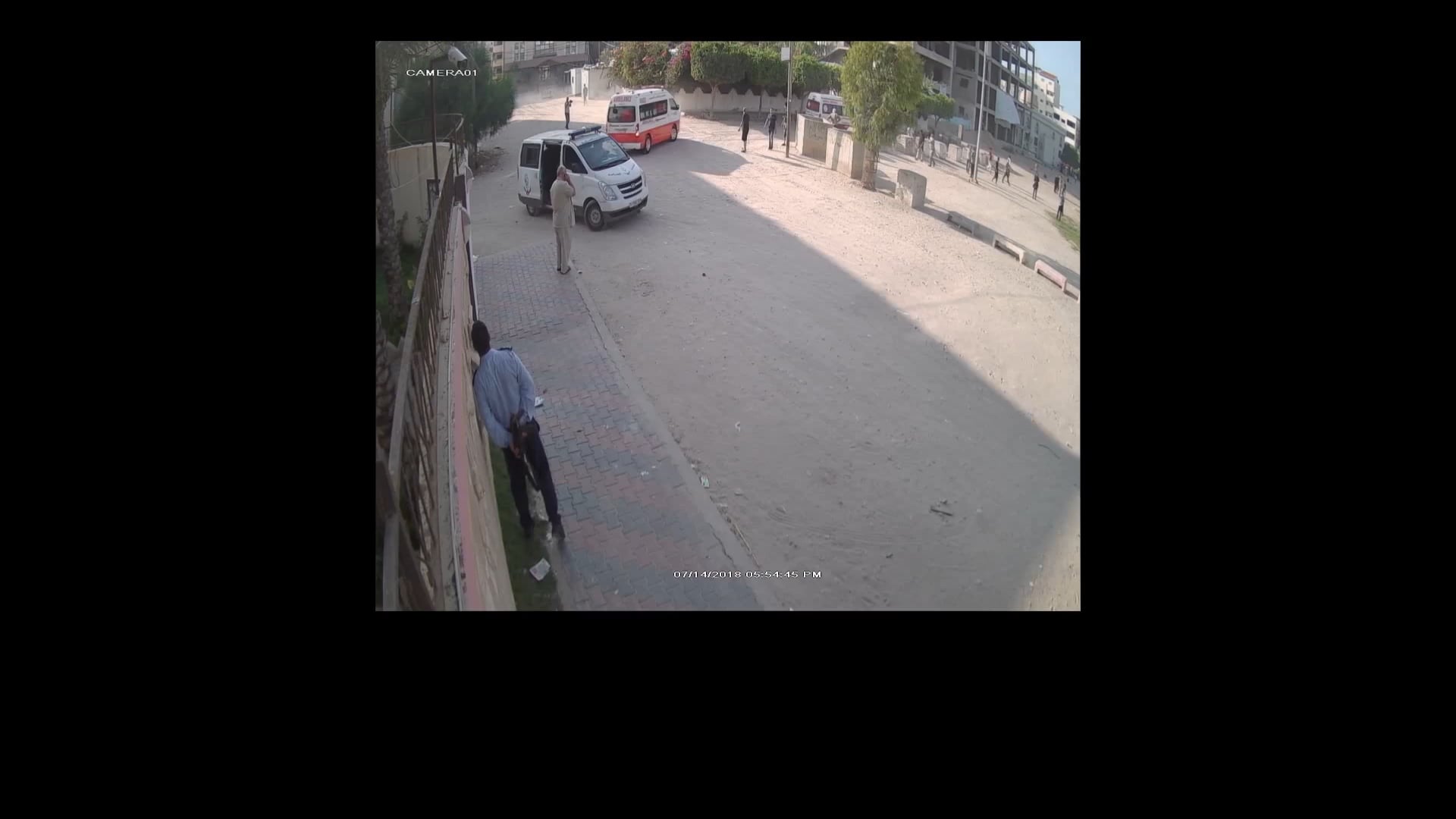
Two children died when an Israeli 'warning strike' hit a building in Gaza City. When the Israeli army shared videos of the attack, the strike that killed the teenagers had been removed. Why did the IDF manipulate their own footage? And what does the incident mean for the 'warning strike' policy?
I.37 Torture and Detention in Burundi
Date of Incident
1 Dec 2016
Location
Bujumbura, Burundi
Forums
Media
Commissioned By
BBC Africa Eye
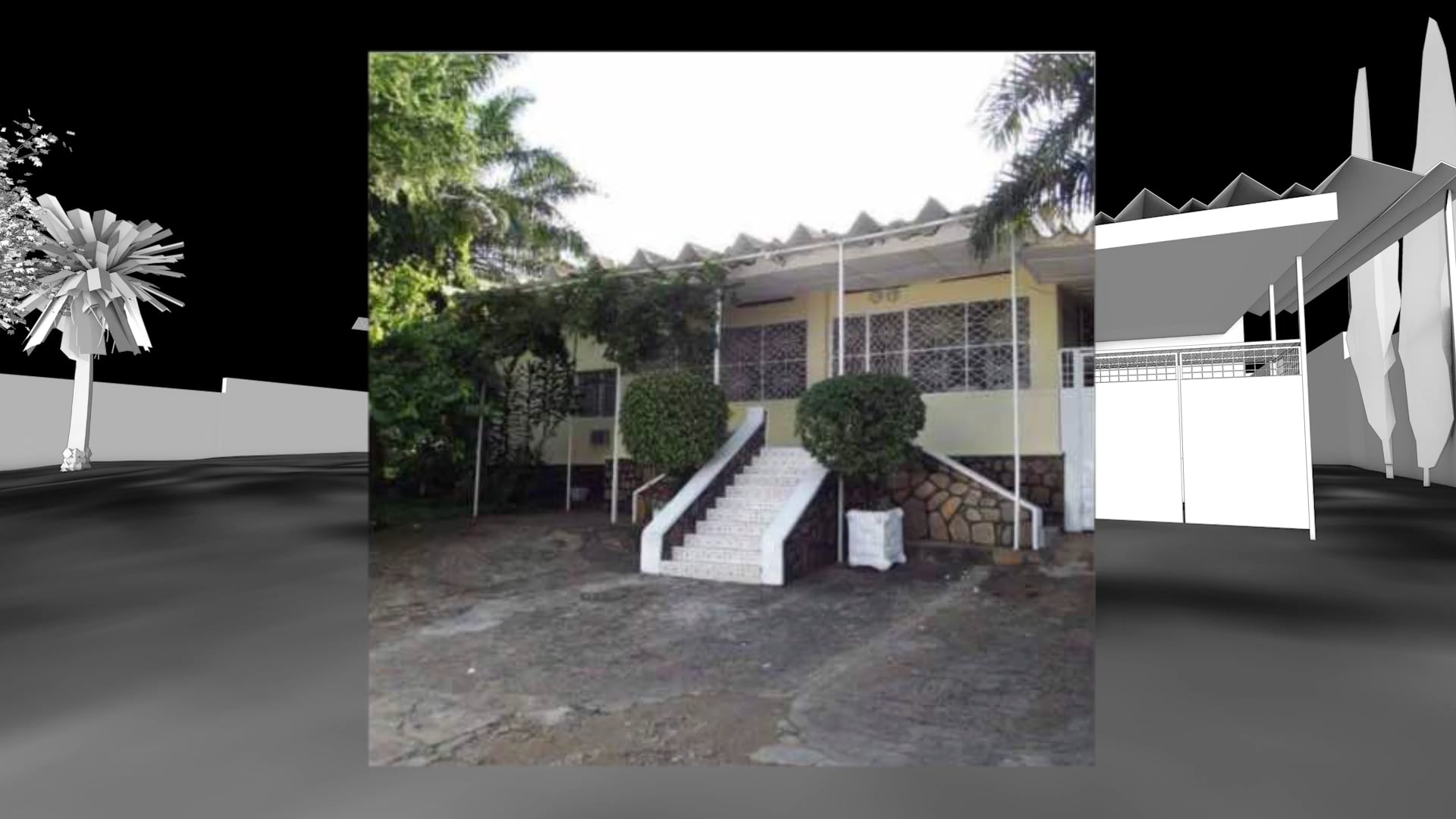
A video posted to social media shows what looks like blood pouring from the drains of an unremarkable suburban house in Burundi’s capital. What was going on behind its walls? Employing our techniques of situated testimony, and collaborating with investigative reporters, we sought to find out.
I.36 The Murder of Pavlos Fyssas
Date of Incident
18 Sep 2013
Location
Athens, Greece
Forums
Legal Process, Media
Commissioned By
Lawyers for the Fyssas family
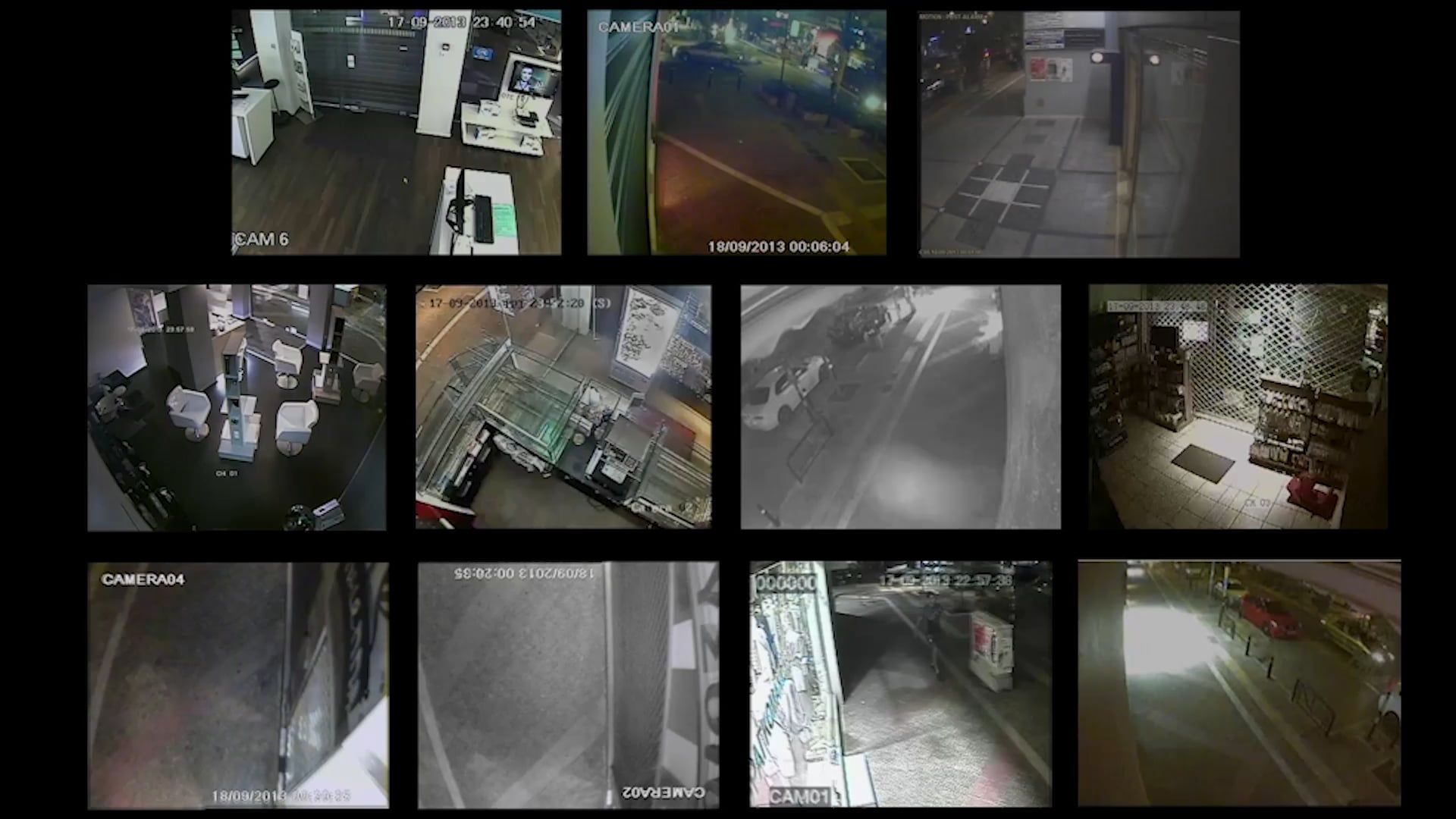
The murder of an anti-fascist rapper by a member of the neo-Nazi Golden Dawn could bring an end to the group's political ambitions. We analysed CCTV and police audio recordings to reconstruct the events of the night. Our evidence, presented to an Athens courtroom, poses difficult questions for the Greek police.
I.35 The Destruction of Yazidi Cultural Heritage
Date of Incident
3 Aug 2014 - 13 Nov 2015
Location
Sinjar, Iraq
Forums
Legal Process, Citizens' Tribunal, Exhibition, Web Platform
In Partnership With
Yazda: Global Yazidi Organization
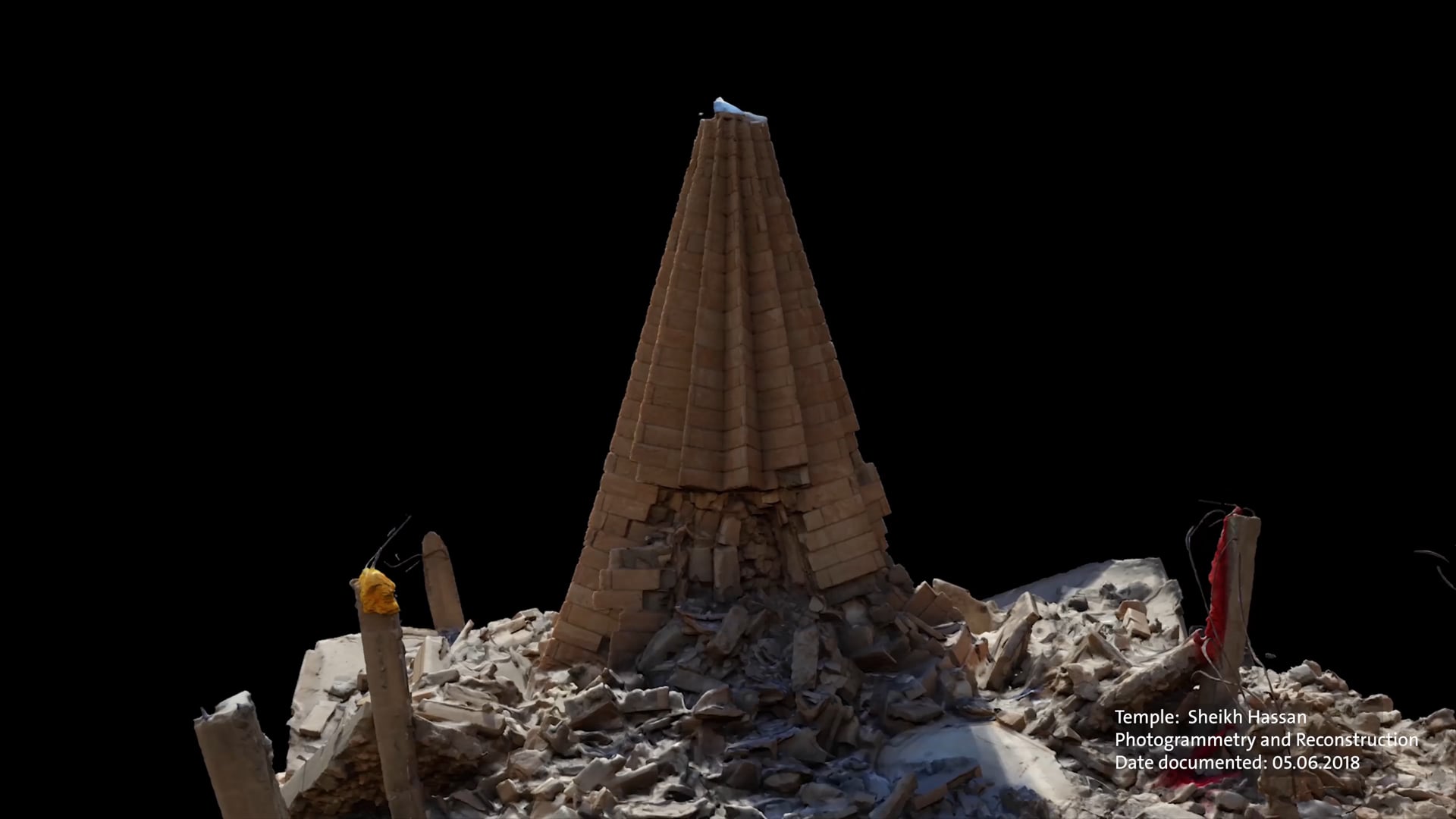
In August 2014, ISIL invaded the Sinjar, northern Iraq, home of the Yazidi religious minority. Thousands were enslaved, executed or displaced, and religious buildings were torn down.
We trained Yazda researchers in our techniques, and worked together to document the physical traces of genocide.
I.34 Chemical Attacks in Douma
Date of Incident
7 Apr 2018
Location
Douma, Syria
Forums
Media
Commissioned By
The New York Times
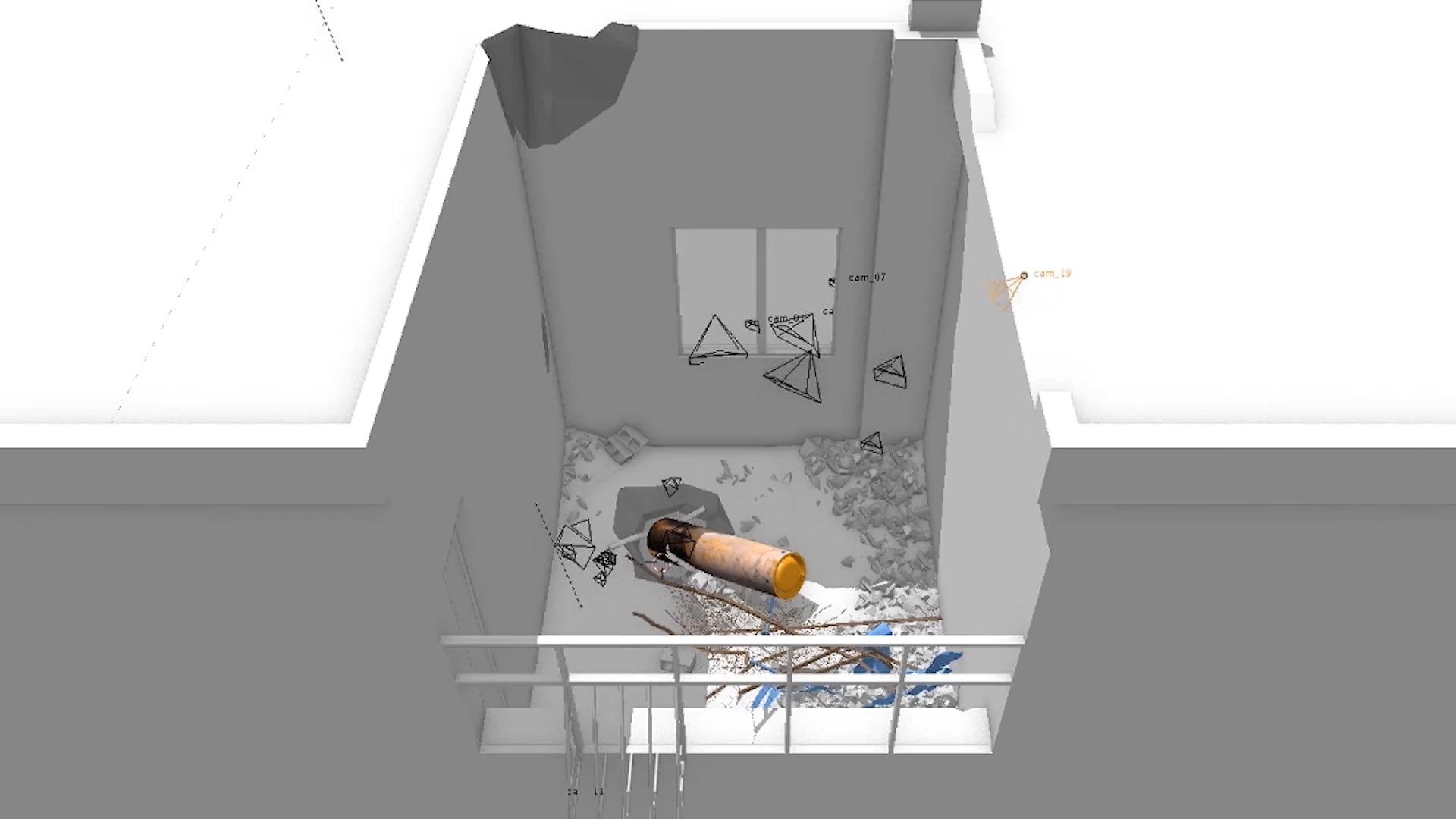
Allegations of chemical attacks lead inevitably to conflict and discord on social media, and competing claims from reporters and politicians around the world.
Working with the New York Times, we developed innovative new techniques to help cut through the confusion with material facts.
I.33 The Killing of Óscar Pérez
Date of Incident
15 Jan 2018
Location
El Junquito, Venezuela
Forums
Media
In Partnership With
Bellingcat
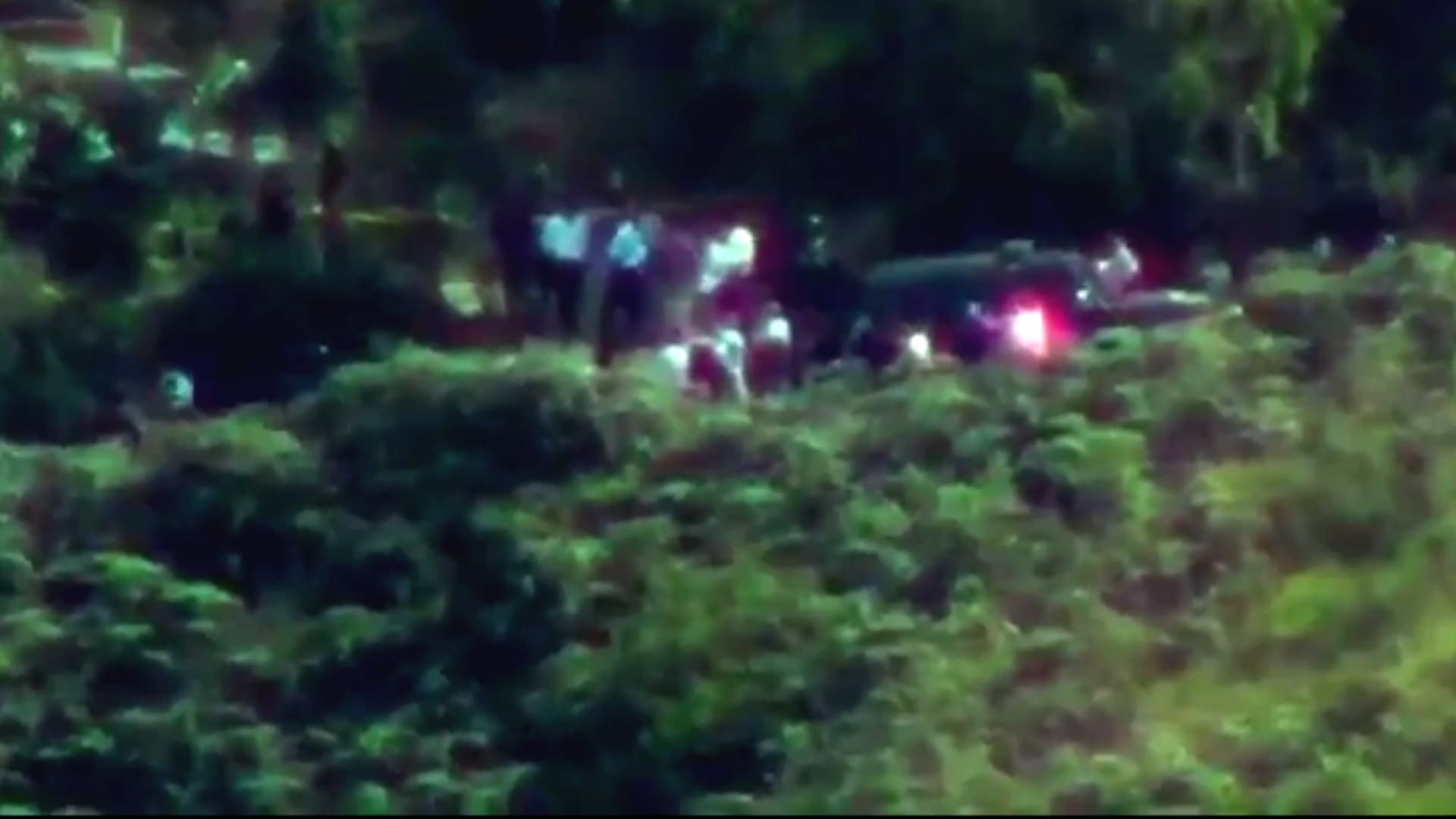
A former intelligence agent turned rebel live-streamed his final hours on social media during a tense stand-off with security forces in El Junquito, near Caracas.
We used that footage to try to answer: did the agent try to surrender? Were he and his group murdered by the state?
I.32 Sea Watch vs the Libyan Coastguard
With Forensic Oceanography

Date of Incident
6 Nov 2017
Location
Mediterranean Sea
Forums
Legal Process, Exhibition
Commissioned By
Self-Initiated
When the Libyan coastguard interrupted a rescue operation by the NGO Sea Watch, at least twenty migrants lost their lives, and more were ‘pulled back’ to inhumane detention in Libya.
Forensic Oceanography shone a light on the practices of a coastguard funded and trained by the Italian government.
I.31 The Seizure of the Iuventa
With Forensic Oceanography
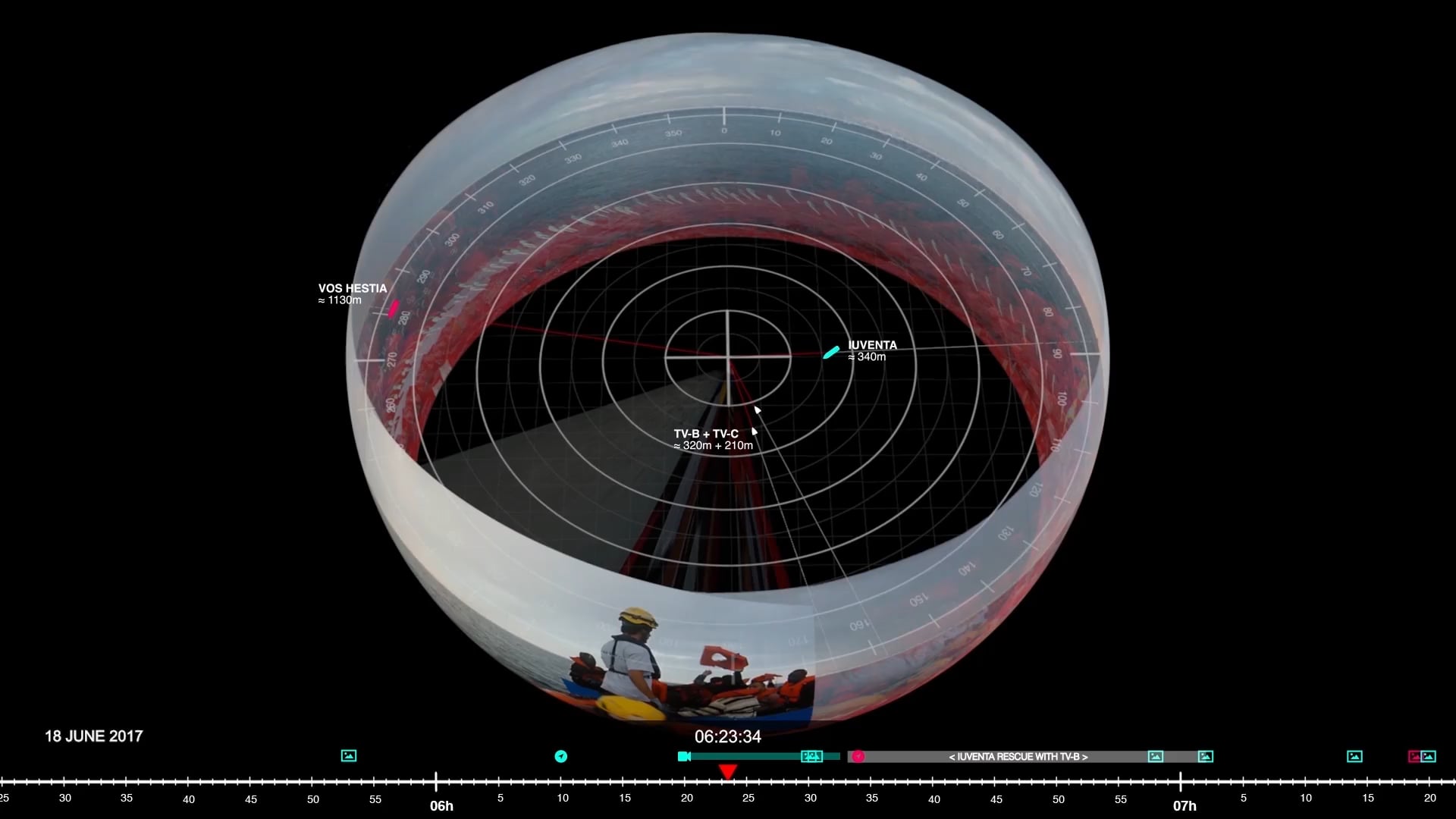
Date of Incident
2 Aug 2017
Location
Mediterranean Sea
Forums
Legal Process, Exhibition
Commissioned By
Self-Initiated
The Iuventa has rescued over ten thousand people from the Mediterranean since it began operating in 2016.
When the vessel was impounded by Italian authorities under suspicion of collusion with people smugglers, we used video evidence and meteorological data to refute the allegations.
I.30 The Grenfell Tower Fire
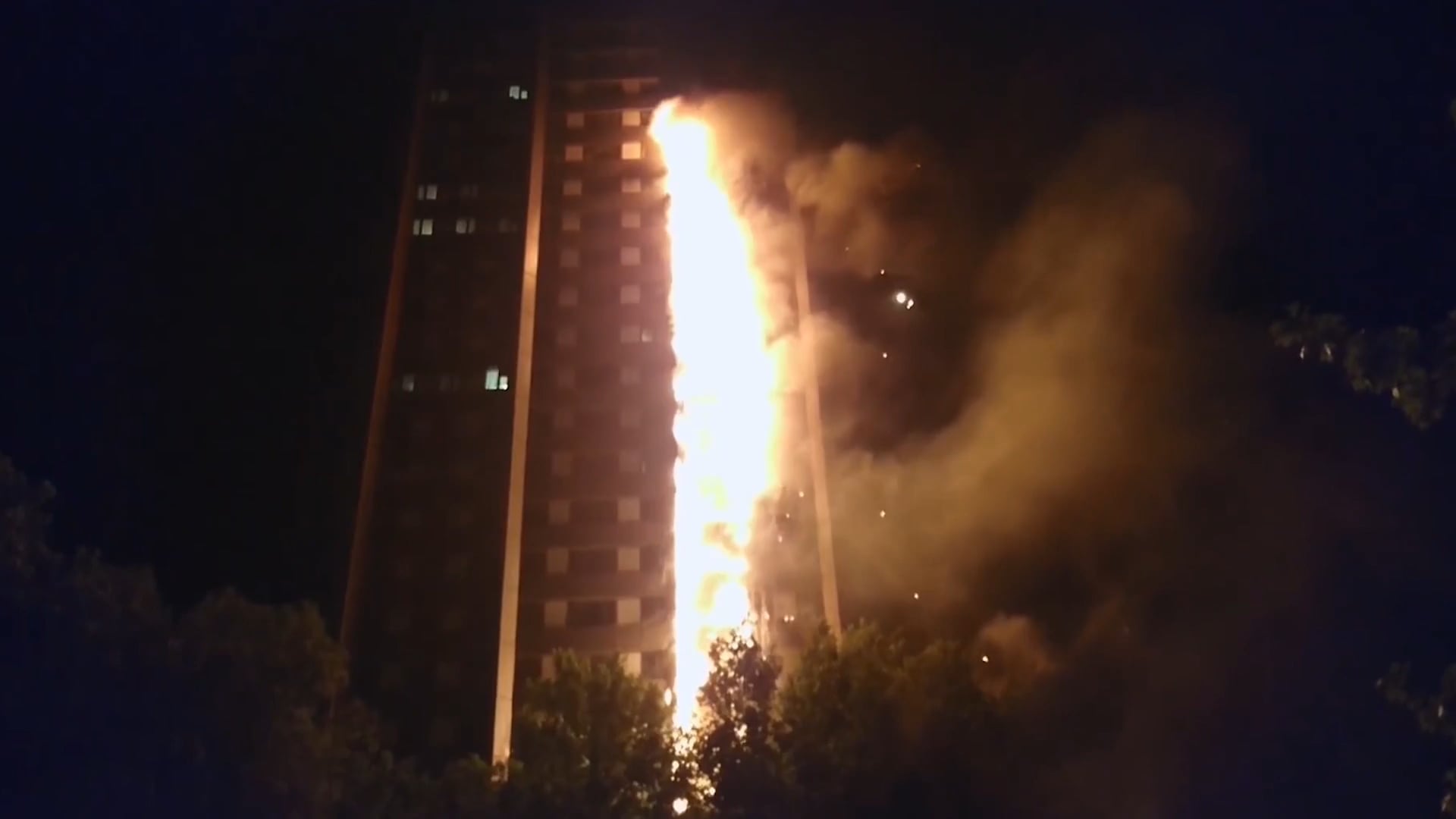
Date of Incident
14 Jun 2017
Location
London, UK
Forums
Media
Commissioned By
Self-Initiated
The Grenfell Tower fire was unprecedented in UK history—not least because of the scale of publicly available information about the night.
We are building an interactive platform that will synthesise that information to create the most comprehensive account of what exactly happened that night.
I.29 The Ali Enterprises Factory Fire
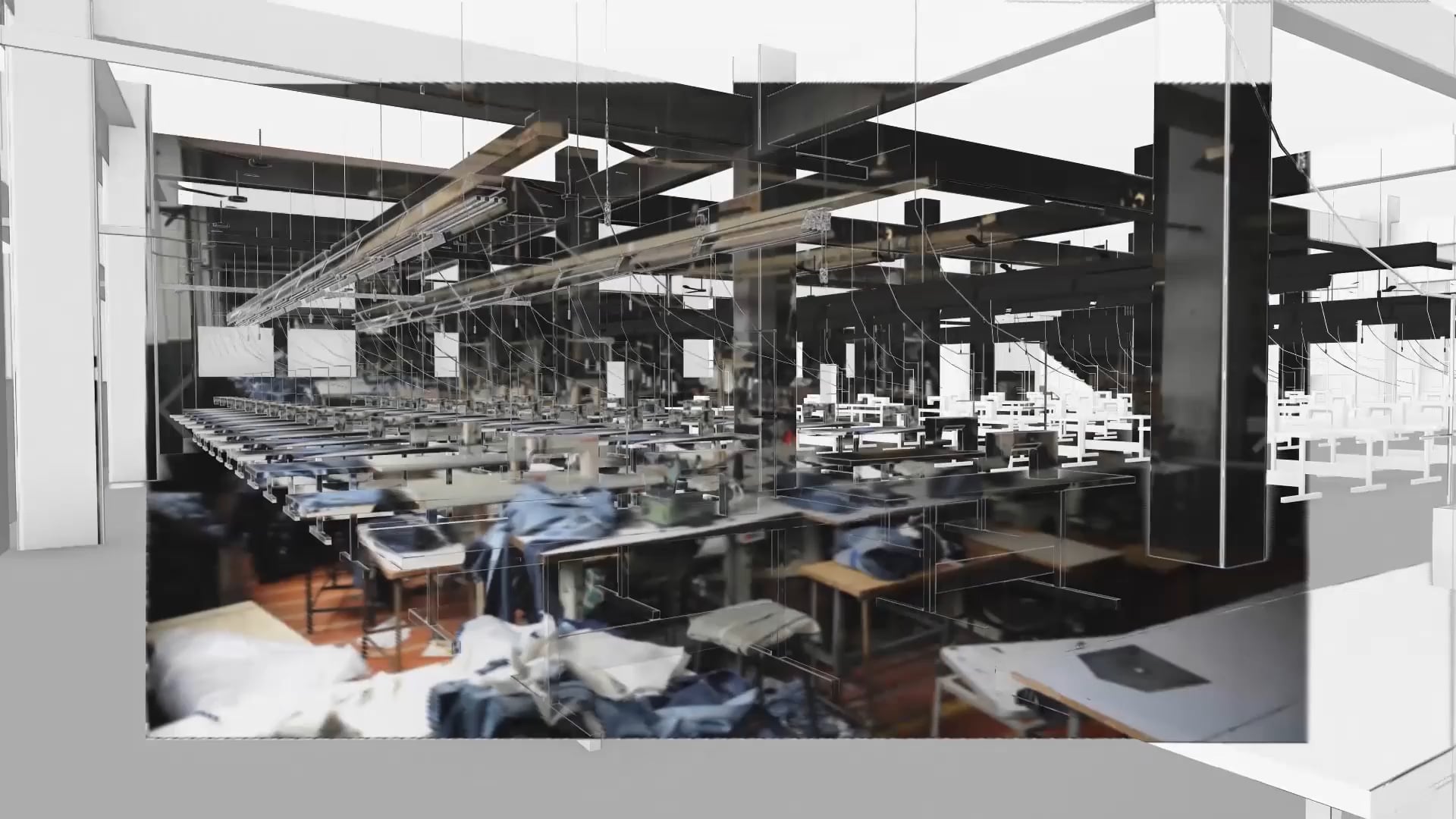
Date of Incident
11 Sep 2012
Location
Karachi, Pakistan
Forums
Legal Process
Commissioned By
European Center for Constitutional and Human Rights (ECCHR)
260 people died when fire broke out in a factory that made textiles for a German retailer.
We exposed failings of regulation and inspection, from overcrowding to a lack of fire escapes, in support of a legal claim against the retailer that could break new ground in corporate responsibility.
I.28 The Enforced Disappearance of the Ayotzinapa Students
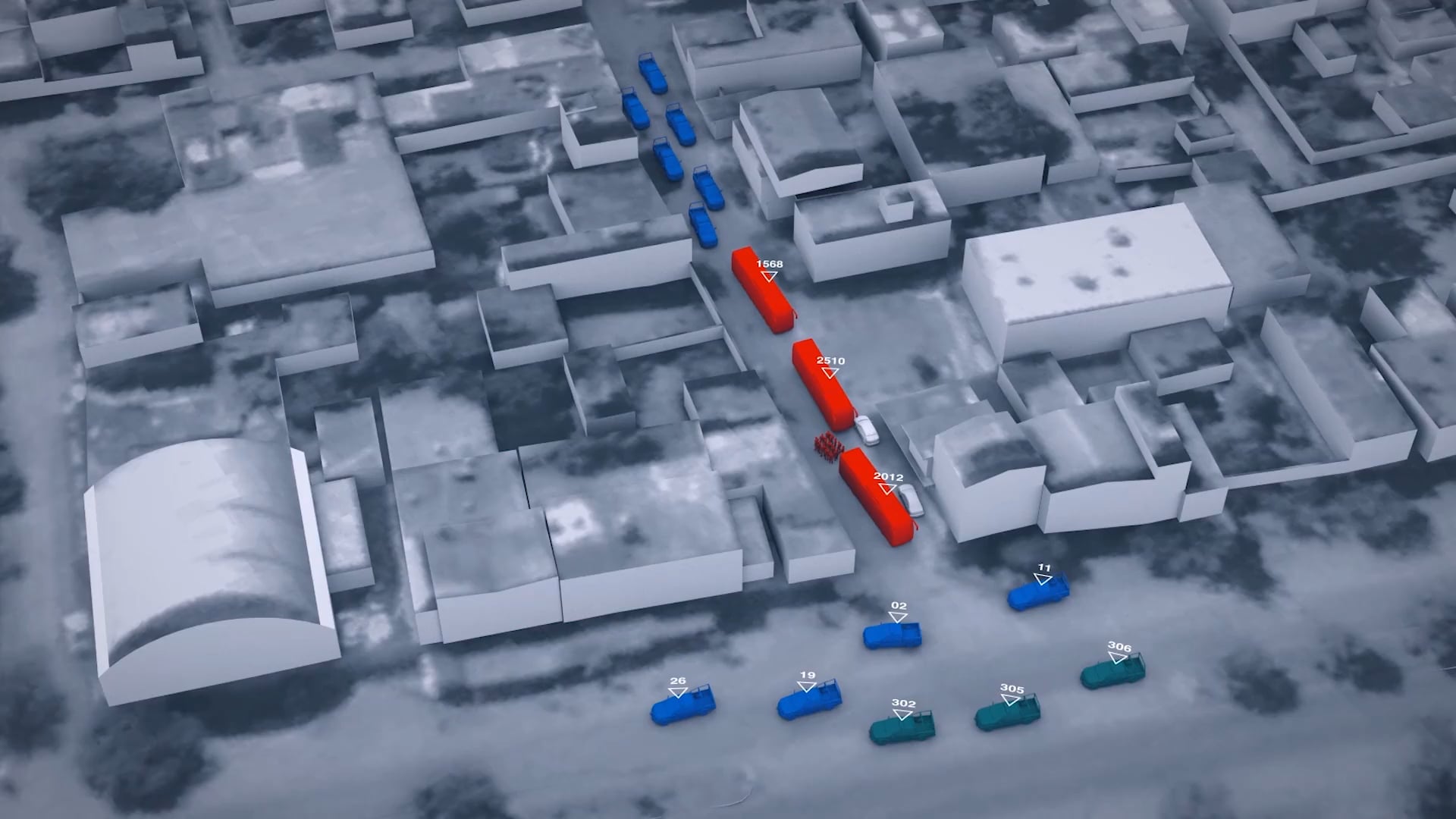
Date of Incident
26 Sep 2014 - 27 Sep 2014
Location
Iguala, Mexico
Forums
Exhibition, Media, Web Platform
Commissioned By
Centro Prodh, Equipo Argentino de Antropología Forense, EAAF
When Mexican police and local organised crime coordinated to attack a group of students, six people were murdered, forty wounded and forty-three 'disappeared'. We built an interactive platform to explore what happened that night, and to expose the inconsistencies in the state’s investigation of its own involvement in one of the most shocking moments of violence in the history of modern Mexico.
I.27 Torture and Detention in Cameroon
Date of Incident
1 Jan 2015 - 1 Jan 2016
Location
Far North, Cameroon
Forums
Media
Commissioned By
Amnesty International
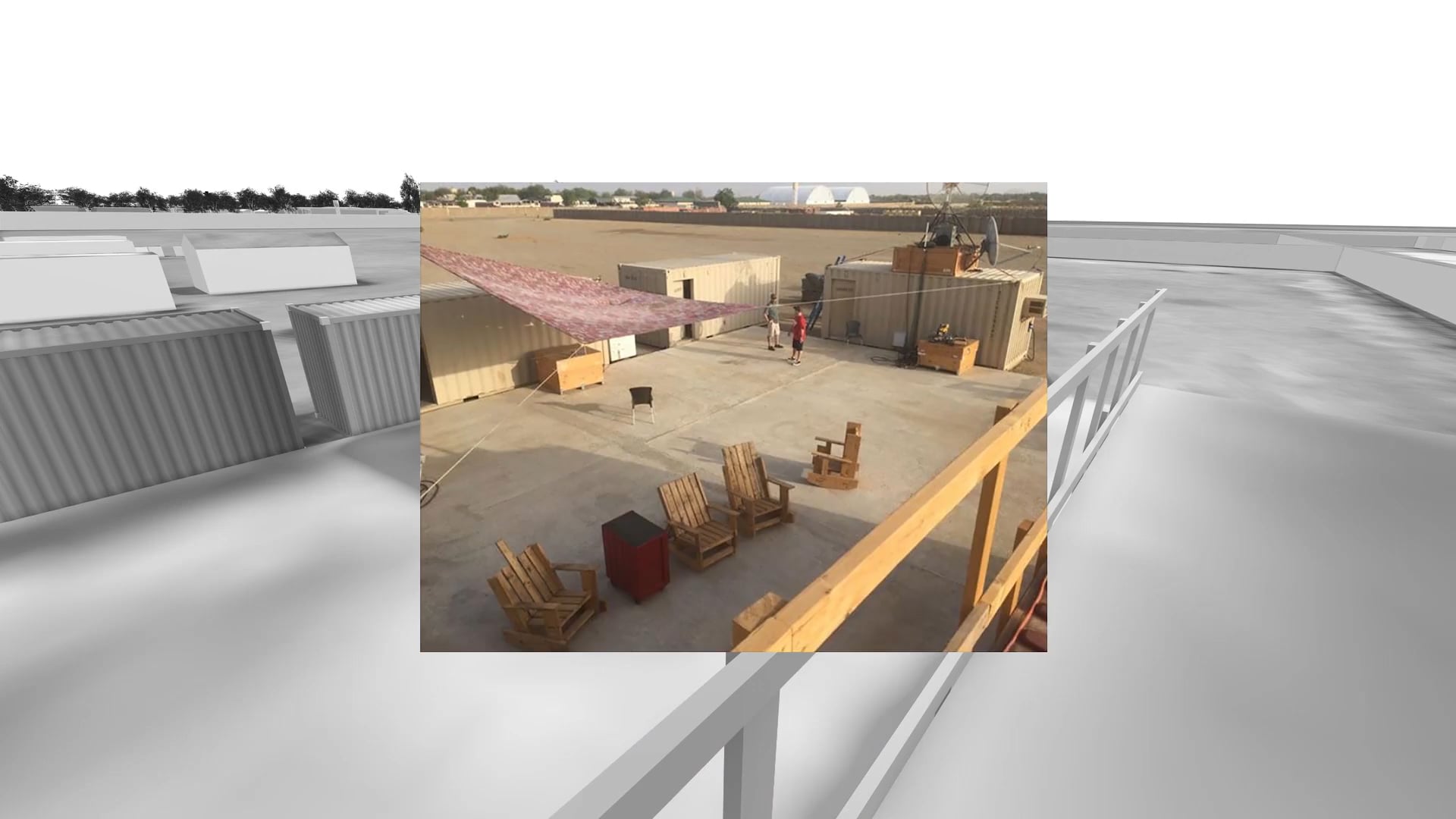
In the US-backed war against Boko Haram, Cameroon’s security forces are detaining and torturing civilians with impunity.
Investigating allegations made by survivors from two sites of illegal detention, we found US military personnel living and working in close proximity to sites of torture.
I.26 Destruction and Return in al-Araqib
Date of Incident
1 Jan 2010 - Ongoing
Location
al-Araqib, Negev/Naqab desert
Forums
Legal Process, Exhibition
Commissioned By
The Village of al-Araqib
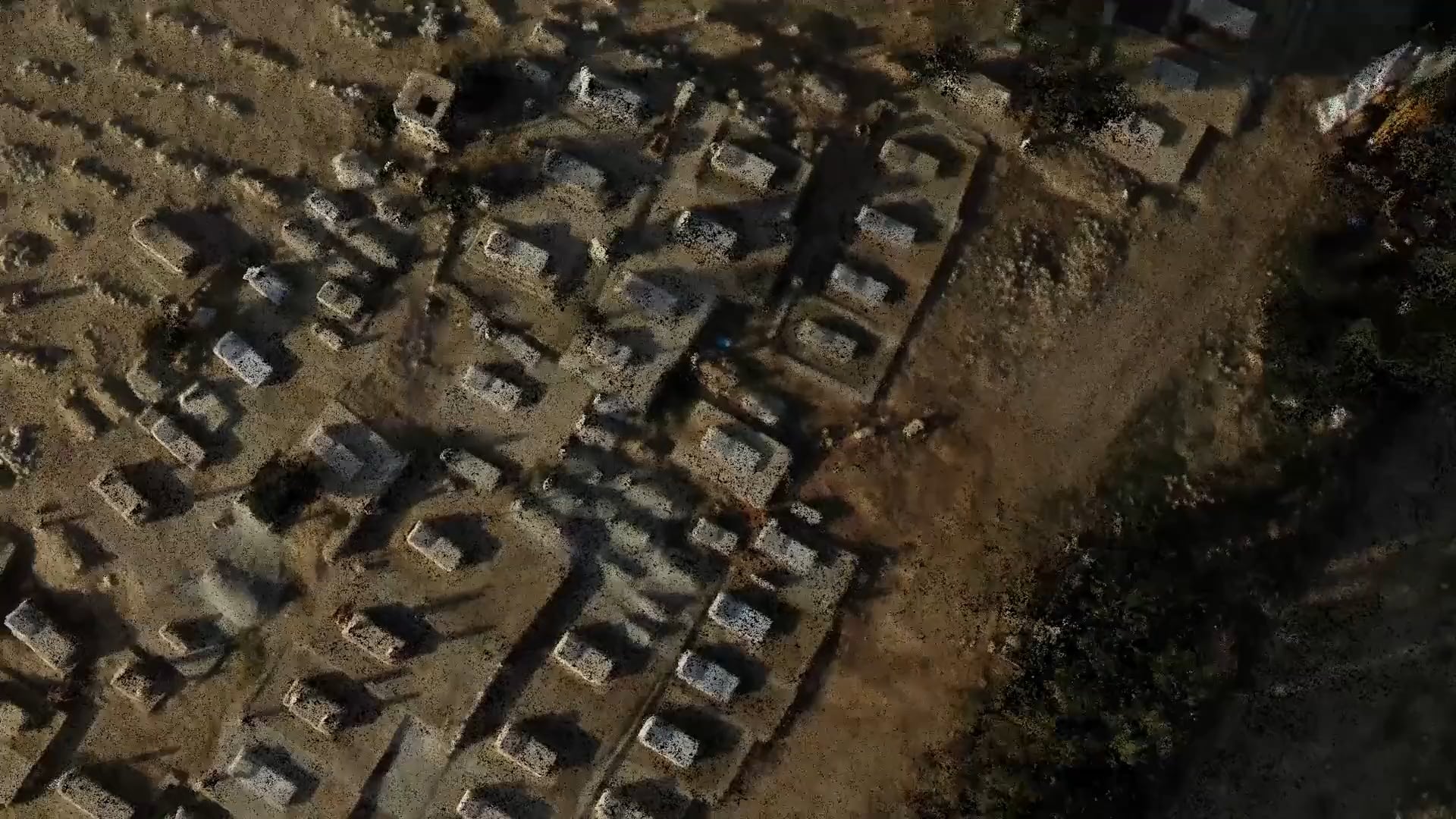
The Bedouin village of al-Araqib has been demolished over 120 times since 1954. Every time, the villagers return.
Using aerial imagery and archaeological surveys, and in collaboration of local families, we provided evidence of ongoing inhabitation, against their dispossession by the Israeli state
I.24 The Murder of Halit Yozgat
Date of Incident
6 Apr 2006
Location
Kassel, Germany
Forums
Citizens' Tribunal, Exhibition, Media, Parliamentary Inquiry
Commissioned By
The People's Tribunal 'Unraveling the NSU Complex'
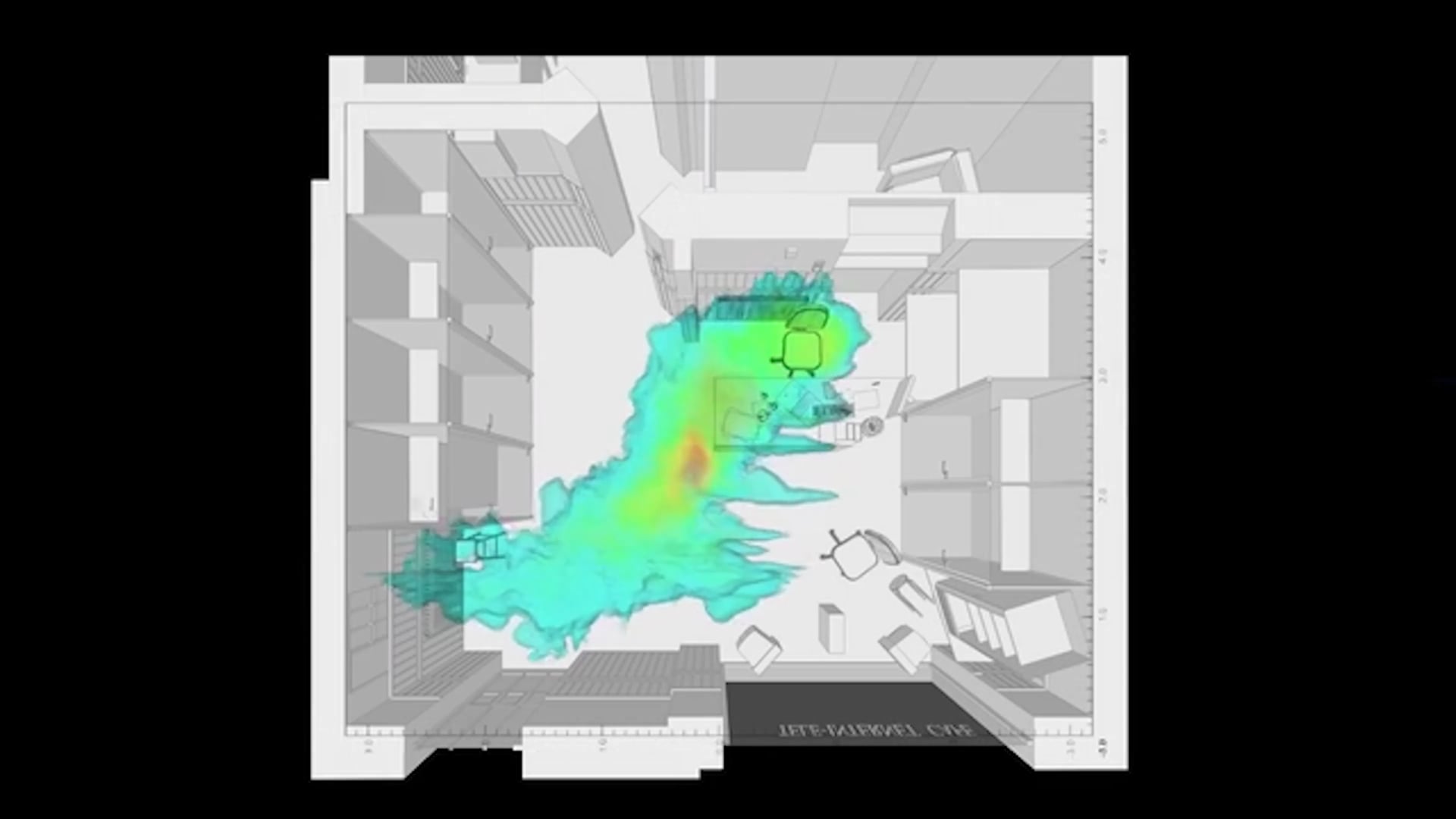
Halit Yozgat was murdered by neo-Nazis at the desk of his internet café in Kassel, Germany, while a state intelligence agent was sitting just metres away. The agent claimed he didn’t hear the gunshots, didn’t smell the gunpowder, and didn’t see the body. Using digital models and 1:1 physical reconstructions, we tested those claims.
I.21 Airstrikes on the al-Jinah Mosque
Date of Incident
16 Mar 2017
Location
al-Jinah, Syria
Forums
United Nations, Media
Commissioned By
Self-Initiated
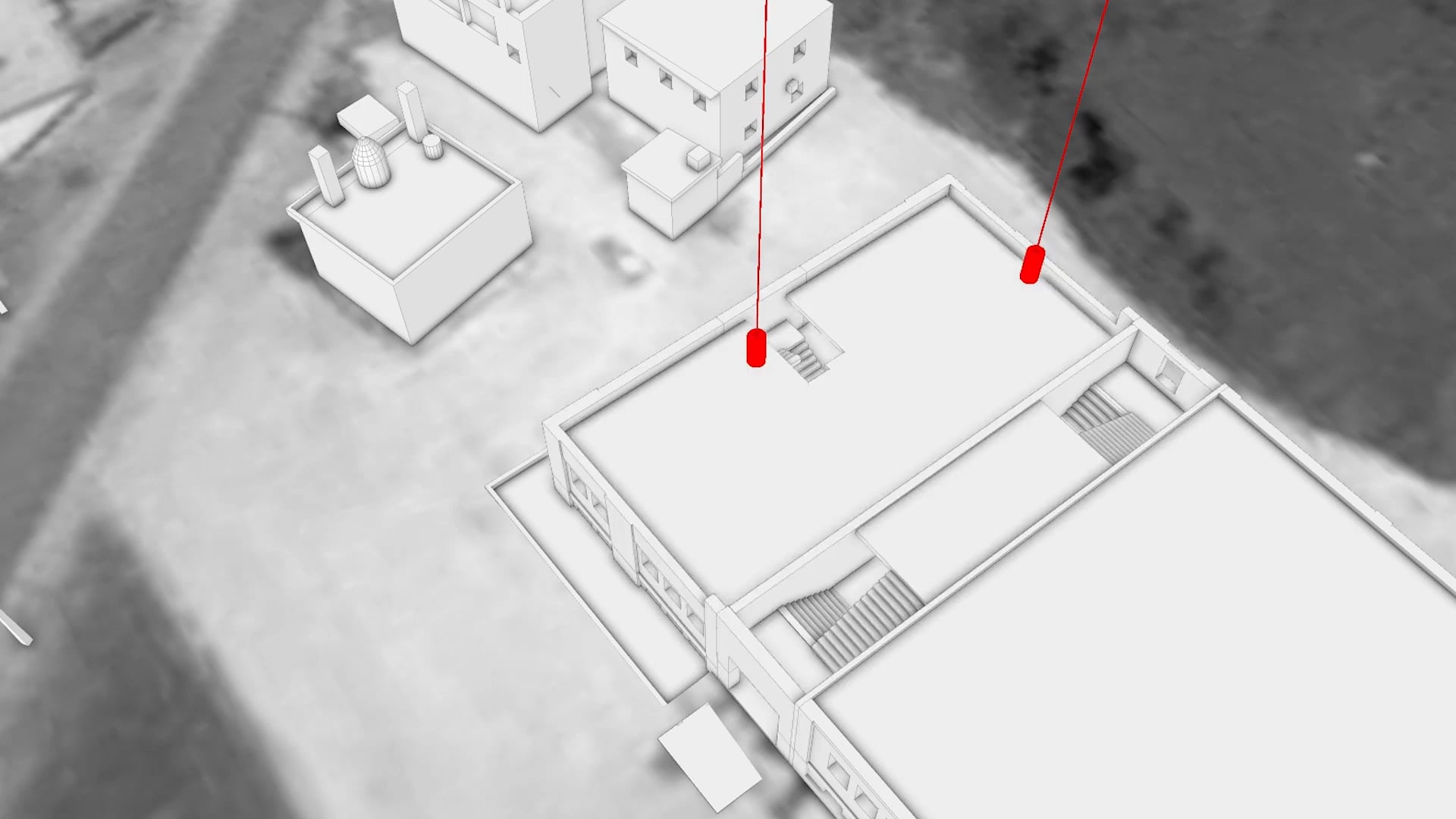
When two Hellfire missiles destroyed the Sayidina Omar Ibn al-Khattab mosque during evening prayer, thirty-eight civilians died.
Piecing together available videos and aerial imagery, we challenged the Pentagon’s claim that the site was an al-Qaeda meeting house, forcing condemnation from the UN.
I.25 Ecocide in Indonesia
Date of Incident
1 Jun 2015 - 1 Oct 2015
Location
Kalimantan and Sumatra, Indonesia
Forums
Exhibition
Commissioned By
FIBGAR - Fundación Internacional Baltasar Garzón
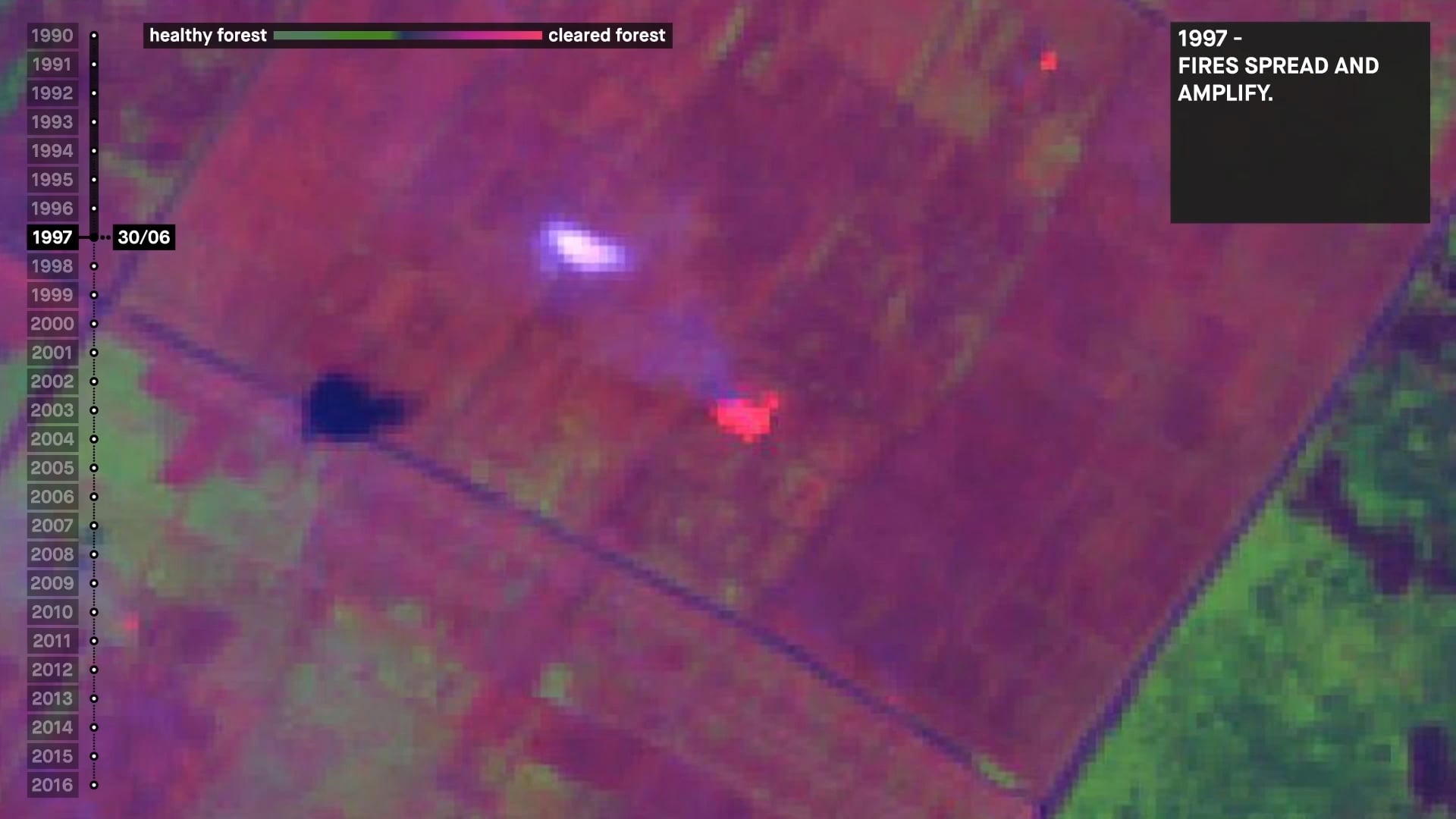
In Kalimantan and Sumatra, fires consumed over 21,000sq. km of forest and farmland in 2015.
Combining fieldwork with satellite image analysis, we established that drainage and ‘monocropping’ by agricultural corporations were direct causes, supporting calls for recognition of a new crime: ecocide.
I.20 Airstrikes on M2 Hospital
Date of Incident
1 Jun 2016 - 1 Dec 2016
Location
Aleppo, Syria
Forums
Human Rights Report, Media
Commissioned By
Digital Forensic Research Lab, Atlantic Council
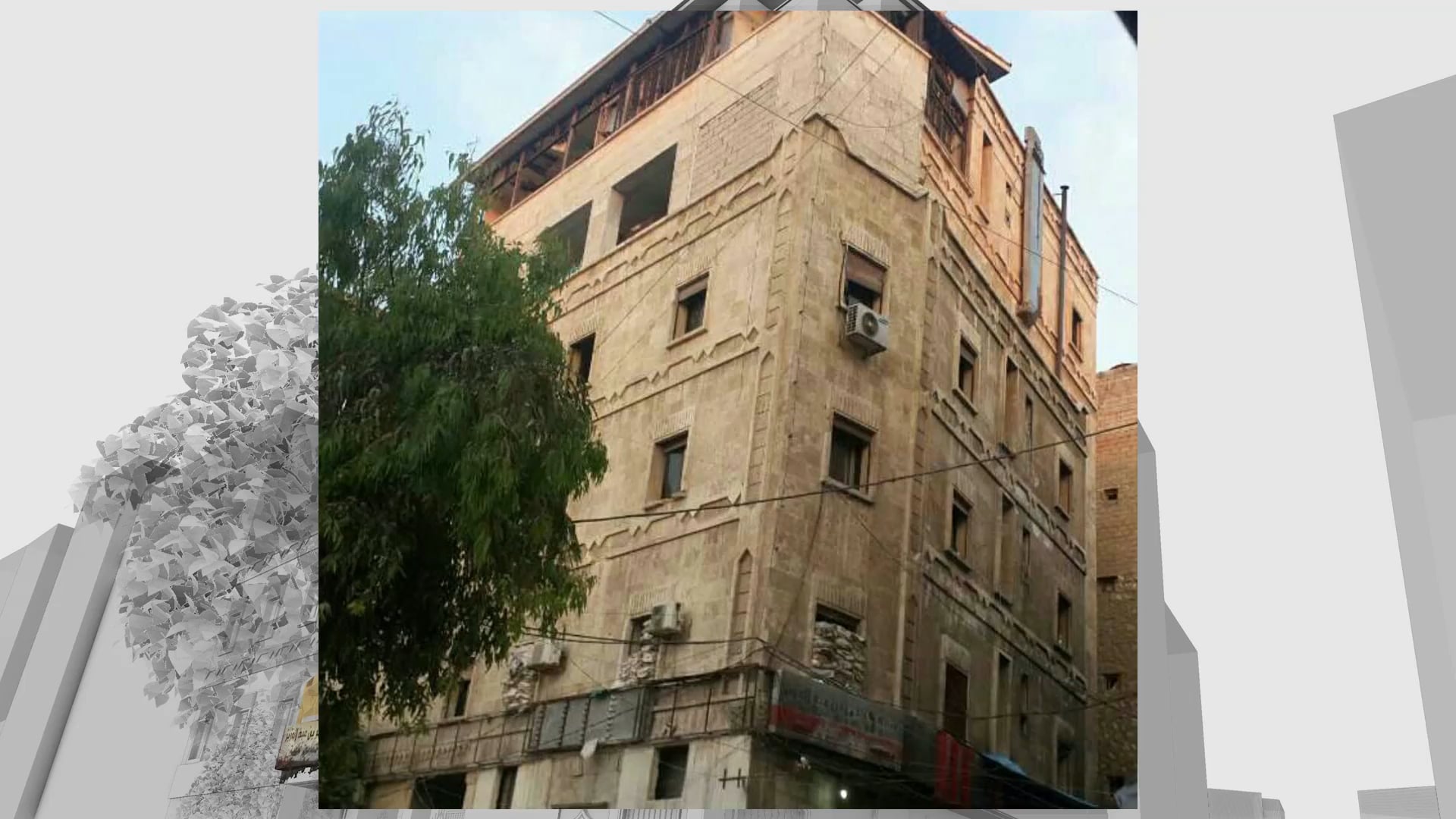
Omar Bin Abdul Aziz Hospital was struck fourteen times by munitions fired by the Syrian army, including cluster and barrel bombs.
Within a digital model, we corroborated multiple sources of CCTV footage to support claims that Syria and its allies were intentionally targeting civilian hospitals.
I.23 Chemical Attack in Khan Sheikhoun
Date of Incident
4 Apr 2017
Location
Khan Sheikhoun, Syria
Forums
Human Rights Report, Media
Commissioned By
Human Rights Watch
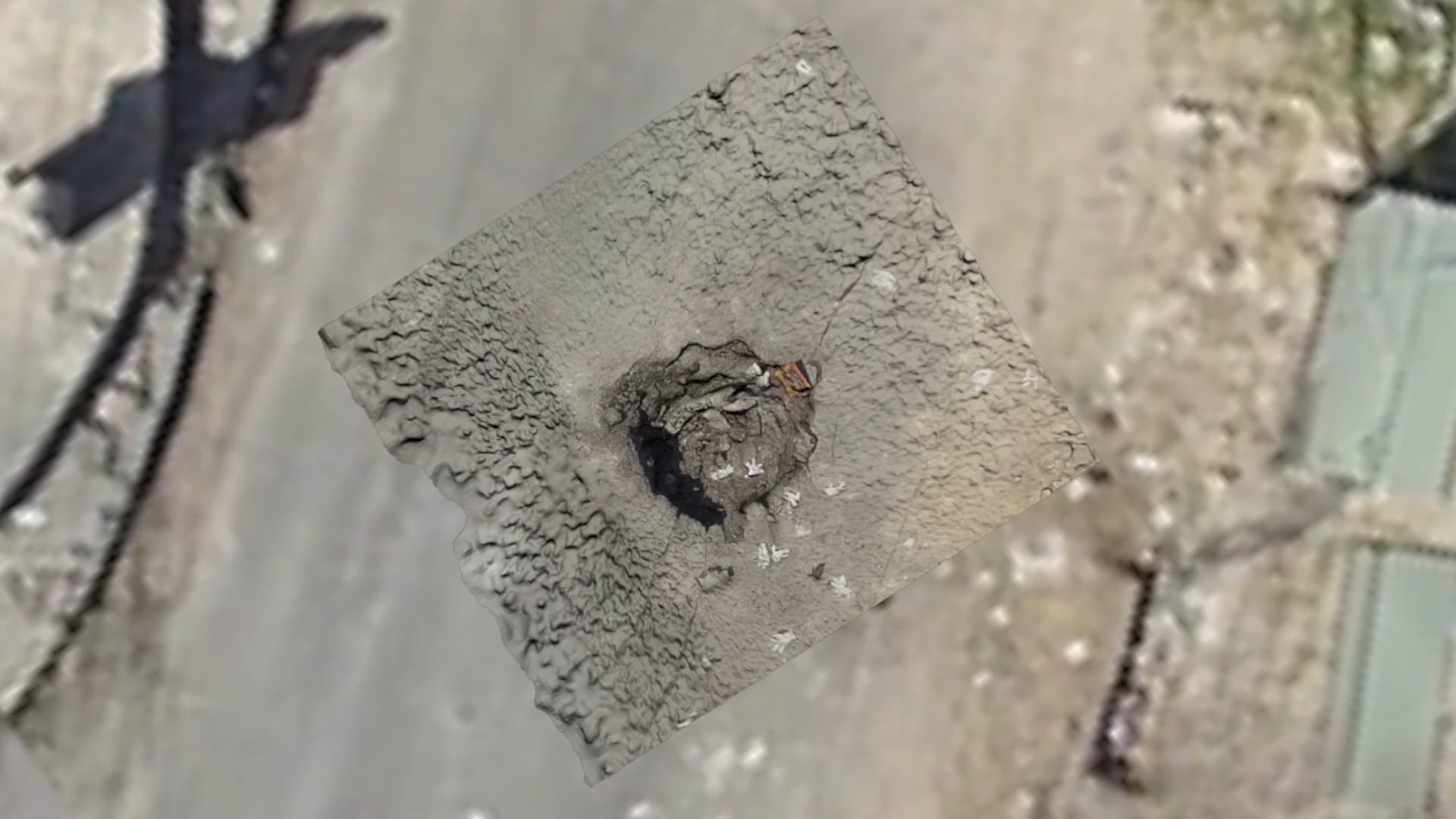
The truth of an apparent chemical attack in the Syrian town of Khan Sheikhoun quickly became obscured behind allegations and counter-allegations.
With Human Rights Watch, we investigated what the precise dimensions of the impact crater could tell us about the munition that had caused it.
I.22 Airstrikes on al-Hamidiah Hospital
Date of Incident
15 Feb 2016
Location
al-Hamidiah, Syria
Forums
Exhibition, Human Rights Report, Media
Commissioned By
Médecins Sans Frontières (MSF)
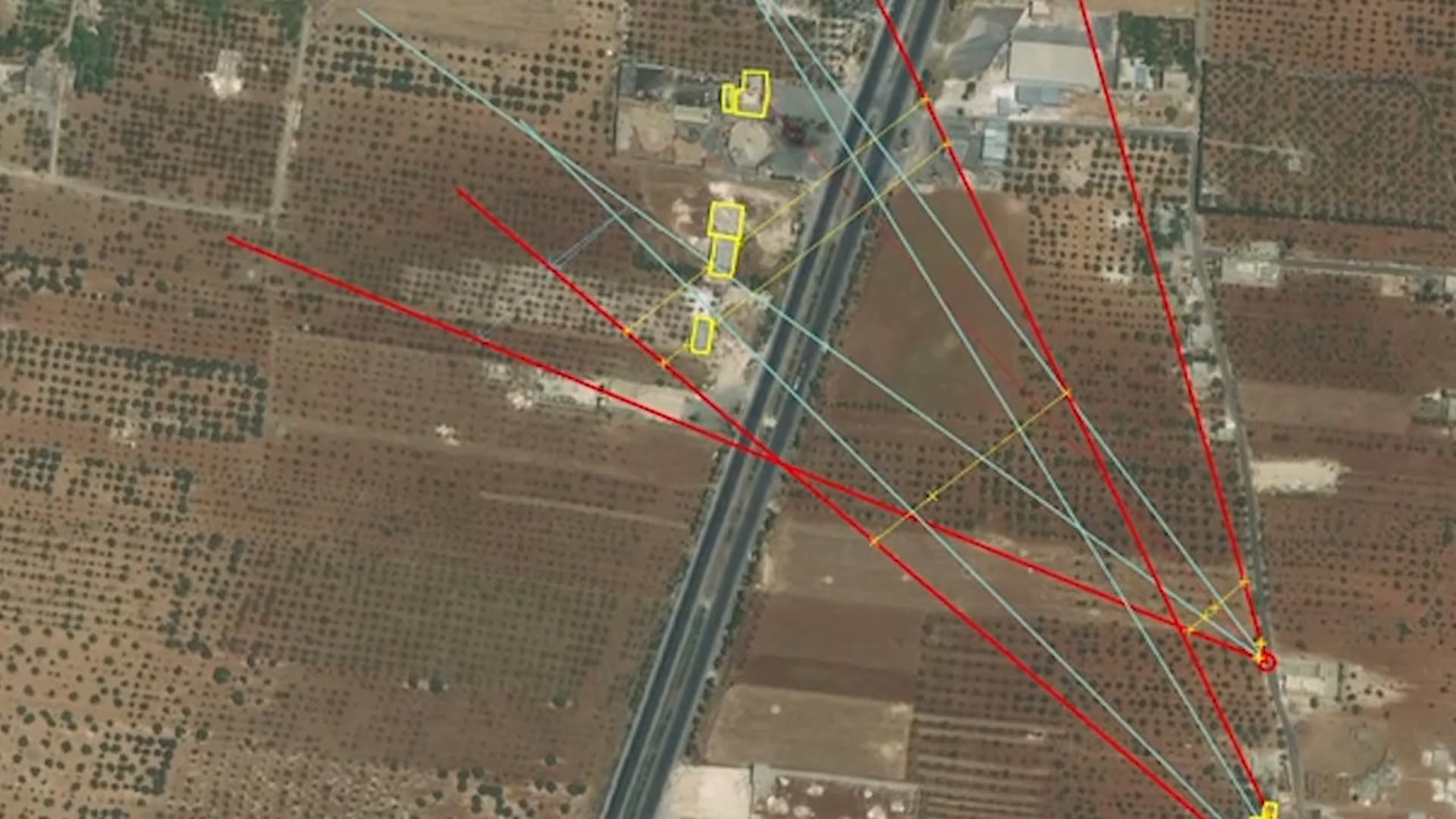
When twenty-five people were killed when a hospital operated by Médicins Sans Frontières was struck by two air strikes, both the Russian and Syrian governments denied responsibility.
By locating and analysing multiple video sources, we attempted to assign responsibility for the attacks.
I.18 Torture in Saydnaya Prison
Date of Incident
1 Jan 2011 - Ongoing
Location
Saydnaya, Syria
Forums
Legal Process, Exhibition, Media, Web Platform
Commissioned By
Amnesty International
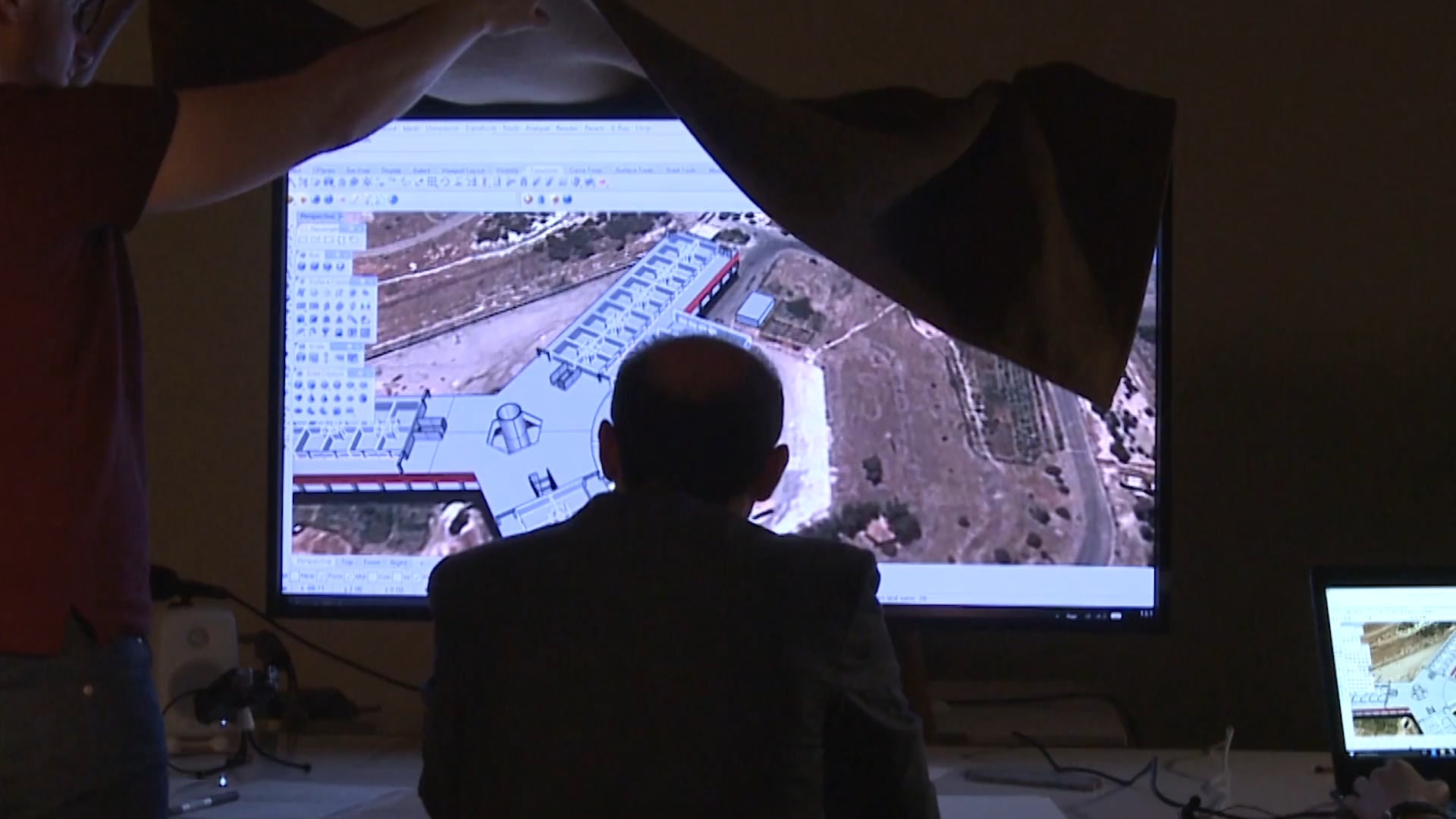
Since the start of the Syrian Civil War, thousands of Syrians have been detained, tortured and executed at the notorious Saydnaya Prison.
Using architectural and acoustic modelling, we worked with five survivors to rebuild the prison and explore their memories of life and death inside its walls.
I.17 Death By Rescue: The lethal effects of non-assistance at sea
Forensic Oceanography
Date of Incident
12 Apr 2015 - 18 Apr 2015
Location
Mediterranean Sea
Forums
Exhibition, Human Rights Report
Commissioned By
Self-Initiated
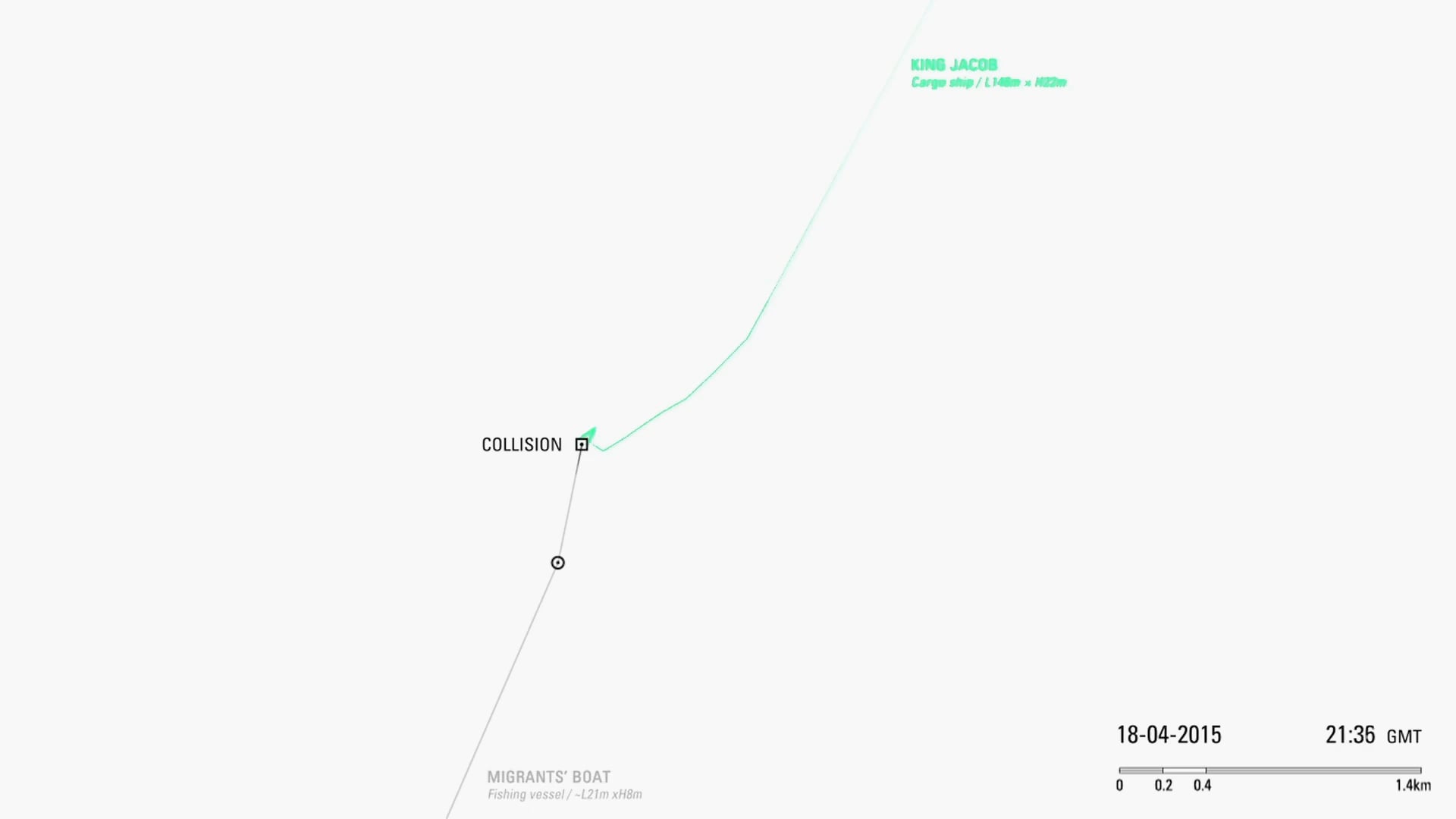
Changing EU policies toward the rescue of migrants resulted in over a thousand deaths in the Mediterranean in the space of one week.
Working with survivors and available shipping data, we recreated the incidents and explored the consequences of making rescue vessels out of commercial ships.
I.16 Airstrikes in Atimah
Date of Incident
8 Mar 2015
Location
Atimah, Syria
Forums
Exhibition, Media
Commissioned By
Airwars
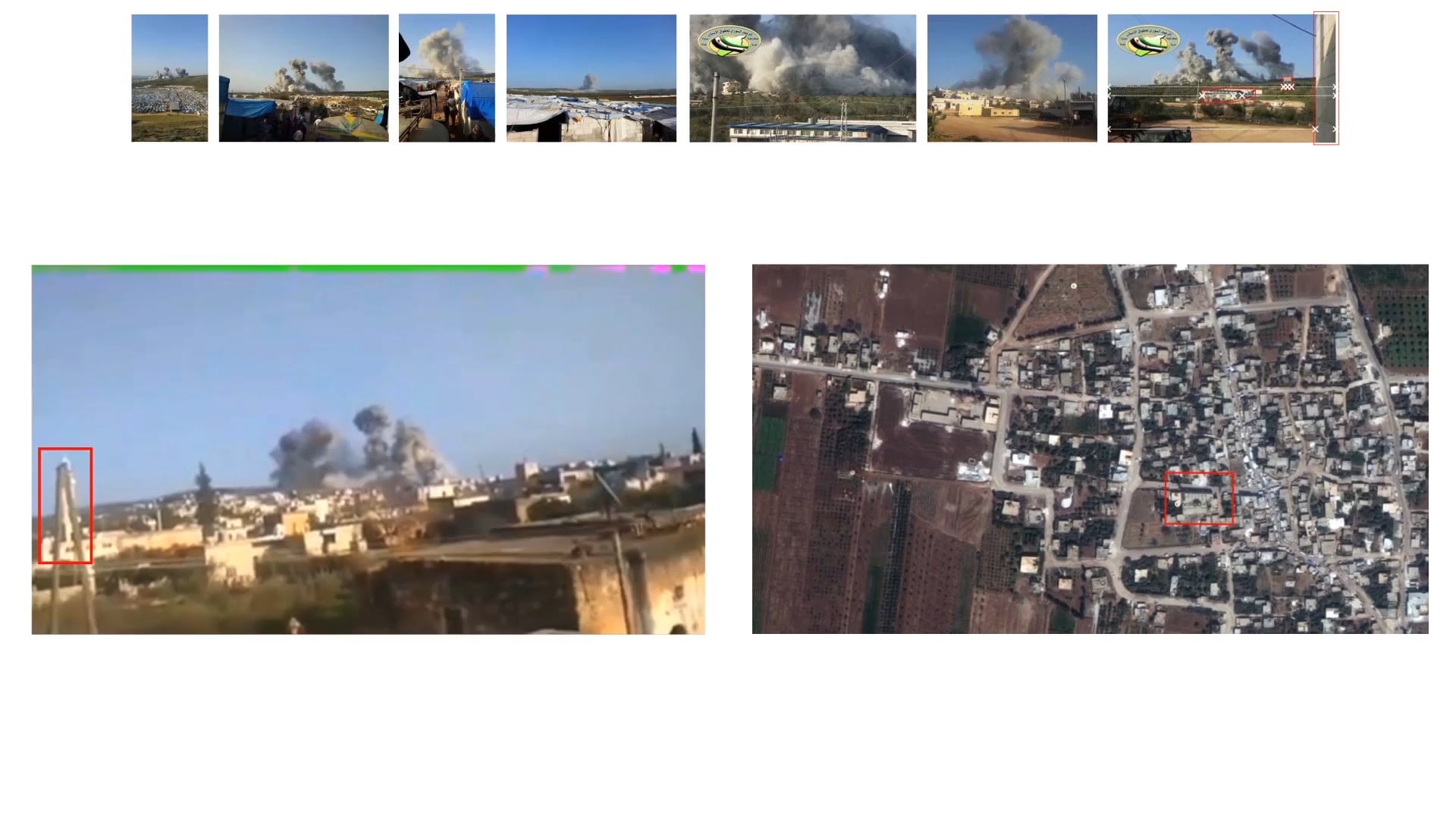
When three bombs landed at the edge of a camp where more than thirty thousand internally-displaced people were sheltered, nobody claimed responsibility.
Using available satellite and smartphone imagery, we determined the location of the strikes, and other information about the munitions.
I.14 Pattrn: Open source software for citizen-driven mapping
Date of Incident
n/a
Location
None
Forums
Web Platform
Commissioned By
Self-Initiated
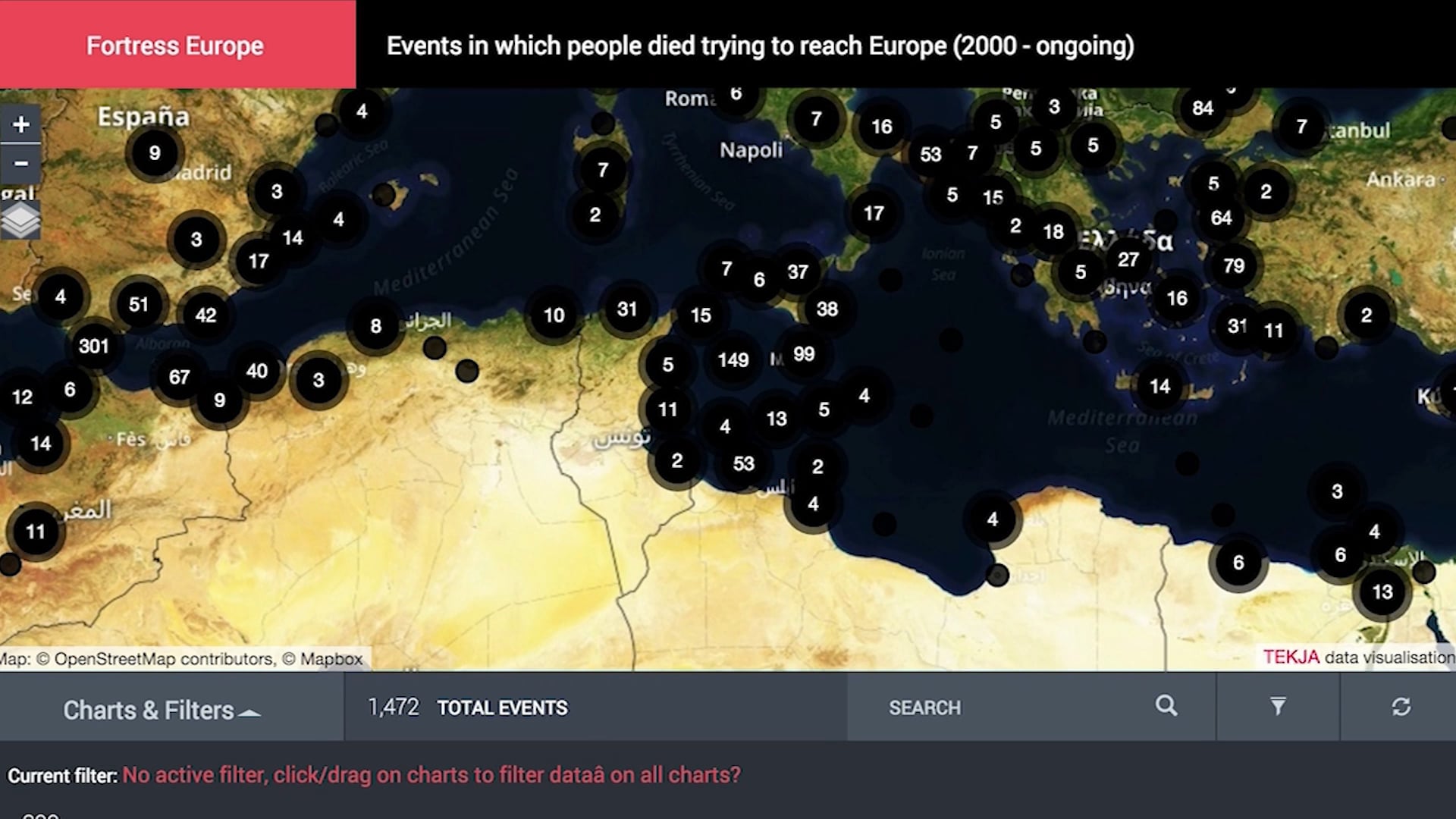
PATTRN is an open-source software developed by Forensic Architecture to support participatory, real-time, citizen-led mapping in conflict zones.
I.15 The Bombing of Rafah
Date of Incident
8 Jul 2014 - 26 Aug 2014
Location
Rafah, Gaza, Occupied Palestinian Territories
Forums
Exhibition, Human Rights Report, Media
Commissioned By
Amnesty International
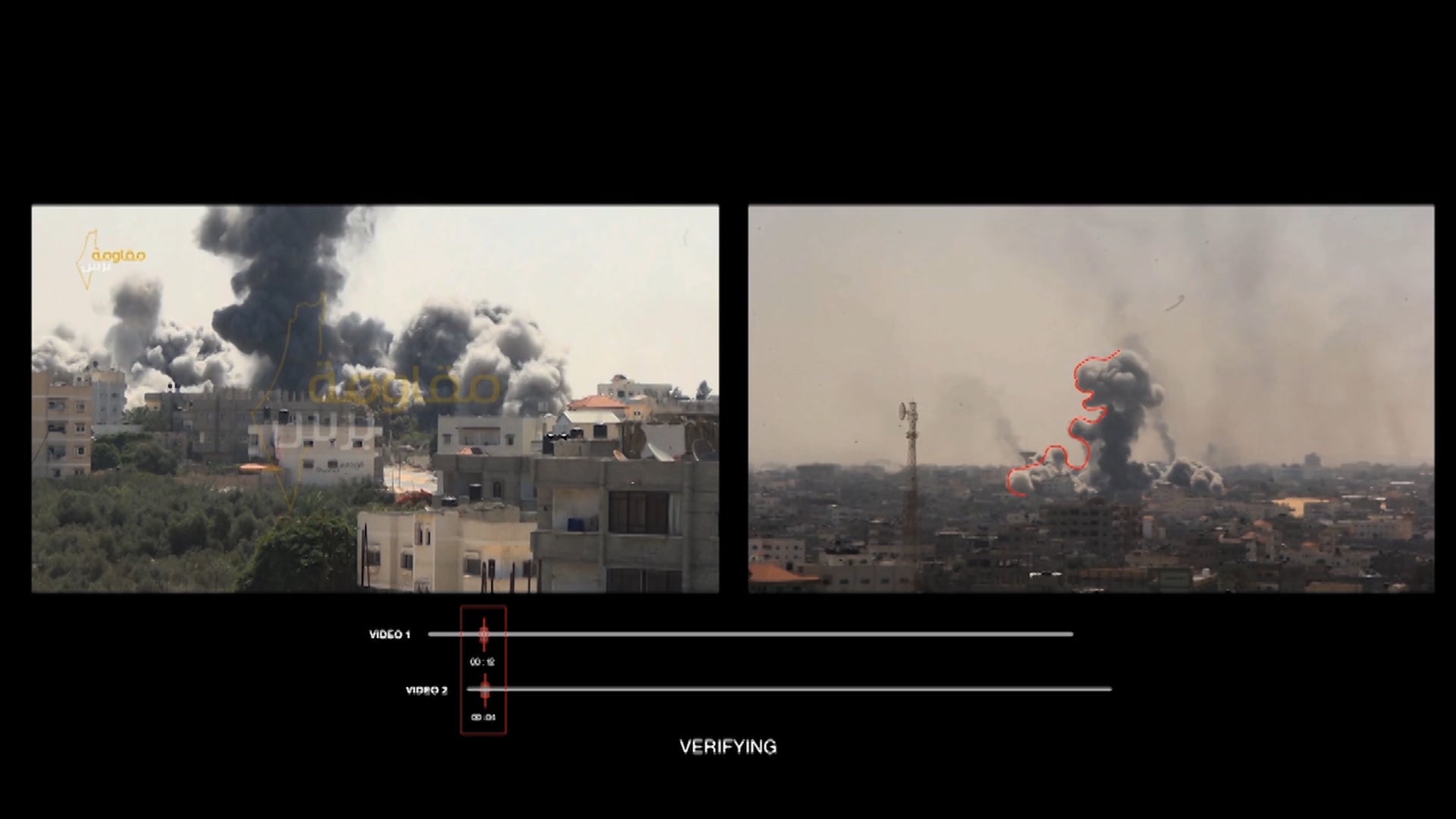
When an Israeli soldier was captured and taken into the tunnels below Rafah, the full force of Israel’s military was unleashed.
Using smartphone footage and satellite imagery, we mapped the destruction as over two thousand munitions were fired into the city in a single day.
I.13 The Gaza Platform: Israel's 2014 offensive
Date of Incident
8 Jul 2014 - 26 Aug 2014
Location
Gaza, Occupied Palestinian Territories
Forums
Web Platform
Commissioned By
Amnesty International
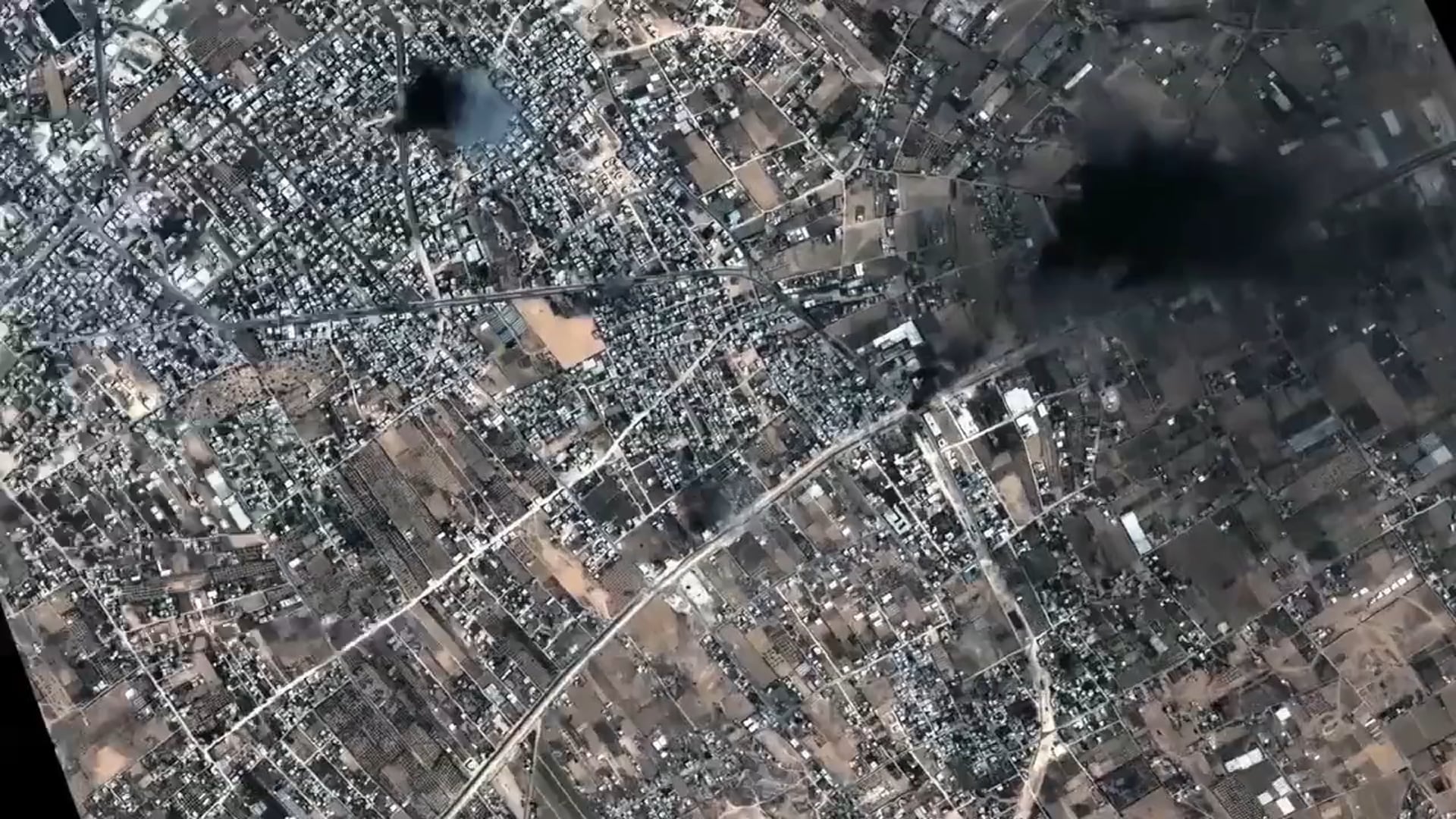
Over 2000 people died in under 2 months during the Israeli assault on Gaza.
Working with local and international NGOs, we built a platform to map almost 3000 individual events, creating a public repository of testimony and data about the offensive—and a template for documenting future conflicts.
I.1 Stopping the Wall in Battir
Date of Incident
1 Jan 2012 - 1 Jan 2015
Location
Battir, Occupied Palestinian Territories
Forums
Legal Process
Commissioned By
Michael Sfard Law Office
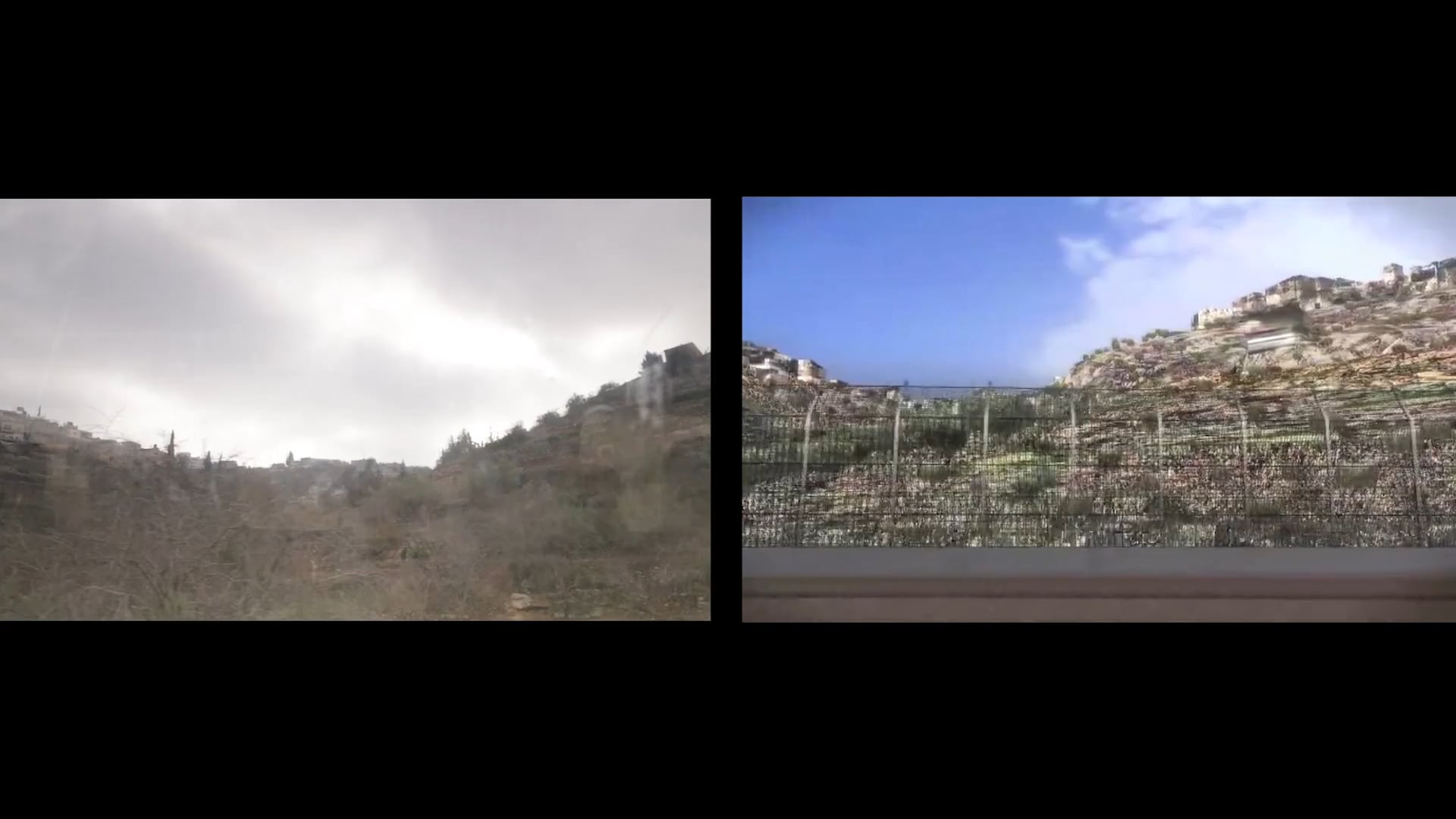
Israel’s separation wall in the West Bank threatened to destroy historic Palestinian farmland.
We supported human rights lawyers to build a pioneering—and successful—legal argument on environmental and heritage grounds.
I.12 The Killing of Nadeem Nawara and Mohammed Abu Daher
Date of Incident
15 May 2014
Location
Beitunia, West Bank, Occupied Palestinian Territories
Forums
Exhibition, Media
Commissioned By
DCI Palestine
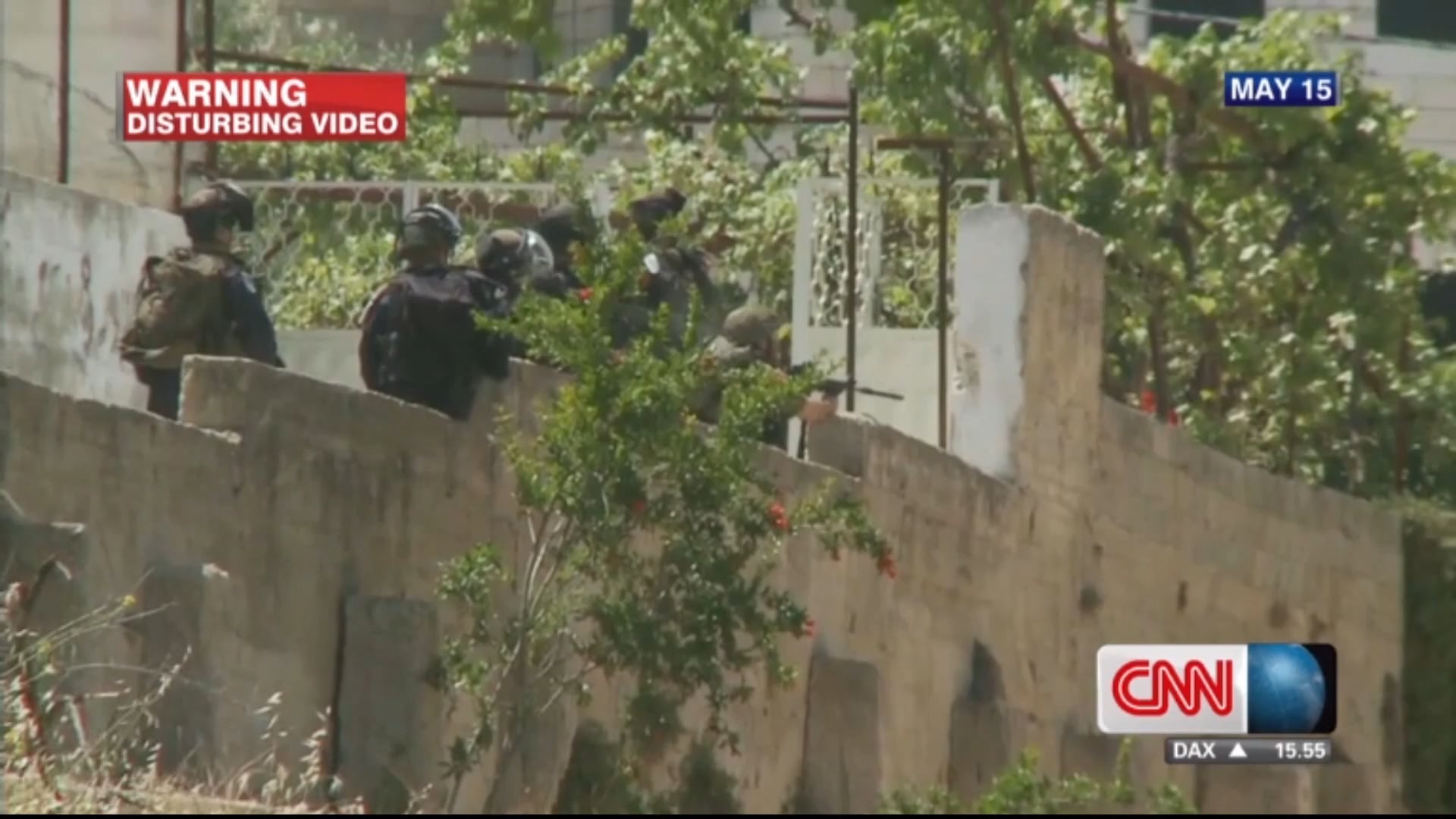
When Israeli military police killed two Palestinian teenagers, the event was recorded by security cameras, US news teams, and photographers.
Using that footage, our audio and image analysis exposed a tactic by which Israeli personnel disguise live rounds as rubber-coated ‘non-lethal’ munitions.
I.7 The Drone Strikes Platform
Date of Incident
1 Nov 2014 - 1 Nov 2014
Location
Federally Administered Tribal Area, Pakistan
Forums
United Nations, Media, Web Platform
Commissioned By
Bureau of Investigative Journalism
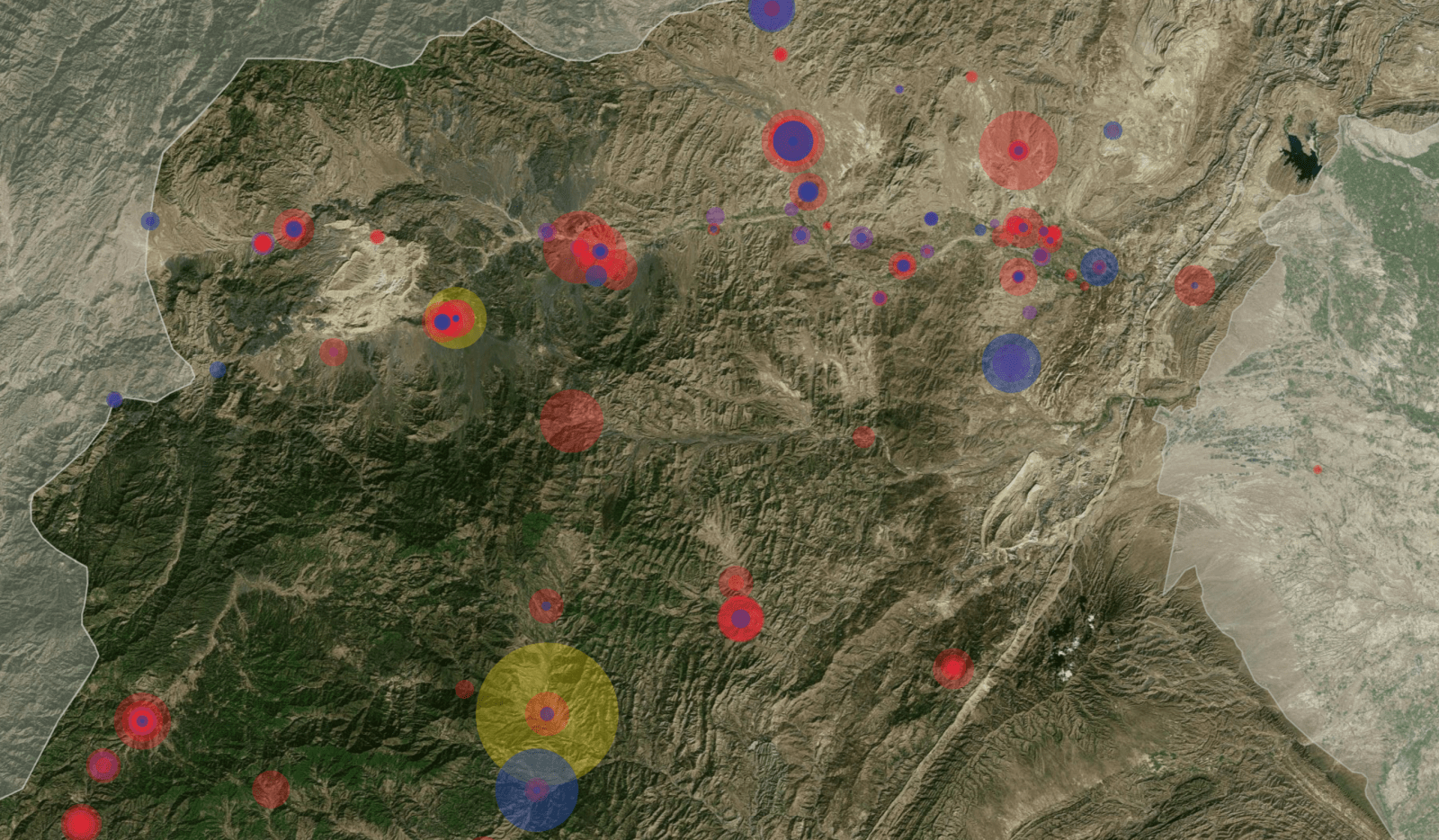
Civilian homes were the target of sixty-one percent of all reported drone strikes conducted by the CIA in Pakistan’s Federally Administered Tribal Areas between 2004 and 2014.
We turned a database of those strikes, compiled by the Bureau of Investigative Journalism, into an interactive cartography.
I.11 Knock on the Roof: Drone strike in Beit Lahiya
Date of Incident
9 Jan 2009
Location
Beit Lahiya, Gaza, Occupied Palestinian Territories
Forums
United Nations, Exhibition, Media
Commissioned By
UN Special Rapporteur on Counter Terrorism and Human Rights
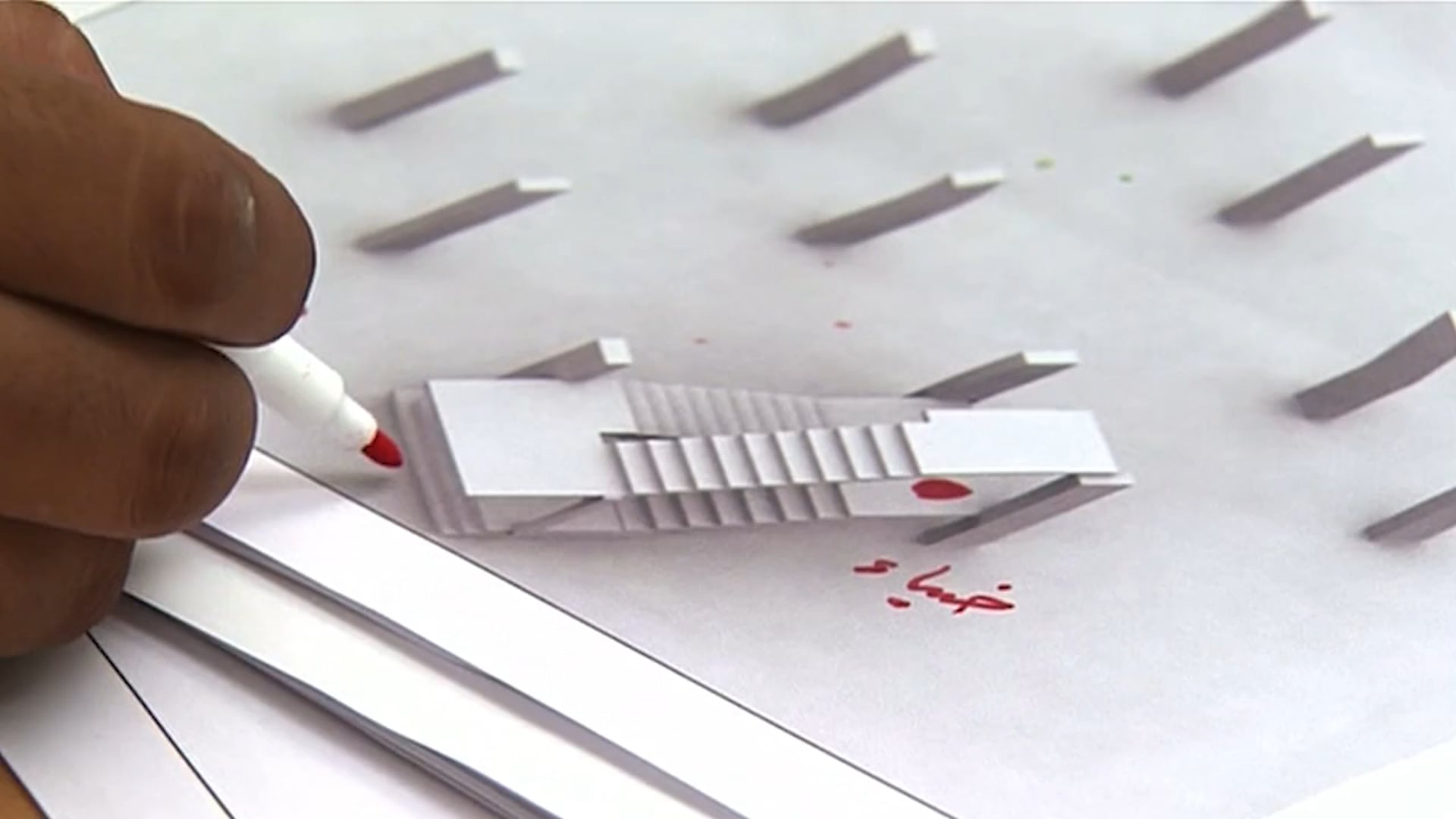
An anti-tank missile, fired at the home of the Salha family, left just a small hole in the roof. The bomb that followed three minutes later destroyed the house, killing six people.
We interviewed surviving family members and investigated the tactics of the ‘warning shot’.
I.10 Drone Strike in Miranshah
Date of Incident
30 Mar 2012
Location
Miranshah, Pakistan
Forums
United Nations, Exhibition, Media, Web Platform
Commissioned By
UN Special Rapporteur on Counter Terrorism and Human Rights
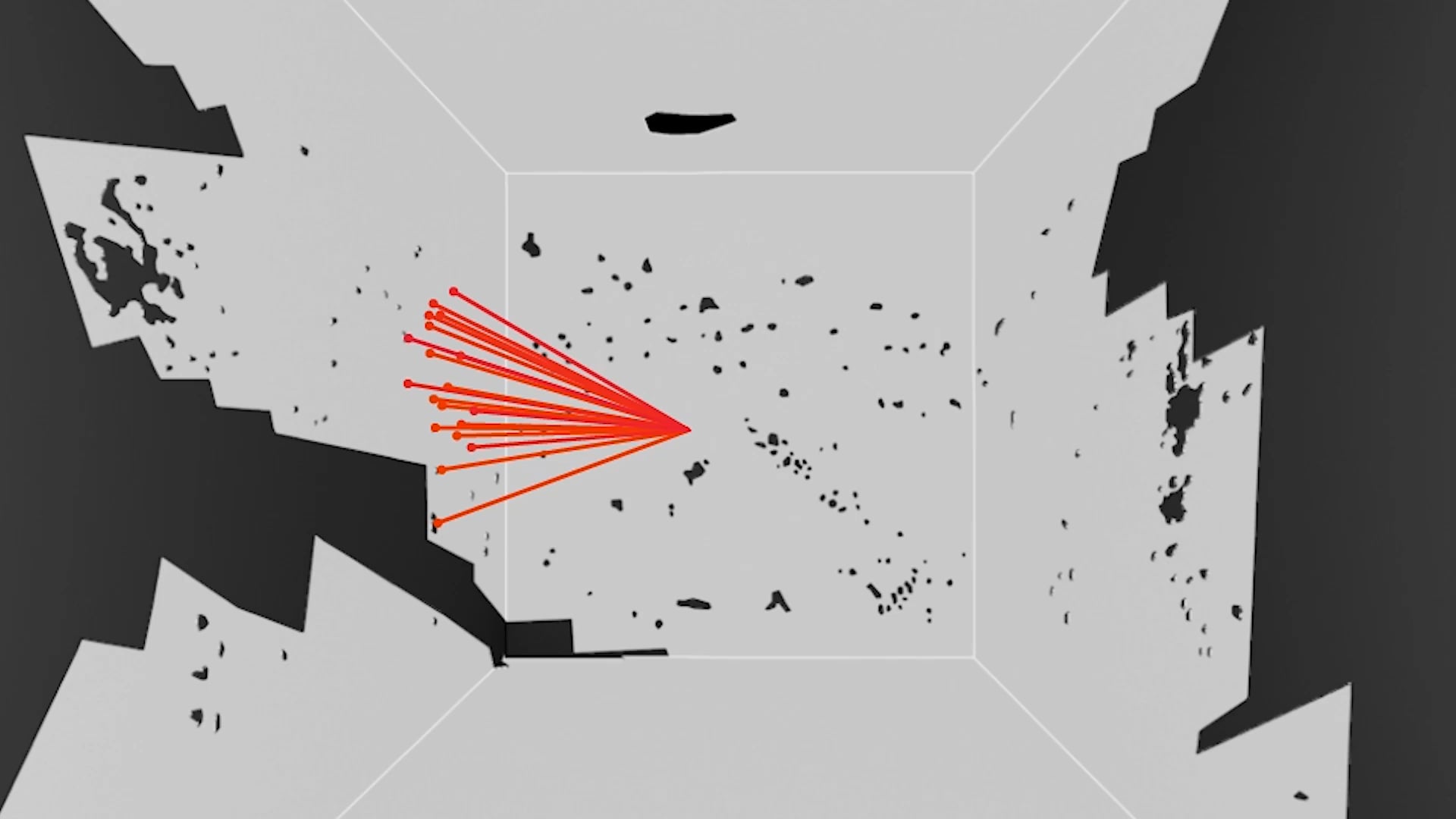
Video footage of the aftermath of a drone strike that killed four people was smuggled across siege lines before being broadcast on MSNBC.
We analysed the footage frame-by-frame to confirm the location of the building, the consequences of the strike, and the munition used.
I.6 Genocide in the Ixil Triangle
Date of Incident
1 Jan 1978 - 1 Jan 1983
Location
Quiché, Guatemala
Forums
Legal Process, Web Platform
Commissioned By
CALDH – Centro para la Acción Legal en Derechos Humanos
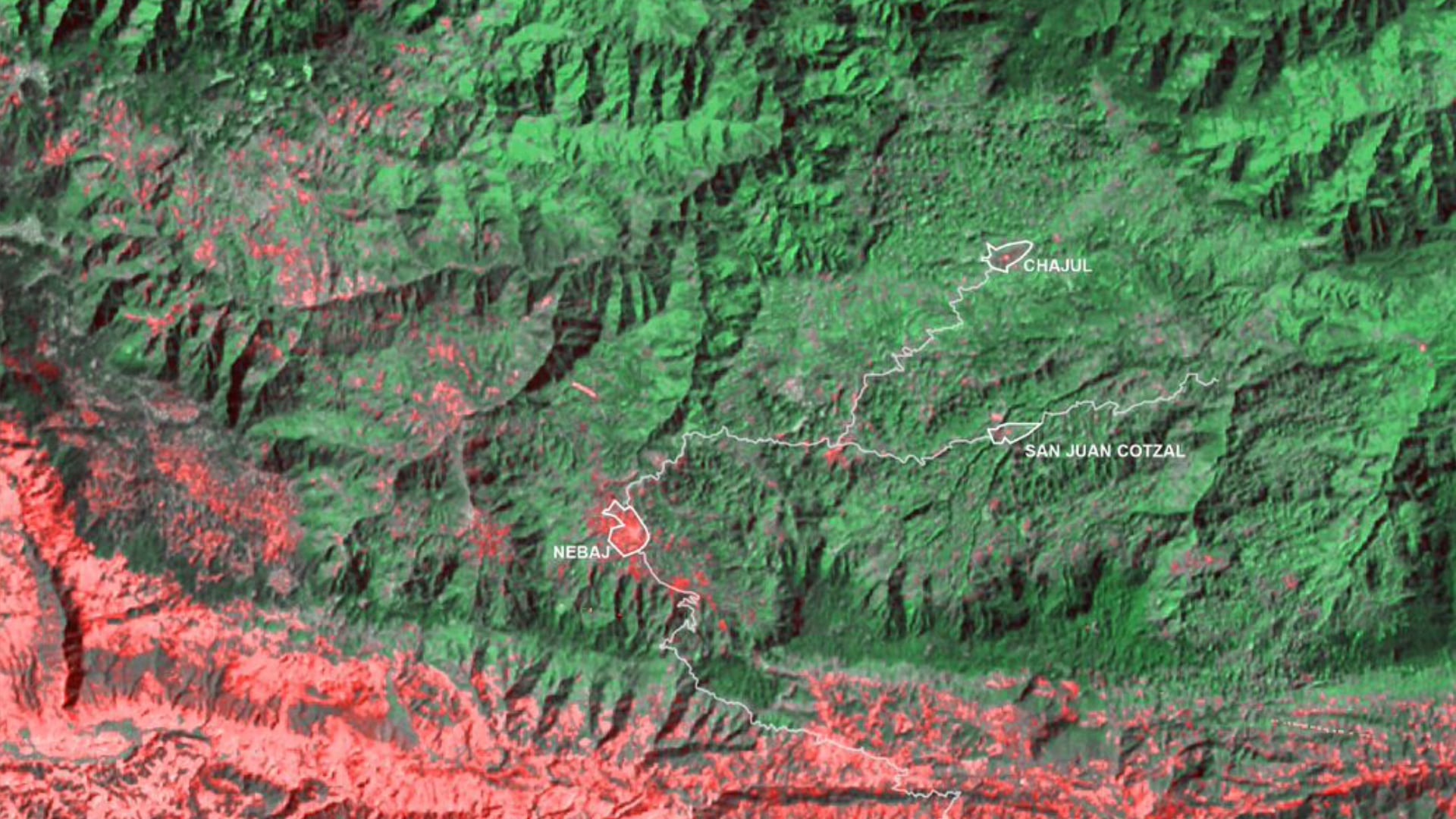
The genocide of the Ixil people was accompanied by widespread deforestation and environmental violence.
We analysed and traced the state’s simple logic: control the Ixil through the destruction of the conditions on which their ways of life depended.
I.8 Drone Strikes on a Jirga in Datta Khel
Date of Incident
16 Mar 2011 - 17 Mar 2011
Location
Dhatta Khel, Pakistan
Forums
United Nations, Media
Commissioned By
UN Special Rapporteur on Counter Terrorism and Human Rights
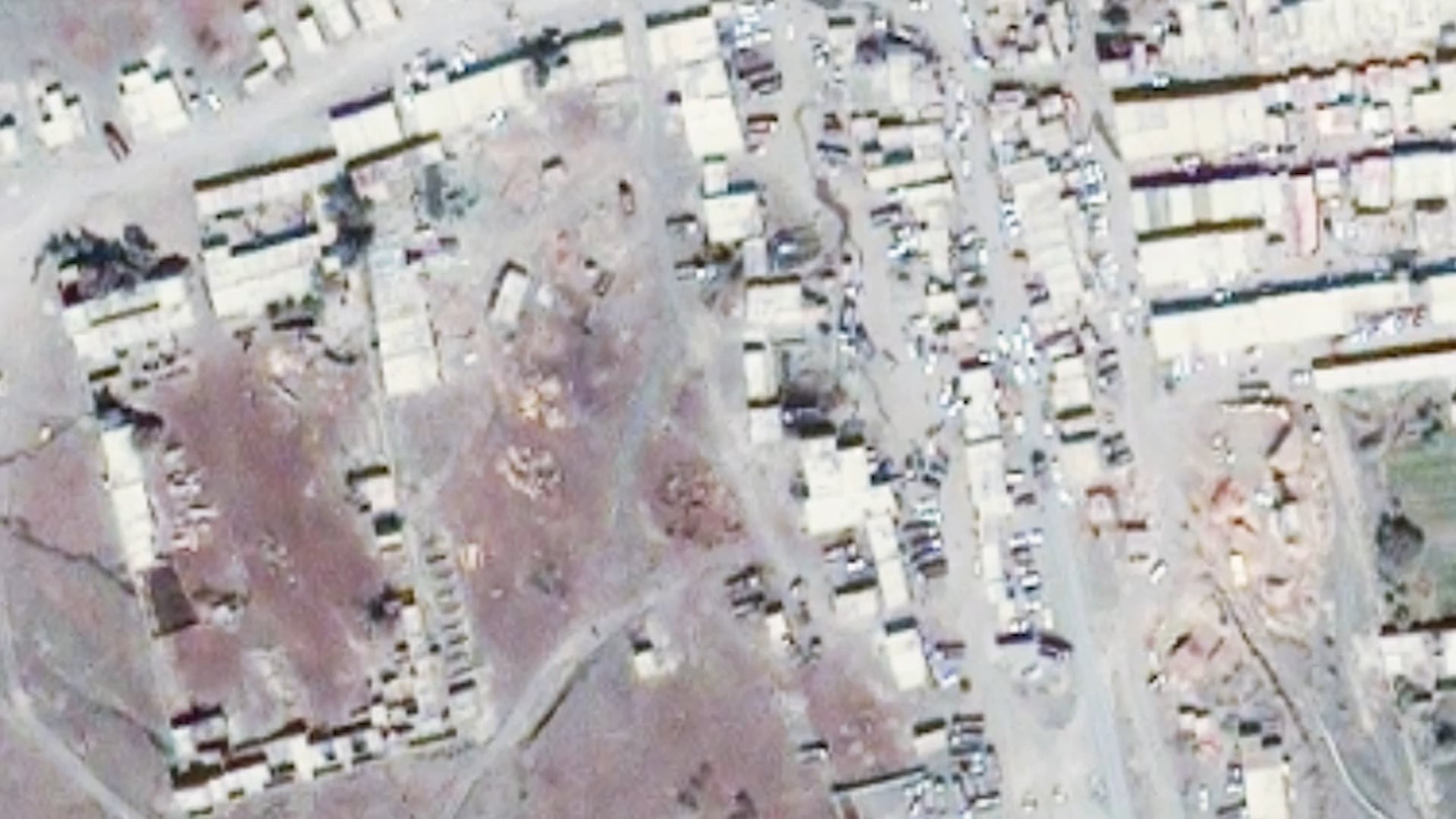
A strike on a community gathering in Datta Khel, Pakistan, killed at least forty-three civilians.
We cross-referenced witness statements, local press reports and satellite imagery to construct a picture of what had taken place.
I.5 Living Death Camp: the archaeology of Staro Sajmište
Date of Incident
1 Jan 1938 - Ongoing
Location
Belgrade, Serbia
Forums
Citizens' Tribunal, Exhibition
Commissioned By
Self-Initiated
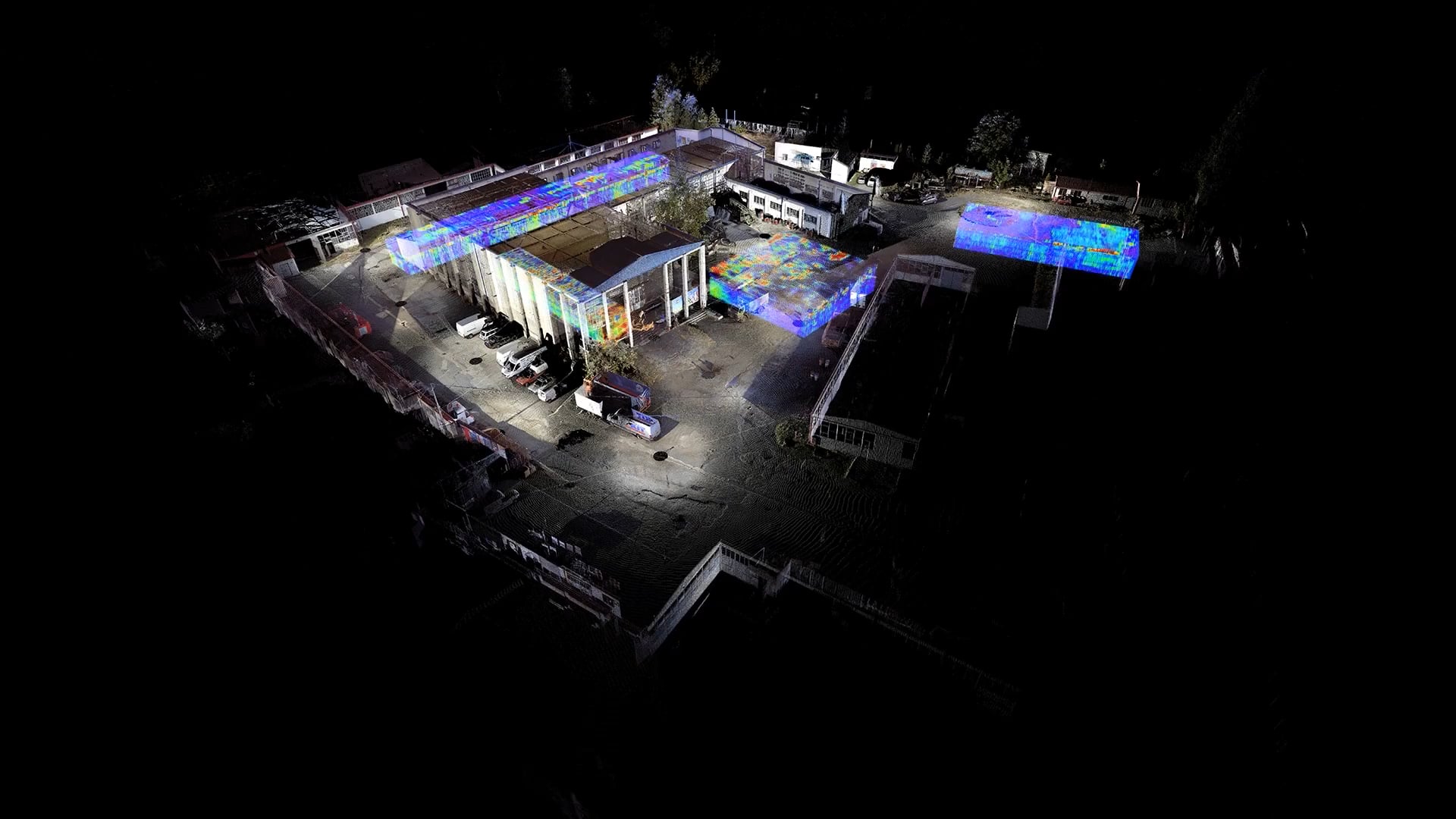
Staro Sajmište, once the site of a ‘world’s fair’, became a Nazi concentration camp.
The Roma community that later lived there—including descendents of the camp’s victims—is threatened by plans to build a Holocaust memorial at the site. We surveyed the site to support their efforts to remain.
I.9 Drone Strike in Mir Ali
Date of Incident
4 Oct 2010
Location
Mir Ali, Pakistan
Forums
United Nations, Exhibition
Commissioned By
UN Special Rapporteur on Counter Terrorism and Human Rights
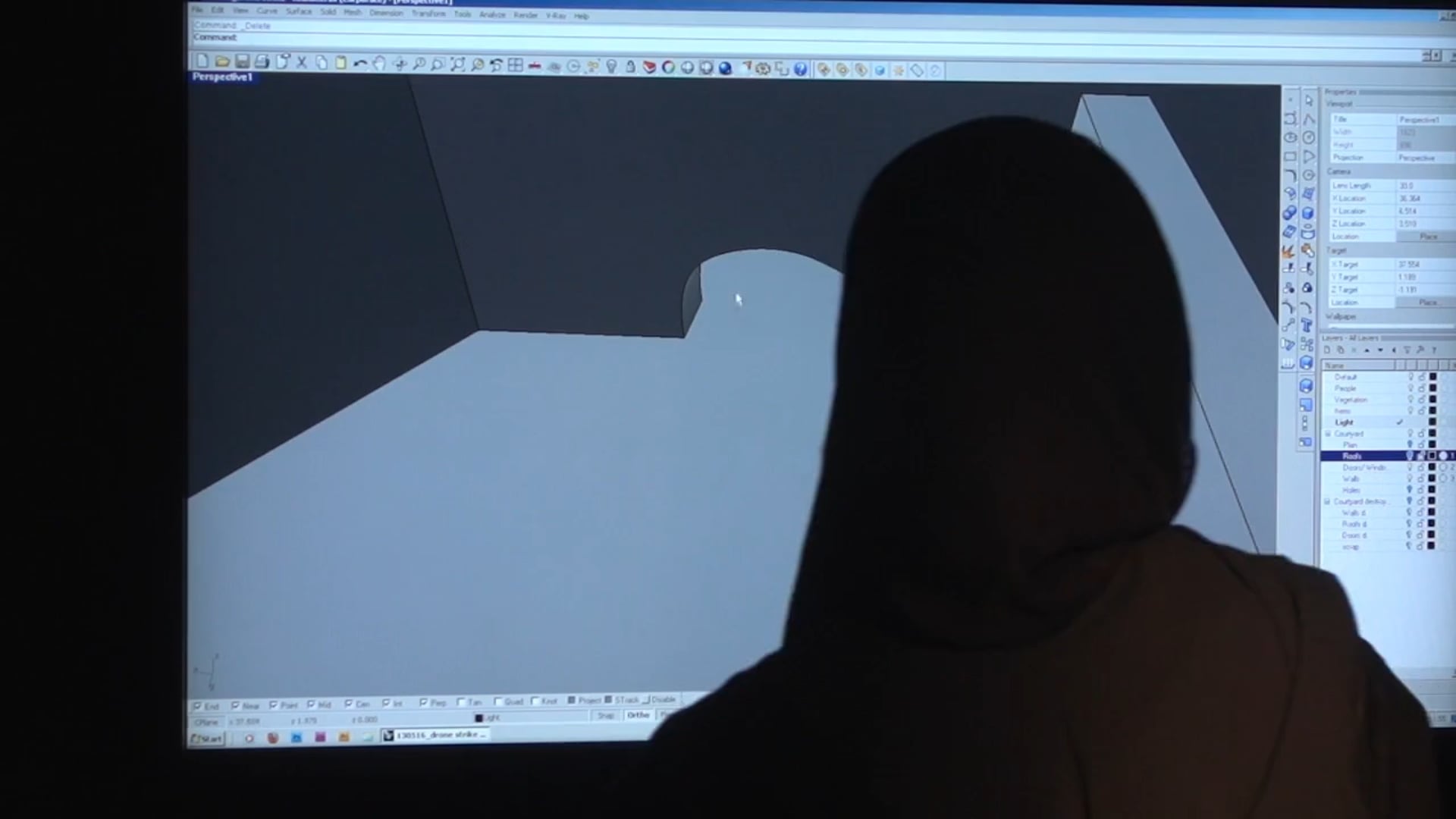
A drone strike killed five people in their home. One woman and her infant son survived.
We reconstructed the home and investigated aspects of the strike and its aftermath, using digital models to unlock new memories in the witness.
I.3 The Use of White Phosphorus in Urban Environments
Date of Incident
27 Dec 2008 - 18 Jan 2009
Location
Gaza, Occupied Palestinian Territories
Forums
United Nations
Commissioned By
Yesh Gvul, Michael Sfard Law Office
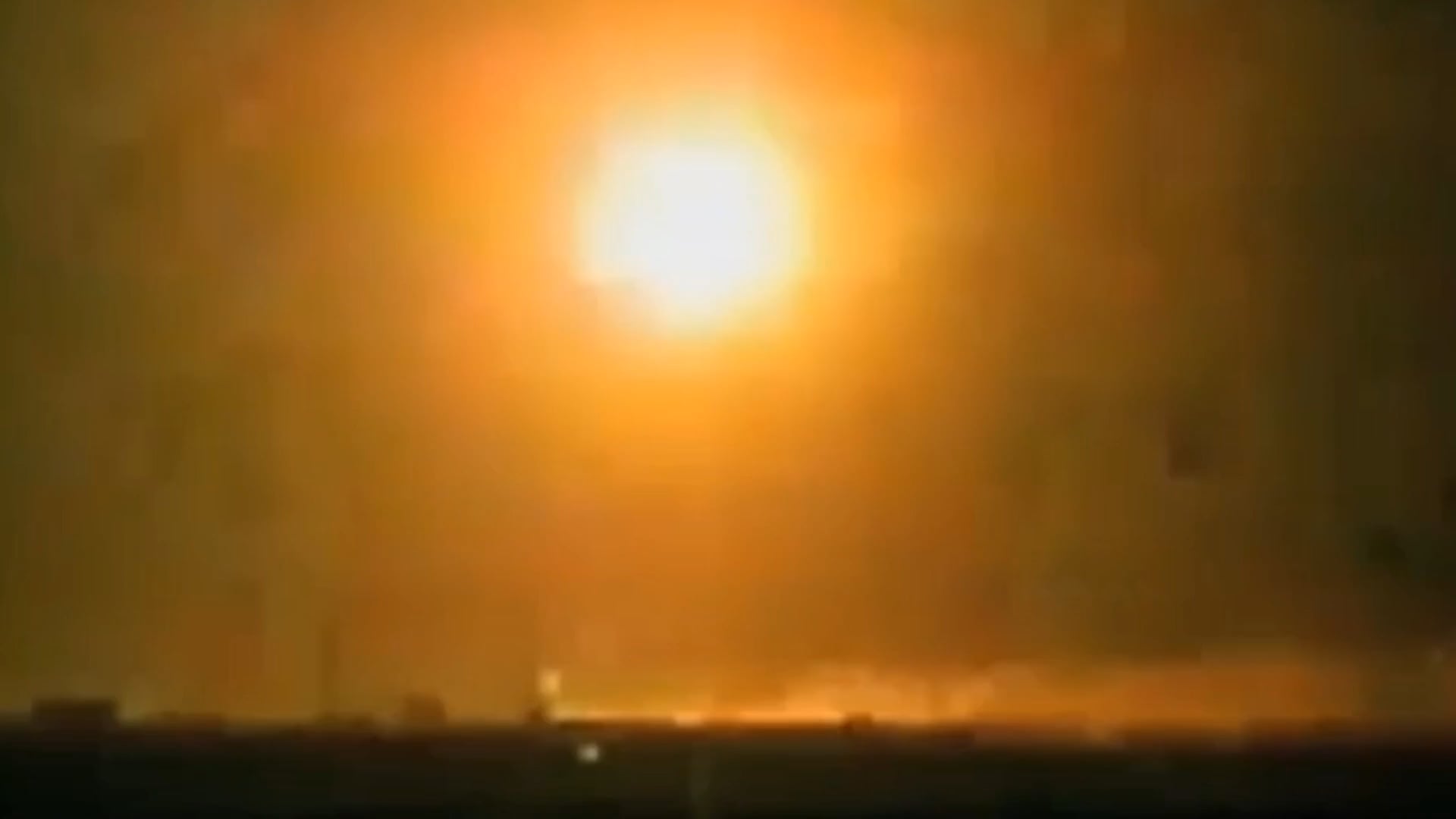
The 2008–2009 conflict saw the use by Israeli forces of white phosphorus, a toxic, flammable and corrosive airborne munition.
We analysed the use and effects of the weapon in support of calls to make its use illegal, and presented our report to a 2012 UN convention.
I.4 The Left-to-Die Boat
Forensic Oceanography
Date of Incident
27 Mar 2011 - 10 Apr 2011
Location
Mediterranean Sea
Forums
Legal Process, Exhibition
Commissioned By
Self-Initiated
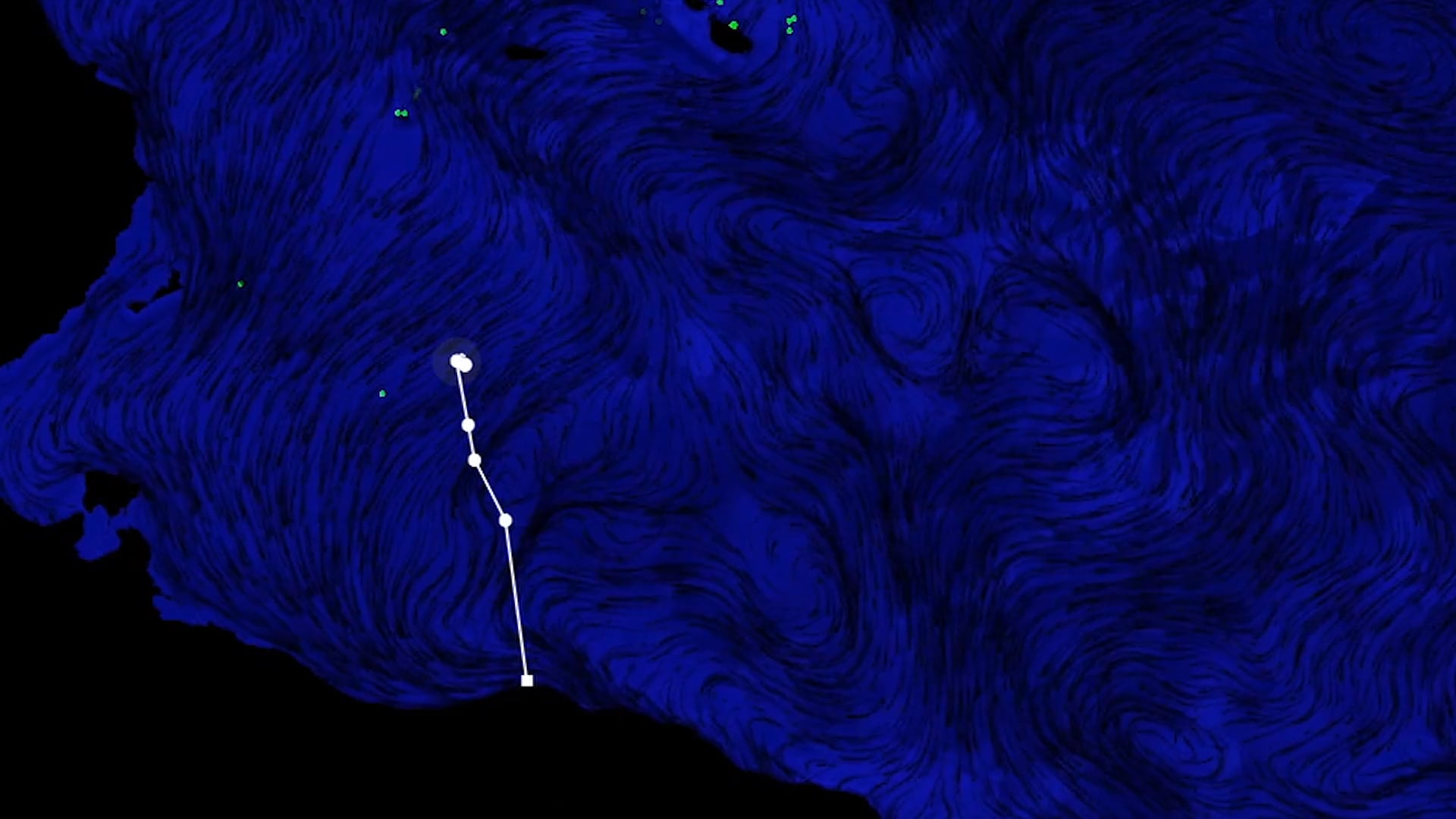
A migrants’ boat was left drifting for two weeks in NATO-monitored waters, its presence known to the Italian coastguard and other nearby vessels. Sixty-three people died.
Using an array of sensing technologies—thermal cameras, radar, and tracking—Forensic Oceanography mapped the path of the boat.
I.2 The Killing of Bassem Abu Rahma
Date of Incident
17 Apr 2009
Location
Bil'in, Occupied Palestinian Territories
Forums
Legal Process, Exhibition
Commissioned By
Michael Sfard Law Office, B’Tselem
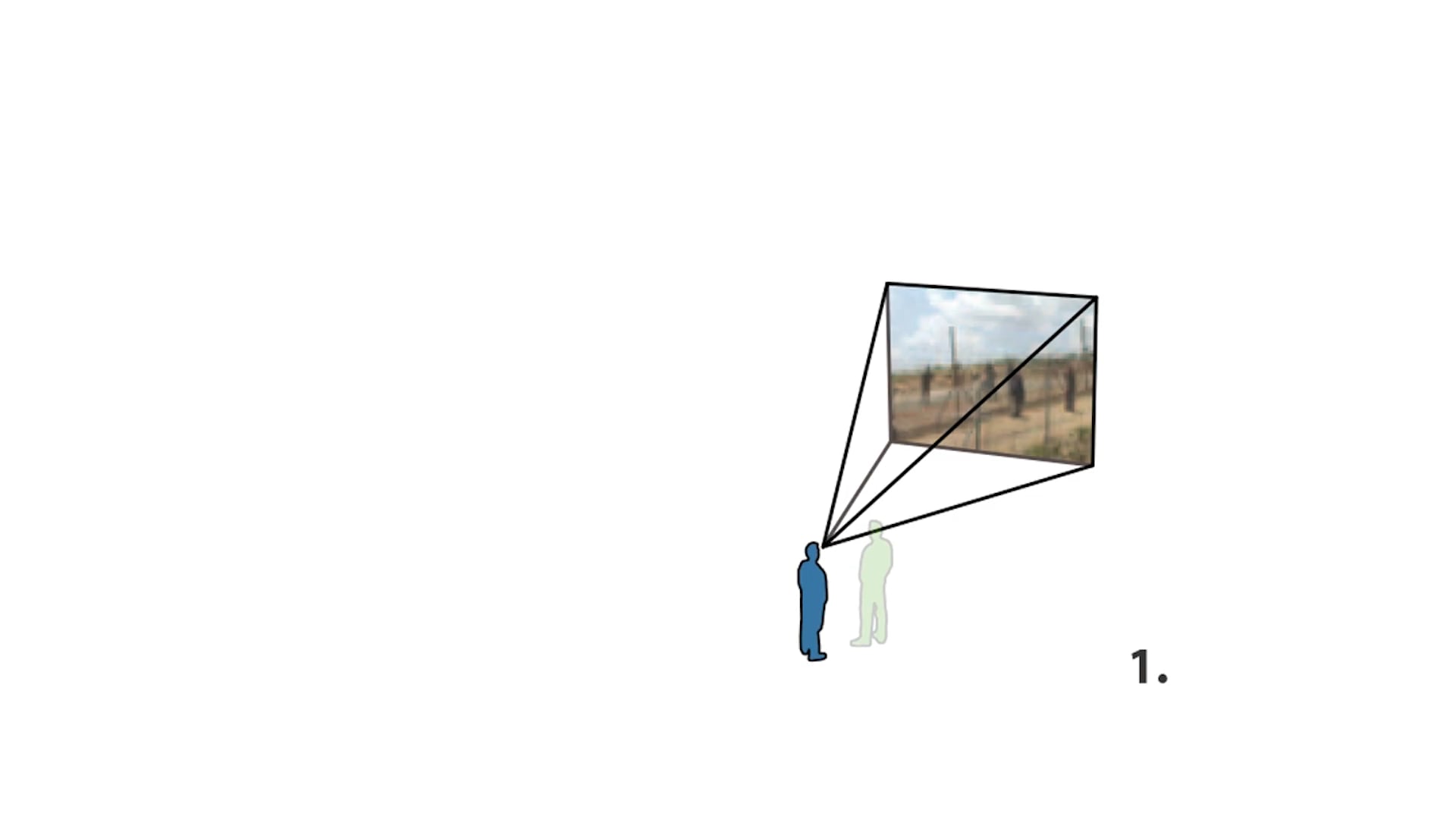
An unarmed demonstrator was killed by a tear-gas canister fired across the West Bank barrier wall. The army denied it was intentional.
We used footage from three cameras to prove that the soldier had intended to kill. Israeli authorities reopened the investigation, but no soldier was ever charged.